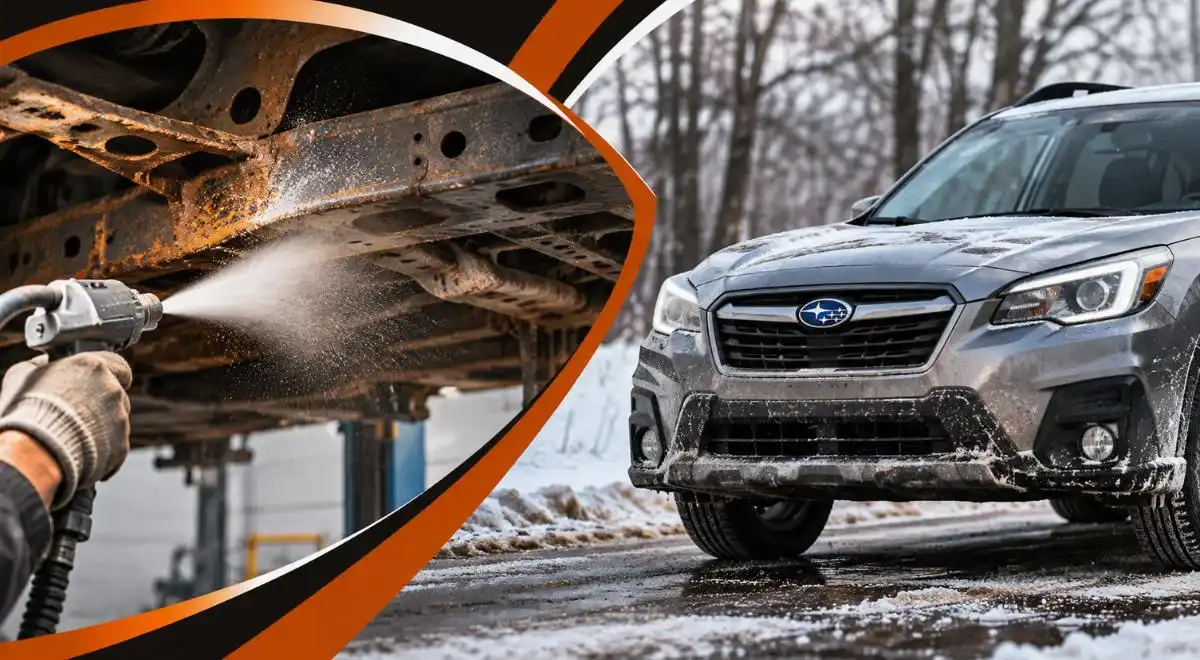
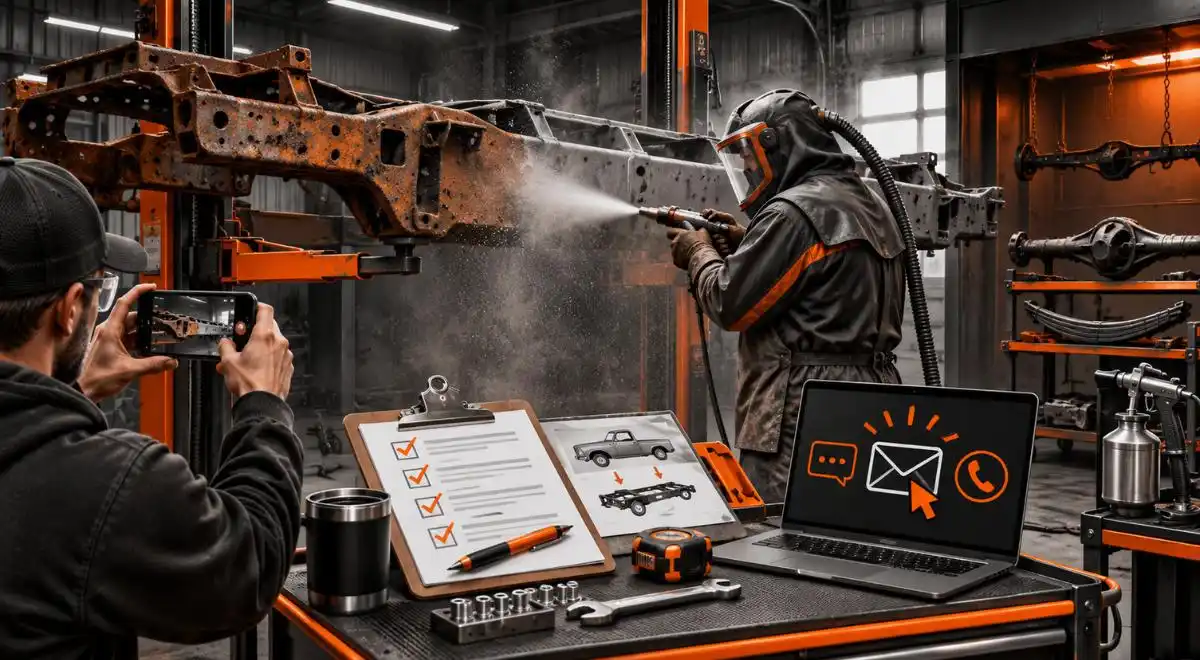
If you are considering worcester waxoyl undercoating for new trucks, a new purchase alone is not a reason to apply another coating. The useful first step is to find out what protection is already present, how the truck will be used, and what areas a proposed treatment would cover. Bay State Rust Prevention provides full-vehicle WaxOyl rust-prevention undercoating; ask for a proposal based on your truck’s condition and configuration rather than relying on the word “new.”
Start with the truck’s exposure and purpose
For a truck driven on treated winter roads in Central Massachusetts, road salt is a relevant consideration. The U.S. Environmental Protection Agency’s road-salt overview discusses environmental effects associated with salt use, including chloride. It offers context for the material a vehicle may encounter, but it does not establish that a specific truck needs aftermarket treatment or that any coating will prevent all corrosion.
Think of the decision as a comparison: expected exposure on one side, and existing protection, condition, and intended ownership on the other. A truck that regularly travels on treated roads has a different use pattern from one rarely driven in winter. Neither pattern settles the question by itself. What matters is whether the proposed work addresses a relevant concern without overlooking factory protection, vehicle instructions, or areas that cannot be accessed.
Use concrete examples, not a blanket rule
These examples can help explain your situation to a shop. They are prompts for an assessment, not automatic recommendations:
- Daily winter commuting: Describe how often the truck will be on treated roads and ask what the existing protection covers.
- Work or fleet use: Note equipment, modifications, and differences in vehicle history. Two trucks in one fleet may not have the same access or protection needs.
- Seasonal driving: Explain where the truck is stored and when it is used. Less winter driving may change the exposure discussion, but it does not reveal what coatings are already present.
- New-to-you truck: Treat missing treatment records as unknown history. Their absence does not prove that a truck is untreated—or adequately protected.
Keeping a truck for many years can make it worthwhile to examine a protection plan, but it does not establish a required treatment interval. Ask what facts support the proposed work and what new information—such as records or inspection findings—could change the recommendation.
Understand what a full-vehicle WaxOyl proposal covers
“Undercoating” can refer narrowly to visible underside surfaces, while Bay State Rust Prevention describes its WaxOyl service as full-vehicle rust-prevention undercoating, including rustproofing for seams, panels, joints, and cavities. That description tells you the kinds of areas the service may address; it does not mean that every hidden surface on every truck is accessible or included in an identical way.
For a new truck, distinguish the general service description from the scope for your particular vehicle. Configuration, installed accessories, and existing materials can affect what can be seen or reached. A cavity treatment and treatment of an exposed frame surface are not interchangeable descriptions of coverage. Ask the shop to connect its terms to the actual areas proposed for your make, model, year, and configuration.
Turn broad coverage language into a usable scope
Terms such as “complete coverage” are difficult to evaluate unless they identify intended areas and limitations. You do not need to demand a claim that every hidden surface can be reached. You do need to know what the proposal includes, what it excludes, and what remains uncertain until inspection.
When comparing a proposal with your priorities, look for clear answers to these points:
- Which areas are intended for treatment, including whether seams, panels, joints, and cavities are part of the proposed work?
- Are any areas excluded, blocked by equipment, or not yet assessed?
- Does the proposal distinguish between visible surfaces and areas that require access or further inspection?
- What would prompt a change to the scope after the truck is examined?
Bay State Rust Prevention’s rust prevention undercoating page provides background on the service. Use that general information as a starting point, then ask how the proposed scope applies to your truck. A clear scope is also more useful for fleet planning: record each vehicle’s configuration and known history instead of assuming one truck’s plan fits all.
Check factory protection and maker guidance
Before considering another application, look for information about factory or dealer-applied protection. Check the documents that came with the truck and ask the selling dealer for available records or product details. A sales description may not identify the material used, the areas treated, or whether a prior application took place. If the paperwork is incomplete, note that as an unknown for the inspection rather than treating it as evidence either way.
Consult the owner’s manual and warranty materials for the exact make, model, and year. Toyota provides owner-manual and warranty resources, and Ford provides an owner-manual lookup. Use the documentation for your truck to check relevant instructions on maintenance, inspection, aftermarket materials, and access to vehicle components. These resource pages help locate documents; they do not answer every question about a proposed treatment.
Resolve the specific uncertainty that affects your decision
If the documents do not address the product or work you are considering, ask the manufacturer or dealer a direct question and describe the proposed treatment. Do not assume that an aftermarket application automatically voids or preserves warranty coverage; the terms and circumstances matter. If warranty implications affect your choice, get clarification before authorizing work and share any relevant instructions with the shop.
This is a targeted check, not a reason to delay every decision indefinitely. For example, if you have a written record of an existing application but do not know its coverage, ask whether that information changes the proposed scope. If the maker’s guidance appears to conflict with a preparation or access step, pause that step until the conflict is resolved.
Use inspection to decide readiness, preparation, and access
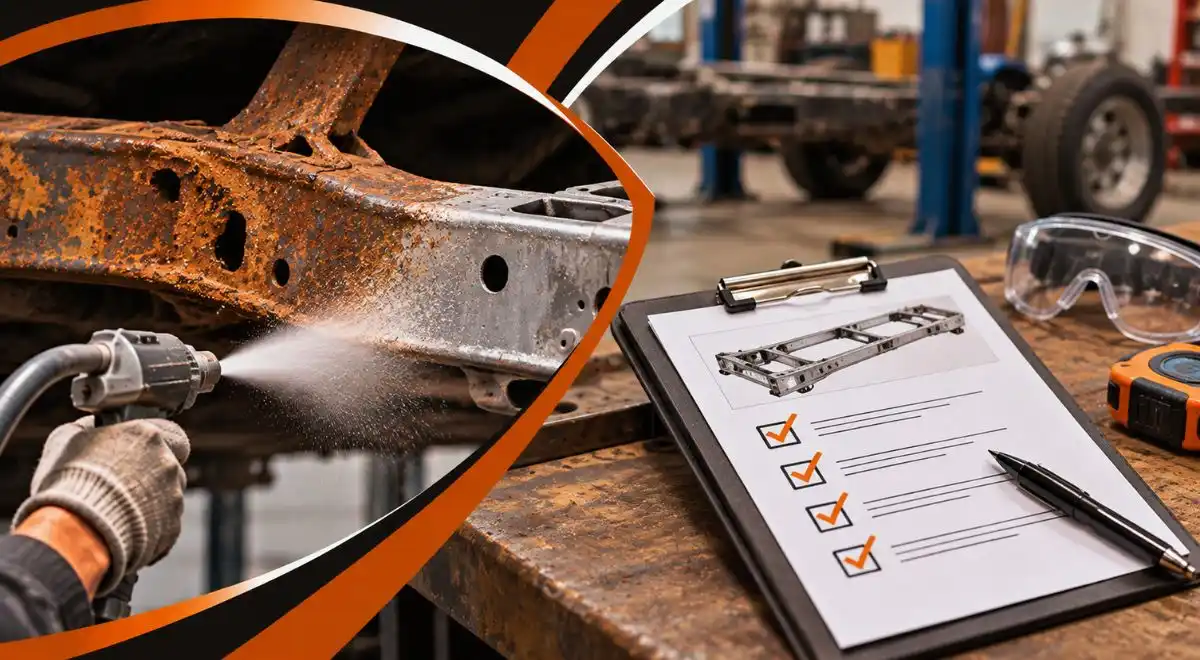
Bay State Rust Prevention lists in-house vehicle inspection and corrosion assessment among its capabilities. For a new truck, inspection can help establish what is observable, whether existing material is present, and whether equipment or vehicle condition affects the proposed work. Age alone does not establish that a truck is untreated, clean, damaged, or ready for another application.
Preparation is a separate question from coverage. The appropriate plan depends on what inspection identifies and on the requirements for the vehicle and product. Do not assume that “undercoating” specifies a particular cleaning or preparation method. Instead, ask what the shop proposes if it finds dirt, visible damage, or an existing coating that needs evaluation. That makes the decision conditional on the actual findings rather than on a generic description.
Ask for findings that lead to a decision
A useful inspection discussion should distinguish what was observed from what could not be confirmed. You can ask the shop to explain:
- Visible condition: What condition was observed on the areas available to inspect?
- Existing materials: Was a prior or factory-applied coating visible, and does it affect the proposed work?
- Access: Do accessories or configuration limit inspection or treatment of any intended area?
- Preparation: What work is proposed if a condition needs attention before treatment?
- Care after application: What care or follow-up does the shop recommend for the material applied?
These answers help you compare what is proposed with what you want done. If an area cannot be assessed at that stage, ask how that uncertainty affects the work and whether it can be resolved before authorization. For fleet vehicles, keep the notes tied to each truck; a shared model name does not ensure identical accessories, condition, or history.
Separate preventive coating from repair work
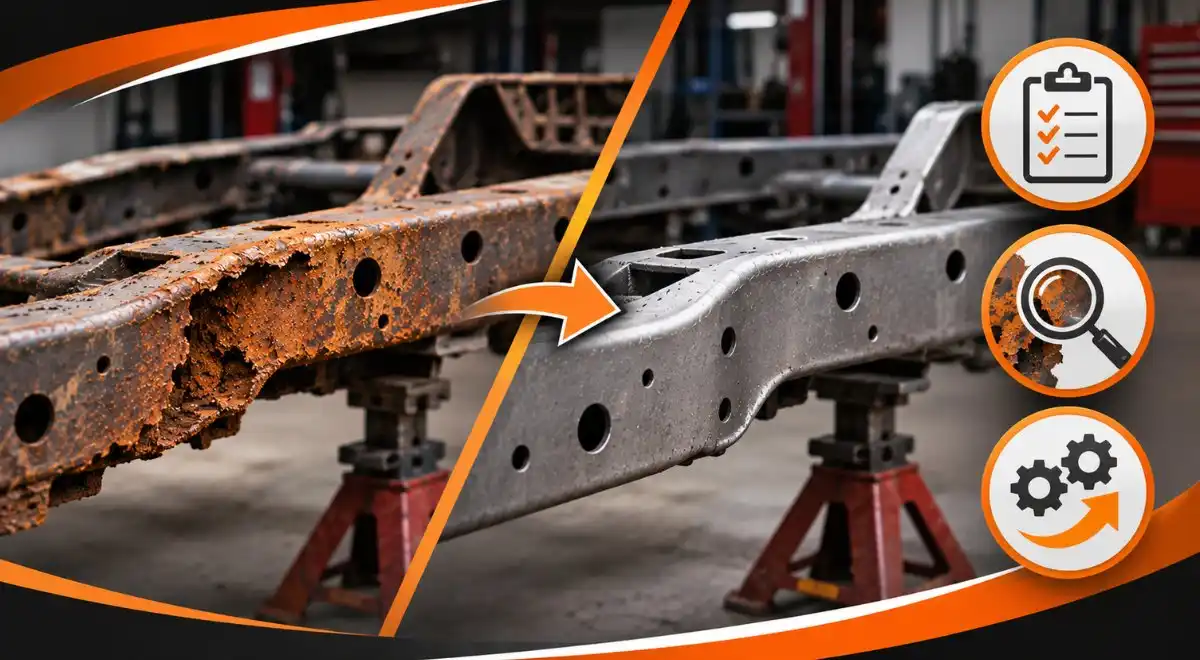
Undercoating is a preventive service, not a repair for structural damage. If an inspection identifies rust damage or a damaged component, first ask whether that condition needs repair and whether it changes the treatment plan. Applying a new coating should not be treated as proof that hidden areas were inspected or that future corrosion cannot occur.
Bay State Rust Prevention offers rust removal through sandblasting, bare-metal preparation for rust-damaged frames, and automotive frame repair. Which service, if any, is appropriate depends on the condition found. For a vehicle that needs more extensive disassembly and rust removal, the shop’s frame-off rust removal page is a relevant next step. The distinction matters especially for a new-to-you truck: a preventive-treatment conversation and an assessment of visible structural damage are different jobs.
After treatment or repair, continue to follow the truck maker’s maintenance instructions. The National Highway Traffic Safety Administration’s vehicle maintenance guidance offers general maintenance information; consult the owner’s manual for instructions specific to your vehicle. A coating is not a substitute for ongoing inspection or for addressing a problem identified later.
Make the decision from the evidence you have
For a new truck with clear records and no identified condition requiring repair, compare the proposed areas with your use and the maker’s instructions. If treatment history is unclear, ask what inspection can establish and what remains unknown. If damage is visible, resolve whether repair is needed before deciding on preventive treatment. These are distinct paths; keeping them separate avoids treating an unknown coating history or a repair concern as an automatic reason to apply undercoating.
Before you decide, have the truck’s configuration, available protection records, intended use, and any relevant maker guidance in hand. Then request a truck-specific proposal that states the intended coverage and any preparation or access limits. Bay State Rust Prevention provides WaxOyl undercoating, corrosion assessment, rust removal, and frame repair for vehicle owners across Worcester and Central Massachusetts. Use baystaterustprevention.com to discuss the truck and clarify the proposed work before authorizing it.
Authored with NotFair SEO