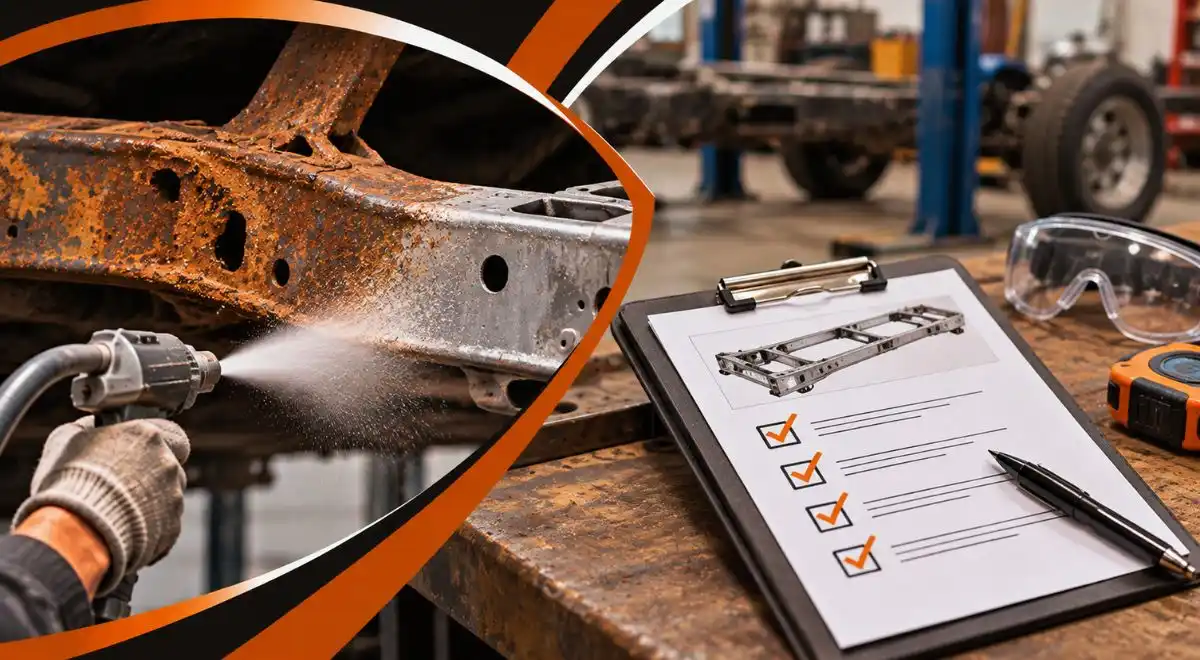

Safe t cap frame repair depends on the vehicle, the damage, and the repair method, not on the name or shape of a cap. Before approving work, ask the shop to identify the exact area being repaired, show that the replacement will attach to sound metal, and explain how its method fits the vehicle’s repair information. If the extent of corrosion or the repair’s basis is unclear, ask for further assessment before a patch covers the area.
Planning a frame rail repair? See our frame repair service in West Boylston, MA for how the repair works, starting prices and booking.
What “T-cap” tells you, and what it doesn’t
“T-cap” is informal repair language, not enough detail to evaluate a structural repair. It may describe a shaped piece of metal fitted to a frame rail, but the term alone does not tell you the part’s dimensions, what original metal will be removed, where the piece will be joined, or whether the method is suitable for that exact location. Ask the shop to describe the proposed work in plain terms rather than treating the label as a specification.
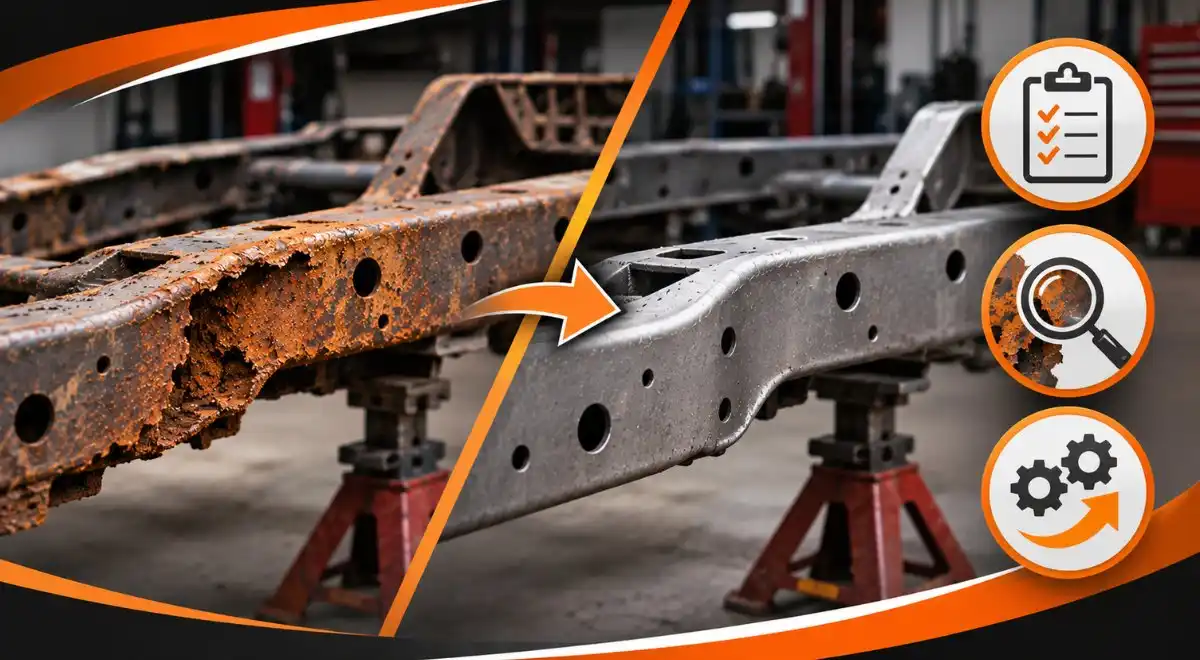
A cap might form part of a sound repair plan, but covering visible rust does not establish that the structure is repaired. If weakened metal remains underneath or around the patch, a neat-looking cover can conceal the condition without resolving it. Likewise, a robust-looking join does not prove the repair is appropriate if the surrounding metal is compromised or the method conflicts with applicable vehicle repair information.
The useful distinction is between a repair that addresses the damaged section and a cover that hides it. A repair explanation should identify what will be cut out, what will replace it, and how the replacement connects to metal judged suitable to retain. It should also identify what is still uncertain. If the shop cannot yet see enough of the frame to answer, ask what inspection step will provide the missing information.
There is no universal yes-or-no answer based on “T-cap” alone. A proposed cap is not automatically unsafe, and its shape is not proof of safety. The decision rests on the specific frame design, the damage found, the repair basis, and checks that can be described after the work.
Inspect the damaged area before choosing a repair
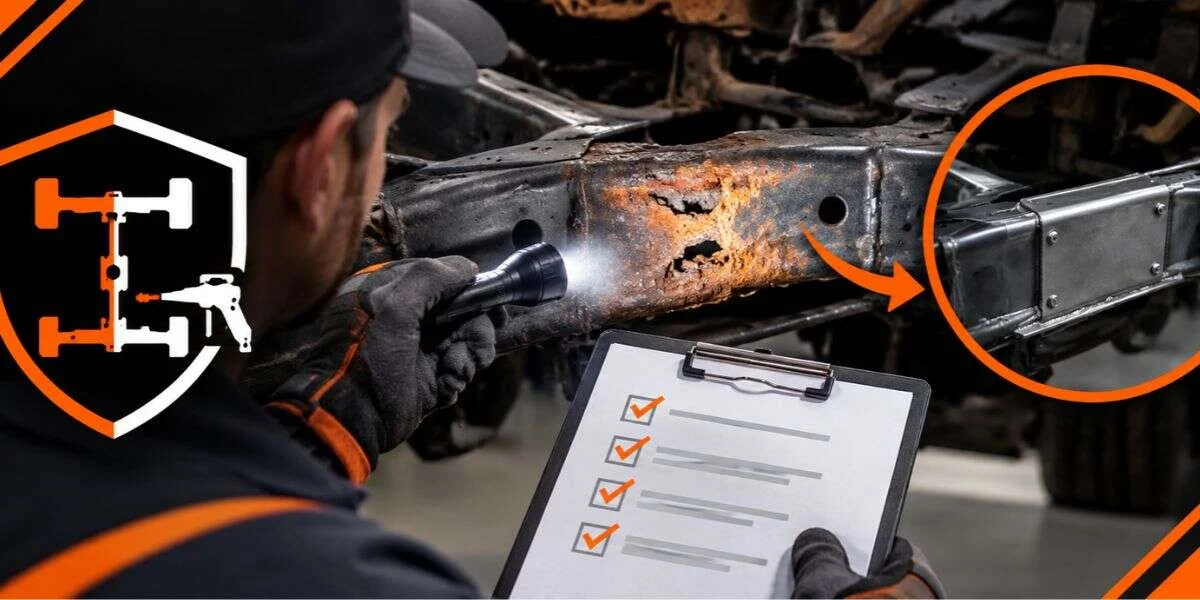
Corrosion can extend beyond the spot that first draws attention. It may continue along a seam, wrap onto another face of the rail, or reach a nearby bracket or connection. A view of the exposed surface may not show what is concealed by coating, accumulated scale, or adjacent parts. The shop should explain what it can inspect now and what, if anything, must be exposed to judge the extent.
Ask for findings about both the damaged area and the metal the proposed repair would rely on. The important question is not simply whether rust is present, but whether the repair can be connected to material the shop considers suitable for that purpose. If the affected area is near a bend, joint, or mounting point, ask the shop to explain how that location changes its assessment and repair plan.
- Location: Is the damage on an accessible, straight section of rail, or close to a bend, seam, joint, or attachment?
- Extent: Does corrosion appear limited to one face, or does it continue around the rail or into adjoining sections?
- Remaining metal: What has the shop observed after exposing the area needed for assessment, and where would the replacement attach?
- Nearby structure: Are connected brackets, crossmembers, body mounts, or other parts also affected?
- Uncertainty: What cannot be assessed yet, and what additional access or inspection would resolve it?
Separate visible rust from confirmed damage
Do not assume that cleaning or removing a coating proves the rail is sound; those steps help reveal a surface, but the repair decision still depends on the condition found. Nor should a shop be expected to name the full repair scope before it has access to concealed areas. A clear estimate can identify what is known, what remains provisional, and which findings could change the recommended work.
For extensive corrosion, frame-off rust removal may be relevant when the vehicle needs broader access for rust removal and assessment. That process is not, by itself, evidence that a particular frame can be repaired or that a T-cap is appropriate. The condition of the exposed structure and the proposed repair method still need to be evaluated for the vehicle in question.
If the area cannot be inspected adequately in its current state, ask whether the shop recommends further disassembly before deciding on a patch. The practical trade-off is between authorizing a defined inspection step and approving a repair whose scope may not match the damage found. Get the shop to explain what additional access is expected to clarify, rather than treating more disassembly as automatically necessary.
Match the proposed method to the vehicle and location
Once the damage is understood, ask what repair information supports the proposed method. The relevant information should apply to the vehicle and repair location; guidance for a different model or a different part of a frame is not automatically transferable. Toyota’s technical-information portal is one example of a manufacturer source for Toyota service information, but it does not establish procedures for other makes or models (Toyota Technical Information System).
If the proposed cap is aftermarket, custom, or otherwise not described in the vehicle’s repair information, ask the shop to say so plainly. Then ask what its alternative method is based on and why it suits the damage found. A shop’s familiarity with a repair is not the same as vehicle-specific support. You do not need to prescribe a joining technique, but you should be able to understand the reasoning behind the one proposed.
Questions that make the scope concrete
Before authorizing work, request a written description detailed enough to compare with what is done. These questions focus on scope and evidence, not on asking the vehicle owner to design the repair:
- What original metal will be removed, and what part or material will replace it?
- Where will the replacement connect to the remaining frame, and how was that area assessed?
- Which vehicle-specific repair information applies, or what is the stated basis for an alternative method?
- What access, disassembly, or additional inspection is needed before the final scope can be confirmed?
- What nearby components need to be moved or protected during the work?
- What will the shop inspect afterward, and what photos or records can it provide?
Ask about nearby fuel-system parts, wiring, brake lines, coatings, or other components if the repair location makes them relevant. Federal Motor Vehicle Safety Standard No. 301 addresses fuel-system integrity under specified conditions; it is not a frame-repair procedure, but it is a reason not to treat nearby fuel-system concerns as incidental (49 CFR § 571.301). Where cutting or welding is proposed, ask how the work area and nearby materials will be handled. OSHA identifies fire hazards as a concern in welding, cutting, and brazing work, so a shop should be able to explain its precautions for the actual job (OSHA welding, cutting, and brazing guidance).
If the shop says it cannot answer until the area is opened, ask whether the initial authorization is for inspection only or includes a repair, and how any change in scope will be approved. Keep inspection findings separate from permission to proceed with additional work. That distinction helps prevent a provisional assessment from being mistaken for a fully defined repair agreement.
Check what the completed repair demonstrates
Before final protective coating is applied, ask whether the shop can show the repaired area and provide photos of the exposed damage and completed work where practical. Photos can document visible stages, but they do not independently certify structural integrity. Ask the shop to explain what was removed, what was installed, and what it checked after completing the repair.
Look for an account of the work, not just a smooth finish. A uniform coating can make an area look tidy while obscuring the repair itself. Ask whether the shop can show the repair before that finish was applied and describe any checks relevant to the location. If the work altered a mounting area or involved a larger section, ask how the fit or position at the affected connections was assessed. The explanation should match the actual scope; a broad claim that the whole vehicle is safe is not a substitute for describing what was inspected.
Keep the repair documentation with the vehicle’s records, especially if you may sell it or if another shop will later inspect or service the frame. Useful records may include the written scope, photos, parts or materials identified by the shop, and a description of the checks performed. These records help a future assessor understand what was repaired, but they do not remove the need to evaluate new corrosion or damage that develops later.
Do not confuse a state inspection with a repair assessment
A vehicle inspection and a detailed assessment of a particular structural repair answer different questions. Massachusetts’ vehicle inspection regulation sets requirements for the state inspection program; a passed inspection should not be treated as proof that a specific T-cap method followed manufacturer repair information or that concealed corrosion is absent (Massachusetts 540 CMR 4.00). If you are buying a vehicle with a frame repair, request the repair records and arrange an independent assessment when the scope or condition remains unclear.
For a buyer, examples worth asking about include a cap that hides the original rail surface, a repair with no record of what was removed, or corrosion close to an attachment that the seller cannot explain. These are prompts for further inspection, not proof by themselves that a vehicle is unsafe. For an owner arranging repairs, the same details help you compare a shop’s written scope with the work it says it completed.
Know when to pause and what to approve
Pause before authorizing the repair if the shop has not assessed the area it plans to cover, cannot explain where the replacement will attach, or presents a custom method as though it were a manufacturer procedure. A second assessment can be useful when corrosion is extensive, the repair approaches an attachment or joint, or older work makes the underlying metal difficult to judge. Ask the second shop to assess the same exposed area and explain any difference in its recommendation.
These examples call for clarification before a decision:
- The proposal says only “install T-cap,” without defining removal, replacement, or the repair area.
- The cap would cover metal whose condition has not been described or assessed.
- The shop cannot identify applicable vehicle information or explain the basis for its alternative method.
- The repair’s scope may change after disassembly, but the approval process is unclear.
- The shop offers photos of the finished coating but cannot explain what it checked beneath it.
By contrast, a plan is easier to evaluate when it identifies the damage, sets out the intended repair, states what information or reasoning supports the method, and explains how the work will be documented and checked. That does not guarantee an outcome; it gives you specific points to verify with the shop before and after the repair.
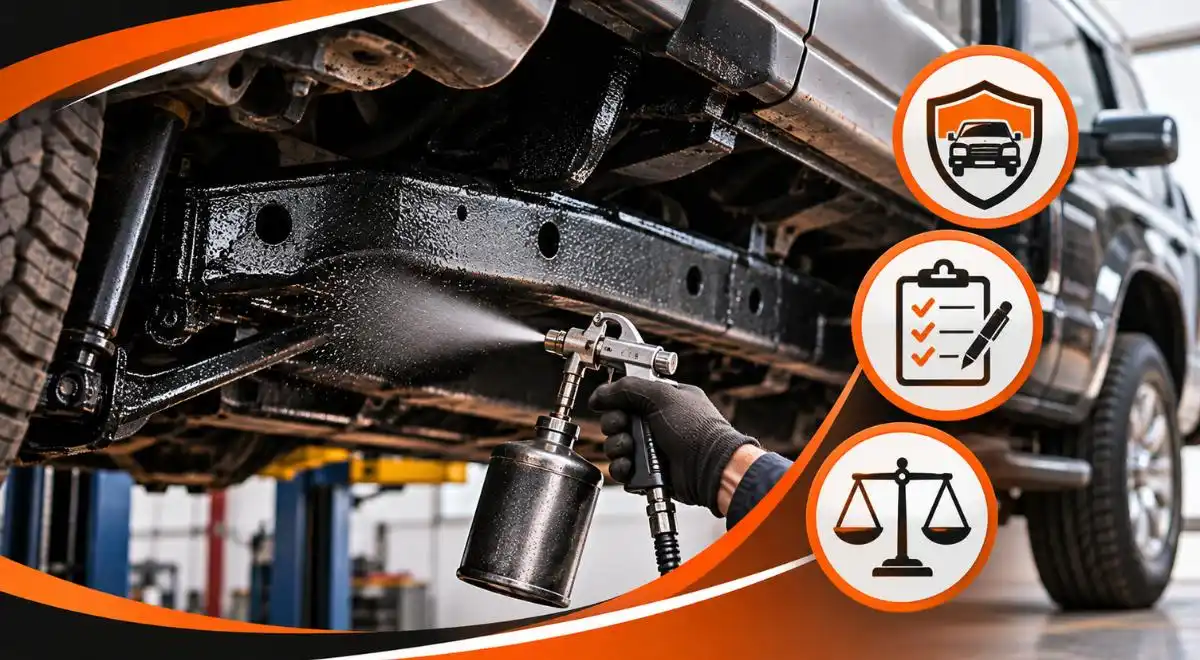
For a rust-damaged vehicle, address the structural condition before treating corrosion protection as a substitute for repair. Once the repair is complete and the relevant surfaces are ready, ask whether rust prevention undercoating is suitable for the vehicle and its condition; protection does not correct weakened metal.
Bay State Rust Prevention’s verified capabilities include vehicle corrosion assessment, frame-off disassembly, sandblasting, and automotive frame repair. To ask whether an assessment fits your vehicle’s condition, contact baystaterustprevention.com.