
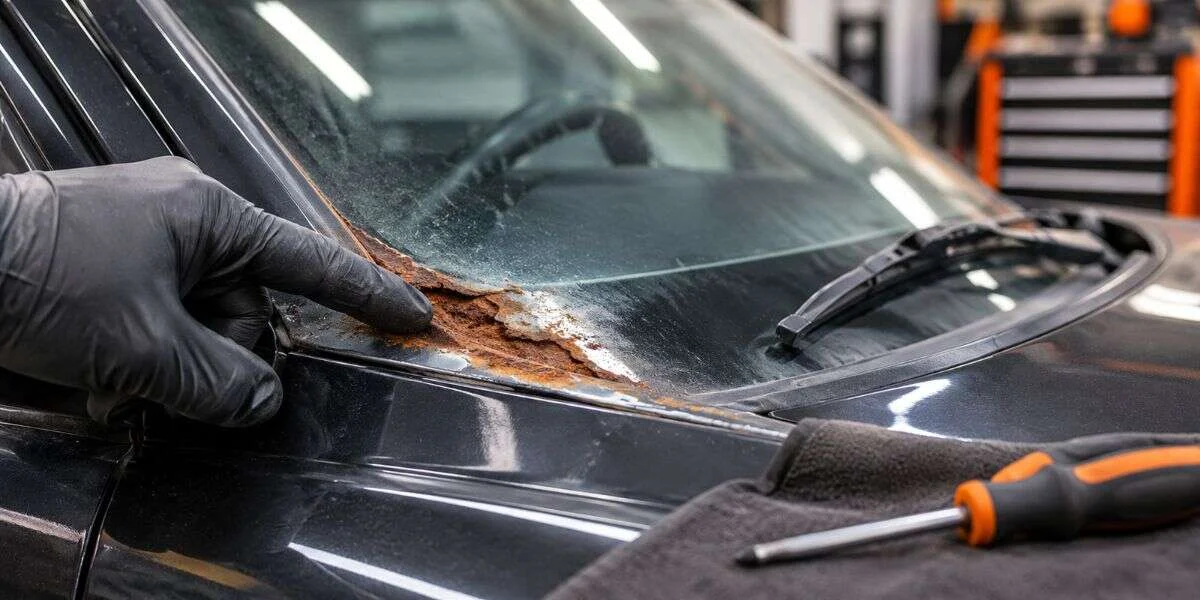

Windshield rust repair depends on where the corrosion is: on removable trim, exposed painted bodywork, or the metal flange beneath the glass. If rust affects that bonding area, the windshield may need to be removed so a repairer can inspect the metal and decide what work is appropriate before reinstalling it. A stain at the edge does not establish which condition applies, so start by documenting what is visible and getting an assessment that separates confirmed damage from what remains concealed.
Rust spreading beyond the windshield frame? See our rust removal and sandblasting service for how the work is done, starting prices and booking.
Identify what is actually rusting
“Rust around the windshield” can describe three different repair problems. A moulding or trim piece may be corroded while the body beneath it is sound. Rust may instead be on exposed painted metal beside the glass. Or corrosion may extend to the flange under the windshield, where the glass is bonded to the vehicle. The location matters more than the stain’s apparent size. A small spot can conceal a larger problem, while a rusty trim part does not, by itself, prove that the bonding surface is corroded.
Look in good light without pulling at trim or probing the glass edge. Record what you can see, and distinguish observations from guesses. For example, “paint is bubbling beside the lower windshield” describes a visible sign; “the flange is rusted through” is a conclusion that requires the metal to be inspected. That distinction helps prevent a preliminary phone or photo assessment from being mistaken for a confirmed diagnosis.
Separate the visible signs from the suspected cause
Photographs can help a repair shop understand where the issue appears, but they cannot reveal metal hidden beneath installed glass or trim. Note whether the sign is staining, flaking, bubbling paint, damaged moulding, or a visible gap. If you know of previous glass replacement or body repair in that area, include that history; it is useful context, not proof of what caused the corrosion.
- Record the location: upper, lower, or side edge, and which side of the vehicle.
- Describe the visible condition, such as chipped paint, bubbling, or loose trim.
- Note any water entry and when it occurs, such as after rain or washing.
- Tell the shop about previous windshield replacement, collision repair, or products applied near the glass.
A damp headliner or wet floor can occur alongside rust, but moisture alone does not identify the entry point. Water may come from another opening or body seam. Finding a leak and repairing corrosion are related, but separate, diagnostic tasks. Ask the shop to explain whether it has identified a water path or whether that still needs investigation.
Choose an inspection that can resolve the uncertainty
An exterior look can locate visible damage; it cannot establish the condition of the flange hidden by the windshield. When a shop proposes glass removal, ask what it needs access to and what the inspection is meant to determine. Removal is most relevant when the suspected damage is under the glass or the repair cannot be planned reliably without seeing the bonding area. Ask for confirmed findings to be separated from possible findings.
Before authorizing disassembly, agree on how the shop will handle a change in scope. The inspection may show that the metal is sound, that corrosion is limited, or that the affected area is more extensive than the visible mark suggested. Ask the shop to pause, explain the newly exposed condition, and get your approval before proceeding with additional work. Photographs or a clear description can make that discussion more concrete.
Questions that make the estimate useful
A useful estimate explains the decision points rather than promising a complete repair based only on a stain. Ask questions such as:
- Where is corrosion confirmed? Is it on trim, exposed body metal, or the bonding flange?
- Why is removal being proposed? What cannot be inspected or repaired with the windshield in place?
- What findings would change the plan? Would sound metal, limited surface corrosion, and perforated metal lead to different work?
- How will added work be approved? Will the shop contact you with the findings before carrying out work beyond the agreed scope?
If a remote estimate depends on inspecting metal beneath the windshield, treat its repair scope as provisional. A photo may help locate the concern but cannot confirm concealed corrosion. A careful estimate should say what has been seen, what remains unknown, and what decision will follow once access is available.
Match the repair to the location and condition
The repair should address the material that is damaged, not just make the edge look better. Ask the shop to explain what it found and how the proposed work responds to that finding. The exact procedure depends on the vehicle and the extent of corrosion, so a generic product recommendation cannot replace an inspection of the affected surface.
Trim or exposed painted bodywork
If inspection confirms that corrosion is confined to removable trim, the work may be limited to that component. If nearby painted metal is affected, the plan should address the condition of the metal and finish rather than simply cover the discoloration. Ask what area will be repaired and refinished, and whether the shop found a moisture source that needs separate attention. Replacing trim is not a substitute for checking the metal beneath it when rust is visible there.
When the bonding flange is confirmed sound, ask whether the proposed bodywork can be completed without disturbing the windshield. That is a repair-scope question for the shop, not something a vehicle owner can settle from the outside. Avoid applying touch-up paint or sealant at the glass edge before the assessment; it can obscure what the repairer needs to inspect.
Corrosion at the bonding flange
If corrosion reaches the flange, the windshield may need to come out to expose the area. The repairer can then judge the extent of the damage and decide what metal work is needed before the glass is installed again. The goal is not merely to clean up the visible edge: the shop needs to assess the surface involved in the glass bond and plan the repair and installation accordingly.
Do not assume that filler, rust converter, paint, undercoating, or extra sealant is suitable for a corroded bonding surface. Those products have different uses, and a coating that may be appropriate elsewhere on a vehicle is not automatically appropriate where glass is bonded. Ask the repairer which preparation and installation procedure applies to your vehicle. The Auto Glass Safety Council provides consumer information about auto glass; use it as general background, not as a diagnosis of your vehicle or a substitute for the shop’s repair plan.
Deep or widespread corrosion
Deep pitting, thinning, or perforation can change the job from surface treatment to metal repair. If damage extends into adjacent body areas, those areas may need assessment too. A small visible spot does not show how much sound metal remains. Ask the repairer to describe the affected area and whether the proposed metal repair will leave the opening suitable for the planned glass installation.
Keep the scope tied to what inspection actually finds. Rust near a windshield does not, by itself, establish that the whole vehicle needs structural restoration. If additional corrosion is identified elsewhere, ask which part is affected and whether that work is necessary for the windshield repair or is a separate decision.
Plan glass removal and reinstallation as one job
When removal is needed, the work involves both the condition of the opening and the reinstallation of the glass. The National Highway Traffic Safety Administration explains the windshield’s safety role in its windshield safety information. Federal FMVSS No. 212 sets windshield-mounting requirements for covered vehicles under specified crash-test conditions. These references explain why installation matters; they do not establish whether a particular vehicle’s flange is sound or prescribe a rust-repair method.
Federal FMVSS No. 205 addresses glazing materials for covered vehicles and equipment. It is not a guide to diagnosing corrosion or repairing a specific opening. For your repair decision, ask what the shop found, what work it performed on the affected metal, and what installation procedure applies to your vehicle. Do not treat a completed glass installation as proof that hidden corrosion was repaired.
At handoff, ask the installer for the instructions that apply to the completed job. Requirements can depend on the vehicle and installation materials, so do not rely on a universal waiting period or general advice found elsewhere. If body repair was also performed, ask whether there are separate care or follow-up instructions for that work.
- Ask for a description of the exposed corrosion and the work completed.
- Keep any photographs, revised estimate, and paperwork the shop provides.
- Get installation-specific driving and aftercare instructions from the installer.
Protect the area while deciding what to do next
Until the shop assesses the concern, do not pry off mouldings, probe the glass edge, or apply household silicone, rust converter, paint, or spray coating around the bond. These actions can hide the condition or complicate later preparation. If you have already applied a product, tell the repairer what it was and where it went. Leave concealed areas for inspection rather than trying to expose them at home.
Arrange a professional assessment when rust appears to continue under the glass, when paint is bubbling beside the edge, or when corrosion looks deeply pitted or perforated. Also mention recurring moisture, corrosion spreading onto adjacent body seams, or glass that appears loose or shifted. These signs do not all prove the same fault; they help the shop decide what needs inspection. If a crack obstructs your view, the glass seems loose, or water entry is substantial, ask a qualified repair shop whether the vehicle is safe to drive.
For Central Massachusetts vehicle owners, keep windshield-opening repair separate from broader rustproofing or frame restoration. Bay State Rust Prevention describes its rust prevention undercoating service and frame-off rust removal work, but those are not substitutes for a windshield-specific inspection or glass installation. If you are considering broader rust prevention or rust-damaged frame work, review what baystaterustprevention.com offers and confirm that the service matches the area you need addressed.