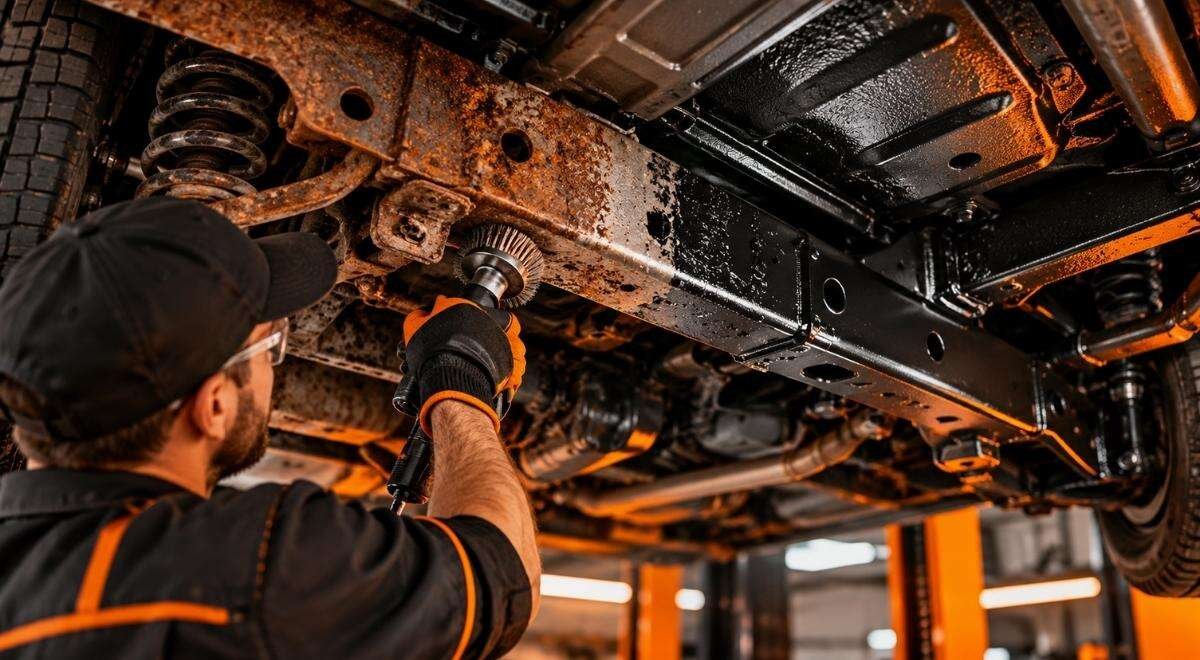
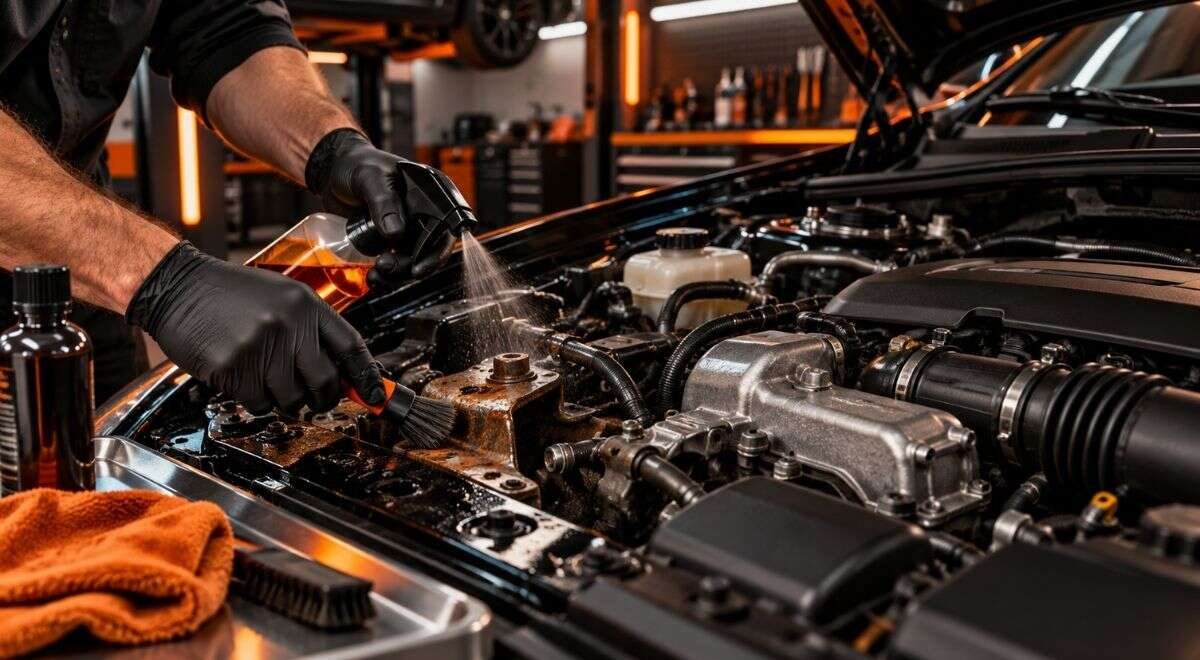
Truck frame rust protection is not just a matter of spraying a dark coating over a dirty chassis. The reliable outcome is a documented process: identify where corrosion is active, determine whether the steel is structurally sound, remove salts and loose rust, prepare the surface for the selected product, and inspect the finished work. For a Central Massachusetts truck, that process can mean the difference between slowing corrosion and sealing contamination against the frame.
This guide gives you a practical sequence for a daily driver, a recently purchased truck, a leased vehicle, a fleet unit, or a restoration project. The promised result is not a universal “rust-proof” label. It is a defensible plan showing what to inspect, what to repair, what to clean, and when to apply protection—with records you can use for future maintenance.
Define the truck’s corrosion problem before choosing a coating
Separate exposure risk from structural damage
Road salt accelerates corrosion because it helps moisture remain conductive on metal surfaces. Massachusetts identifies road salt as an environmental concern, and the U.S. Environmental Protection Agency describes chloride from road salt as a pollutant that can move into water and soil. Those facts do not establish a specific coating life, but they do explain why a truck that is driven through treated winter roads deserves more than a visual inspection of its painted body panels. See the Massachusetts road-salt information and the EPA road-salt overview.
Start by identifying the truck’s use pattern. A low-mileage classic stored indoors has different priorities from a work truck that carries equipment through slush every week. A leased pickup may justify accessible protection and careful documentation rather than extensive disassembly. A fleet vehicle needs a repeatable inspection schedule. A restoration may need the frame stripped completely before any protective product is selected.
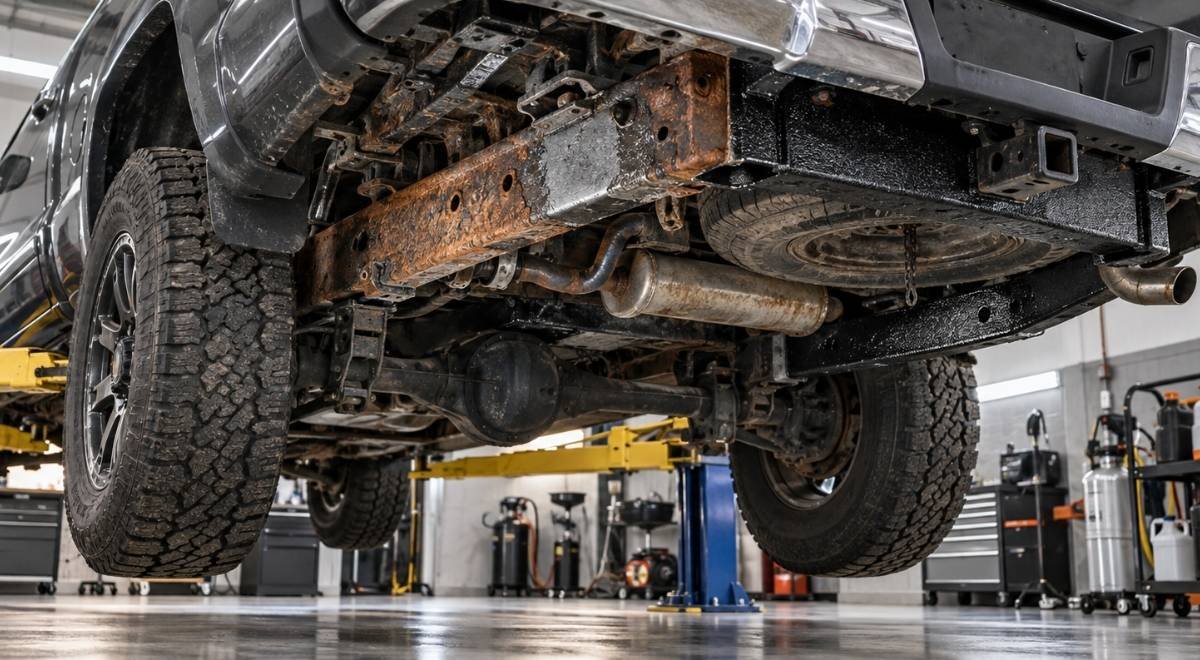
Do not treat surface rust and weakened steel as the same problem. A coating can reduce contact with water and oxygen; it cannot rebuild a perforated rail, restore lost thickness, or make a cracked weld safe. Look especially at frame rails, crossmembers, spring and control-arm mounting areas, steering and suspension attachment points, body mounts, brake-line brackets, and boxed sections where wet debris can remain hidden.
Build an evidence set
Before washing or scraping, photograph the frame from both sides and record the truck’s mileage, use, and recent repairs. Mark each observation as one of four conditions:
- Clean or lightly oxidized steel: discoloration or thin oxidation without measurable section loss.
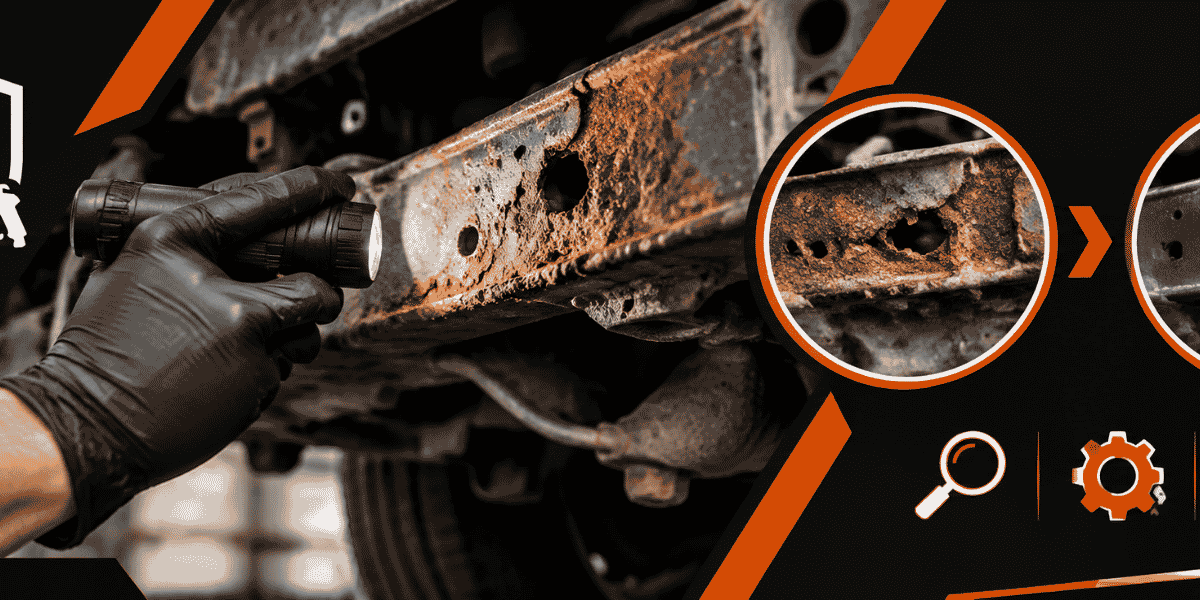
- Scaly corrosion: layered rust that may conceal deeper pitting.
- Perforation or thinning: holes, soft edges, distorted brackets, or a visibly reduced section.
- Contaminated surface: grease, undercoating, mud, salt residue, flaking paint, or an unknown previous coating.
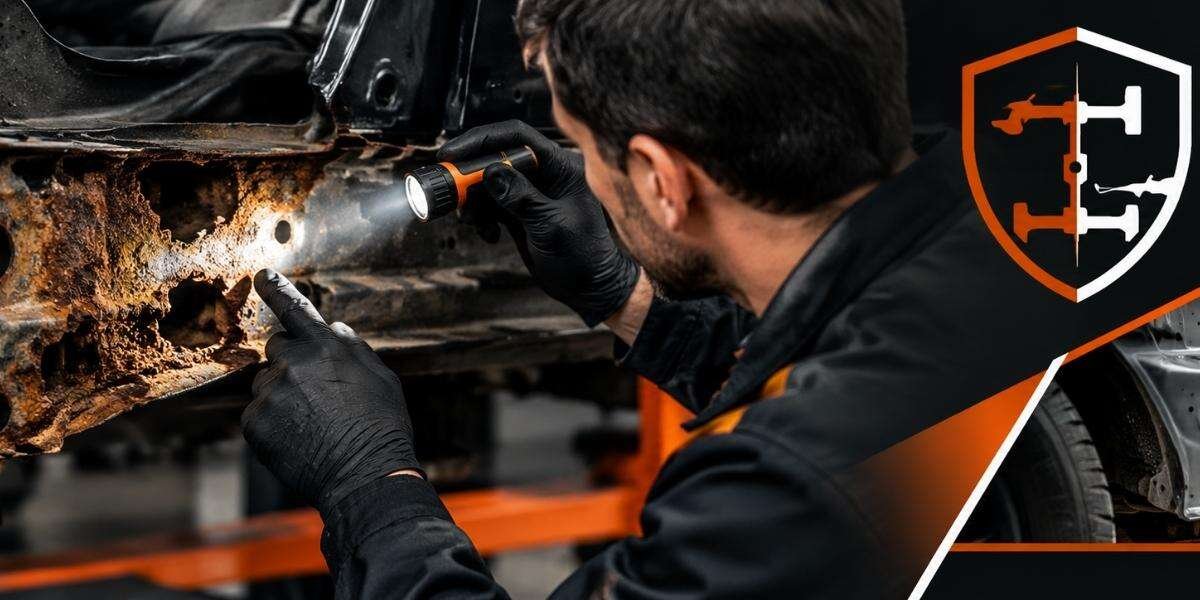
Use a bright inspection light and a blunt pick only where safe and appropriate; avoid striking a frame aggressively or probing near fuel, brake, electrical, or hydraulic components. If a rail, suspension mount, or steering attachment has questionable thickness, stop the preservation plan and obtain an inspection by a qualified repair professional.
| Observation | Likely next decision | Do not do yet | Record for the file |
|---|---|---|---|
| Dry surface rust with intact edges | Clean, mechanically prepare, and select a compatible protective system | Do not bury loose scale under coating | Photos, location, product history |
| Heavy scale around a mount or crossmember | Expose the steel and evaluate thickness before preservation | Do not assume a hard coating makes it structural | Close-up photos and inspection notes |
| Perforation, cracking, or distorted bracket | Plan repair or replacement before final coating | Do not spray over the defect to make it less visible | Repair scope and approval |
| Grease, salt, mud, or unknown old coating | Choose a cleaning and removal method compatible with the substrate | Do not judge adhesion from appearance alone | Contaminant type and affected areas |
The table is an implementation aid, not a substitute for a structural assessment. The first decision is always condition, not product.
Choose the right level of disassembly and access
Work from the intended finish backward
Access controls quality. A truck that remains assembled may receive useful protection on exposed rails and cavities, but hidden surfaces behind brackets, skid plates, crossmembers, and body mounts can remain untreated. A frame-off project provides better access but also creates more responsibility: every removed fastener, brake line, clip, and ground strap must be identified and safely restored.
Use three practical work levels:
- Routine underbody service: wheels, shields, and selected components are removed so the accessible frame and suspension areas can be cleaned and protected.
- Targeted corrosion repair: affected brackets, sections, or components are removed or opened far enough to inspect steel and complete repairs.
- Frame-off restoration: the body and major components are separated from the frame so corrosion removal, inspection, welding, and coating can be coordinated as one project.
For a daily-driven truck, the best choice is often the least disassembly that still gives a technician a clear line of sight and a clean spray path. For a classic vehicle or a frame with extensive scale, saving labor by leaving the body in place can produce a poor result in exactly the areas that matter most.
Protect adjacent systems before cleaning
Make a component map before pressure washing, blasting, or applying a liquid product. Identify fuel tanks, filler hoses, brake components, electrical connectors, sensors, rubber bushings, exhaust parts, air intakes, and drain openings. A method that is appropriate for bare steel may be inappropriate for a connector, seal, or soft line.
- Confirm how the truck will be supported and how the frame will be accessed.
- Remove loose shields and packed debris that block inspection.
- Cover or isolate components that cannot tolerate the chosen cleaning method.
- Keep drain paths open; do not fill factory weep holes with coating.
- Label disconnected wiring, hoses, brackets, and fasteners before removal.
- Plan how waste water, abrasive, rust debris, and contaminated material will be collected.
For abrasive blasting, worker protection is not optional. OSHA’s abrasive-blasting safety guidance addresses hazards such as dust, noise, pressure, and abrasive exposure. That source supports safe process planning; it does not determine which coating belongs on your particular frame.
Access is part of the treatment specification. If a product cannot reach a cavity, seam, or back side, record that limitation rather than implying the entire frame received equal protection.
Remove salt, grease, scale, and failed coatings in a controlled order
Clean first, abrade second
Rust removal starts with identifying what is sitting on top of the steel. Road film, petroleum residue, old wax, loose paint, and chloride deposits can interfere with both visual inspection and adhesion. Begin with a cleaning method suitable for the truck and the waste stream, then allow the surface to dry sufficiently for inspection. Do not use a blasting step to compensate for heavy grease; abrasive media can spread contamination and obscure the actual condition of the metal.
After degreasing and washing, use the least aggressive method that can expose sound steel. Scrapers and wire tools may be appropriate for loose scale. Mechanical abrasion can prepare localized areas. Blasting may be more efficient when corrosion is widespread or old coatings conceal the frame, but the operator must control media, pressure, access, dust, and the risk of removing sound material from thin sections.
Blasting is a preparation method, not a repair method. It can reveal a hole that was hidden by scale, but it cannot replace missing steel. It can also make a weak bracket look cleaner without making it stronger. Inspect again after cleaning, because the post-removal condition—not the pre-cleaning appearance—should govern the repair decision.
Use the surface-preparation standard for the selected system
Do not choose a “clean enough” appearance by eye alone. The coating manufacturer’s technical data should specify the permitted surface condition, profile, cleanliness, temperature, humidity, and recoat or overcoat requirements. AMPP maintains standards and technical resources for protective coatings and surface preparation; its standards page is a useful reference point for understanding why preparation is treated as a defined process rather than a visual preference.
Illustrative starting policy: after cleaning, require a second inspection under strong lighting and document every area where scale remains. Adjust that policy when the product data sheet requires a different profile, when the steel is thin, or when the frame contains seams and cavities that cannot be prepared with the same method. The signal to adjust is the specification and the actual substrate condition, not a calendar deadline.
For a frame-off project, a useful handoff record includes:
- Cleaning and removal method used.
- Areas that were blasted, mechanically abraded, or left intact.
- Any exposed holes, cracks, thin sections, or questionable welds.
- Residual contamination or inaccessible cavities.
- Photos taken immediately after preparation.
- Product technical data reviewed before protection begins.
Bay State’s frame-off rust removal service is relevant when the frame needs broad corrosion removal before repair or coating. The important point is not the name of the method; it is the documented transition from contaminated, unstable material to a surface that can be inspected and treated.
Repair structural defects before applying Truck Frame Rust Protection
Decide whether the frame needs preservation, repair, or replacement
Once scale and old coatings are removed, classify the steel again. A shallow pit on a noncritical surface may be a preservation issue. A hole in a frame rail, a separated seam, a cracked suspension bracket, or a heavily thinned mounting area is a repair issue. A component that cannot be restored to a safe condition may need replacement.
For owners evaluating a used truck, this is the stage where a low asking price can become misleading. Ask to see the frame after loose scale is removed, not just a freshly coated underbody. For fleet managers, a consistent defect code—monitor, repair, or remove from service—helps prevent individual operators from making different judgments about similar damage.
Never use coating to conceal a structural decision. A repair area should remain identifiable in the records, and the final protection should not prevent future inspection of a weld, replacement section, drain opening, or fastener interface.
Coordinate welding and coating compatibility
Protection should follow structural work, not precede it. Welding over unknown coatings can create fumes, contamination, poor weld quality, or an unsafe work condition. Remove coatings from the immediate repair zone according to the repairer’s procedure, complete the repair, inspect it, and then prepare the repaired steel for the selected corrosion system.
A practical repair handoff should state:
- Which parts are being repaired or replaced.
- Whether the repair requires access from one or both sides.
- Where welds, seams, and heat-affected areas will be inspected.
- Which surfaces must remain free of coating for assembly or grounding.
- How cavities will be protected after welding.
- What documentation the owner receives before final coating.
Illustrative starting policy: require photographs of every repaired area before it is covered. Adjust the policy upward for a restoration, a fleet vehicle with heavy duty cycles, or a repair that affects steering, suspension, or body mounting. The signal is the safety consequence and future inspection need, not the vehicle’s age alone.
Select and apply a compatible protection system
Match the product to the surface and the maintenance plan
A protective system should be selected after the frame’s condition and preparation method are known. Consider whether the product is intended for bare prepared steel, painted surfaces, cavities, seams, or previously coated areas. Consider how it behaves around drain holes, fasteners, rubber components, exhaust heat, and future repairs. A product that is useful inside a cavity may not be appropriate on a hot exhaust-adjacent surface or a friction interface.
Bay State uses WaxOyl for corrosion protection, but the correct application still depends on the product’s instructions and the prepared substrate. Refer to the product’s current technical information for application conditions and compatibility rather than assuming that one product can be applied identically to every truck, coating, or repair area.
Coverage is not the same as protection. A heavy layer over salt, loose scale, or trapped moisture may create a false sense of completion. Conversely, an excessively thick application can obstruct inspection, close a drain, or complicate a future repair. The target is a continuous, compatible film on a properly prepared surface, with cavities and seams addressed according to the system’s design.
Control timing by technical requirements and actual steel condition
Do not promise that clean blasted steel must be coated “the same working day.” Flash rust can develop at different rates depending on the blasting media, steel temperature, humidity, dew point, residual salts, ventilation, and the time the truck sits before coating. Some systems require a particular window; others require a specified cleanliness or re-preparation if oxidation appears.
Illustrative starting policy: inspect prepared steel at the beginning of each shift and immediately before coating. Adjust the interval when the technical data sheet sets a shorter window, when humidity or condensation changes, or when any visible flash rust appears. The trigger is the coating specification and the metal’s condition—not an arbitrary same-day rule.
Before application, verify:
- The selected product is compatible with the prepared surface and any remaining sound coating.
- The steel is free of visible loose rust, grease, mud, and wash residue.
- Drain holes and service interfaces are identified and protected from blockage.
- The application equipment can reach the intended cavities and back sides.
- Temperature, humidity, ventilation, and cure conditions meet the product instructions.
- Overspray controls protect brakes, tires, exhaust parts, wiring, and work surfaces.
For a leased vehicle, photograph the work and retain the product name, lot or batch information when available, preparation notes, and areas that were inaccessible. For a fleet, use the same inspection form at each service so coating loss and new corrosion can be distinguished from incomplete original coverage.
Create a maintenance and inspection loop that catches failure early
Make the next inspection easier than the first
Rust prevention is a maintenance decision, not a one-time visual transformation. After winter use, rinse salt from accessible underbody areas without forcing debris into sensitive openings. Inspect when the frame is dry enough to distinguish wet dirt from coating loss. Look for bare metal at edges, new flaking, damaged coating around fasteners, packed debris, blocked drains, and corrosion returning from seams or cavities.
The vehicle’s use should determine the inspection frequency. A truck that tows on salted roads, travels gravel routes, or carries wet landscaping material needs a different schedule from a summer-only collector vehicle. A fleet can tie inspection to an existing service event. A private owner can use seasonal changes as reminders. Avoid presenting any single interval as a universal rule.
Illustrative starting policy: inspect at the beginning and end of each winter season, then shorten the interval after severe salt exposure, off-road damage, or any repair that disturbed the coating. Extend it only when the vehicle is stored, lightly used, and repeatedly documented in sound condition. New damage, coating lift, or trapped debris is the signal to inspect sooner.
Use a simple decision log
Keep the original photographs with later images taken from similar angles. Record whether a finding is cosmetic, maintenance-related, or structural. This helps a used-truck buyer compare claims with evidence, gives a restoration shop a clear handoff, and helps a fleet manager decide whether a vehicle needs routine service or removal from operation.
| Inspection finding | Action | Escalation signal |
|---|---|---|
| Minor coating scuff with sound steel | Clean, prepare locally, and restore compatible protection | Repeated scuffs in the same operating area |
| Coating lifting at a seam | Remove the failed area and investigate beneath it | Moisture, scale, or salt trapped under the film |
| New rust around a repaired mount | Reinspect the repair and preparation before recoating | Cracking, movement, distortion, or section loss |
| Packed mud or blocked drain | Remove debris and restore drainage | Persistent wetness inside a cavity |
For owners seeking broader service information, Bay State’s rust prevention undercoating page explains the site’s rust-prevention focus. Use that information as part of a conversation about the truck’s condition, access, preparation, and maintenance—not as a replacement for inspecting the actual frame.
What to do first: book a condition-based frame inspection
Bring the right information to the first appointment
Start by photographing the truck’s frame, noting where it is driven, and listing any previous undercoating, blasting, welding, or frame repairs. Do not apply a new product immediately if you cannot identify what is underneath. Ask for the frame to be assessed in the order described here: access, cleaning, structural condition, preparation, compatible protection, and follow-up documentation.
- Record the truck’s year, use, storage conditions, and winter-road exposure.
- Photograph rails, crossmembers, mounts, brackets, seams, and suspicious scale.
- Separate visible surface rust from areas that may be structurally weakened.
- Choose routine access, targeted repair, or frame-off work based on what must be inspected.
- Obtain the selected product’s current preparation and application requirements.
- Set a maintenance reminder based on exposure and the first follow-up inspection.
That sequence is the safest starting point for a new truck, a used-car evaluation, a leased vehicle, a work fleet, or a restoration. It avoids the two costly shortcuts: coating over an unknown defect and delaying protection while assuming a fixed calendar rule applies to every freshly prepared frame.
Bay State Rust Prevention serves Worcester and Central Massachusetts with rust prevention undercoating, rust removal, frame-off sandblasting, and frame repair; if the inspection shows that preparation or structural restoration is beyond a routine home service, baystaterustprevention.com is a sensible next step.