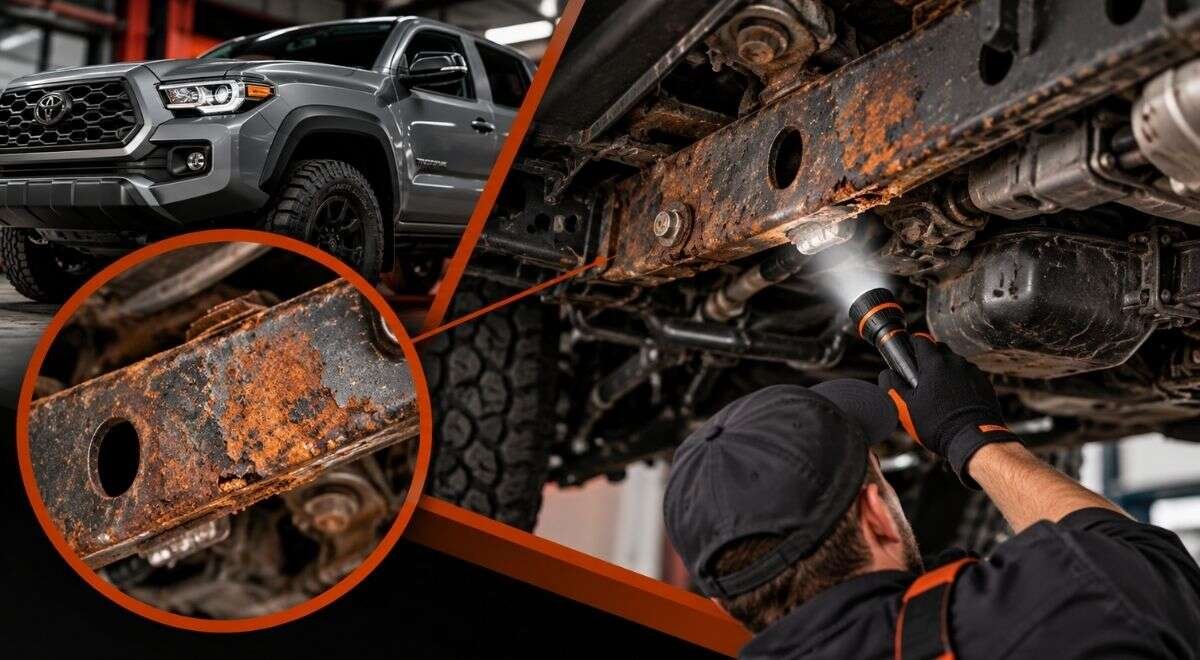
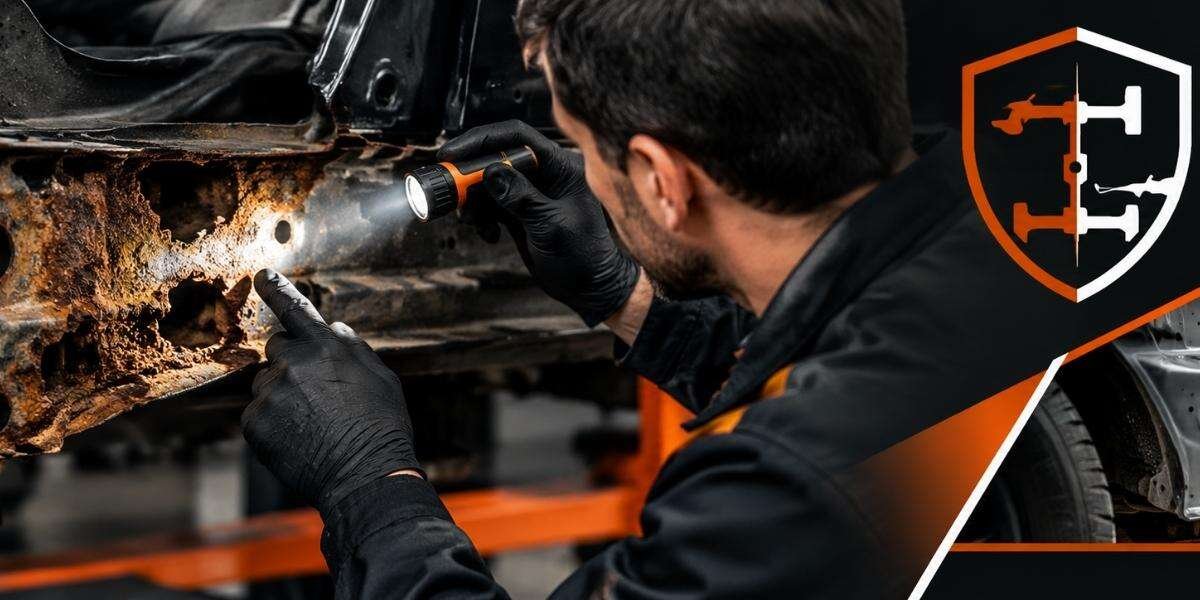
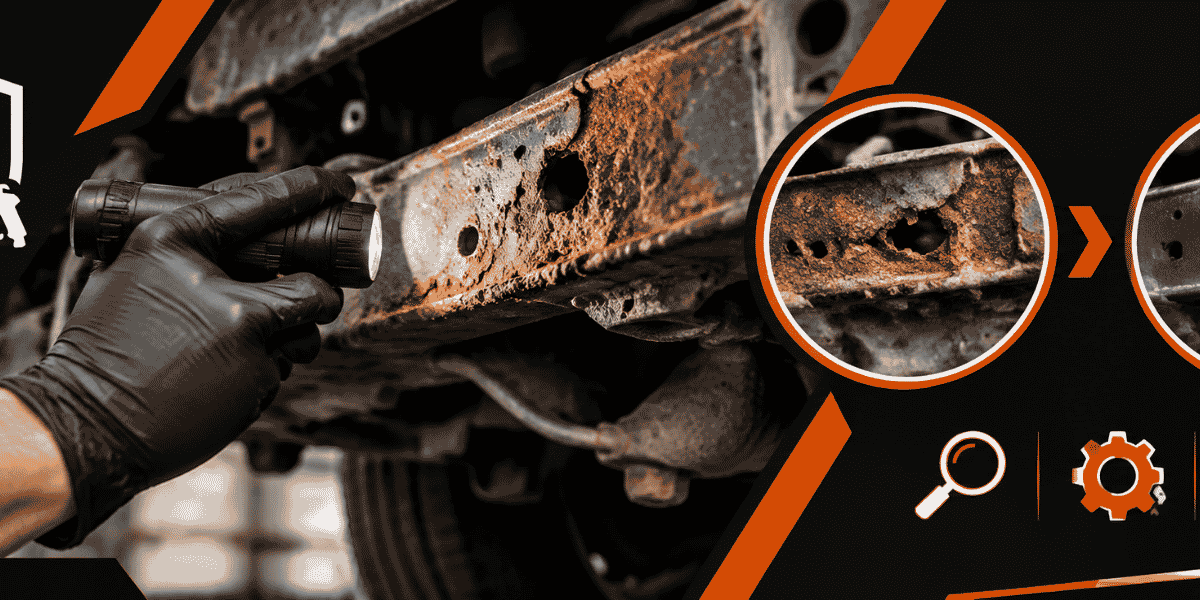
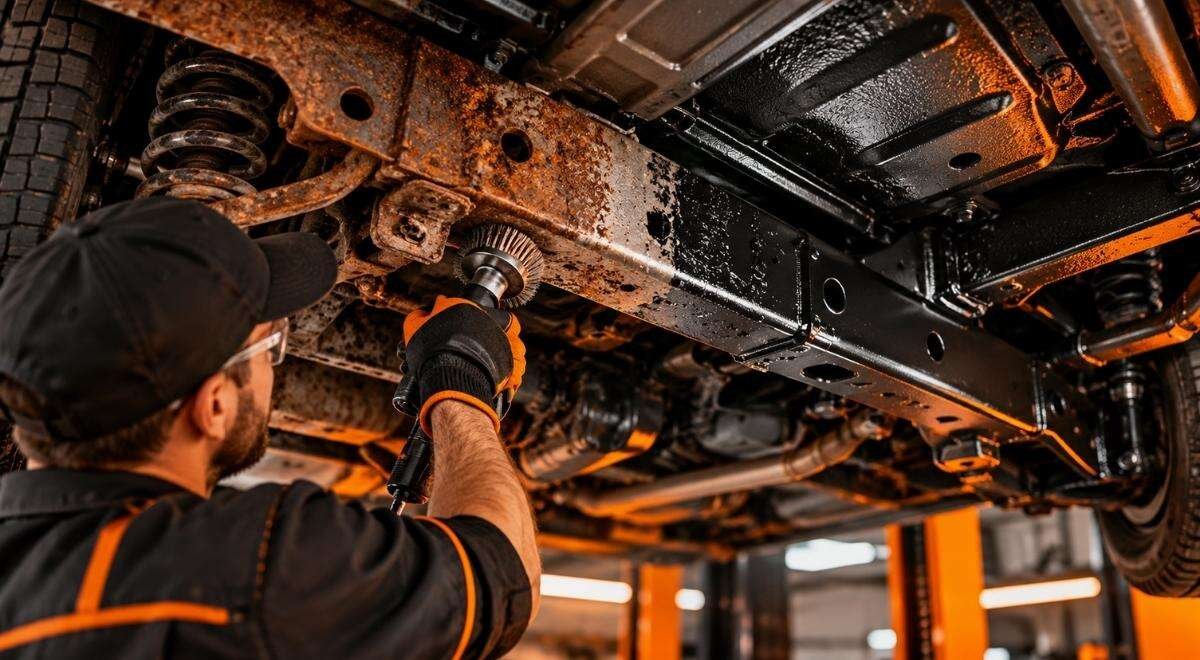
A Toyota Tacoma frame rust inspection should answer two questions: is the corrosion limited to the surface, or is it affecting the frame or attached components? Start with a safe visual check, photograph anything concerning, and have a qualified shop inspect questionable areas on a lift before buying, coating, or repairing the truck. This guide gives you an ordered checklist and a way to decide what to do next.
Prepare the truck and your inspection notes
Make the inspection safe and repeatable
Park on firm, level ground, let hot components cool, and use a flashlight, phone camera, and a blunt inspection tool such as a plastic trim tool. Do not crawl under a truck held up only by a jack. If you cannot see the frame safely from the ground, ask a shop with suitable lifting equipment to inspect it.
Before looking underneath, record the VIN, mileage, model year, and any known repairs or undercoating. Take a wide photo of each side, then closer photos of suspicious spots with nearby components in view. Keep the surface condition visible; thick dirt, fresh paint, or a recent coating can conceal details. Do not chip, drill, or aggressively scrape the frame to “test” it.
- Bring a light, phone, and notes or a simple inspection form.
- Photograph both frame rails, crossmembers, body mounts, and suspension attachment points where visible.
- Mark each concern by location, such as “left rear spring hanger” rather than “rust underneath.”
- Note whether the area is dry, wet, oily, freshly coated, or covered in packed debris.
Check the frame from front to rear
Follow the structure, not just the easiest-to-see surfaces
View each frame rail from front to rear, then check crossmembers and the places where major components connect. Pay particular attention to seams, bends, brackets, and boxed sections: moisture and road debris can collect at joints, while layered corrosion may be less obvious on a broad flat surface. Look around body mounts, suspension mounting areas, and accessible brake or fuel lines without pulling parts off.
Scan for loose scale, swelling at seams, holes, cracking, distorted metal, separated joints, and repairs that do not appear properly joined. A small patch of orange discoloration is not, by itself, proof of structural damage. Conversely, a dark coating does not establish that the metal underneath is sound. Location and metal condition matter more than color alone.
- Compare similar locations on the left and right sides.
- Look for flaking layers or raised seams, not only surface discoloration.
- Check whether brackets and mounts appear firmly attached and aligned.
- Do not treat a visual inspection as confirmation that hidden frame cavities are clear.
Sort findings by urgency
Separate surface corrosion from a structural concern
Use this table to decide what to do next, not to certify the truck as safe. The condition may vary across a frame, and a shop may need to clean or inspect an area more closely before making a repair recommendation.
| Finding | What it may indicate | Next step |
|---|---|---|
| Thin, uniform discoloration with no visible scaling or distortion | Surface corrosion may be present, but visual appearance alone cannot establish remaining metal strength. | Document it and arrange a closer inspection if the truck’s history or use raises concern. |
| Flaking scale, swollen seams, or corrosion around a mount | Corrosion may be progressing beneath the visible surface or affecting a connection. | Have a qualified technician inspect the area before applying a coating or buying the truck. |
| Perforation, cracked metal, a loose attachment, or a visibly distorted frame section | Possible structural damage requiring professional assessment. | Do not assume it is safe to drive or repair; ask a qualified repair shop to assess it promptly. |
| Fresh coating, patching, or heavy packed debris over a suspicious area | The underlying condition is difficult to evaluate from the available view. | Request documentation and an inspection with appropriate access before making a decision. |
Escalate uncertainty, not just obvious holes. A shop can determine whether cleaning is needed to assess the metal and whether repair is appropriate. If the frame needs substantial corrosion removal before evaluation or restoration, see the process for frame-off rust removal.
Verify recalls and ask about other VIN-specific programs
Do not assume a recall lookup shows every available remedy
Check the truck’s VIN through both NHTSA’s recall lookup and Toyota’s recall page. These are useful checks for open safety recalls, but a clear result does not establish that the frame is corrosion-free or that no other assistance applies. A recall lookup is not a frame inspection.
Also ask Toyota customer support or a Toyota dealer whether any model-year-specific service campaign or customer-support program applies to that VIN. Not every service or support program appears as a recall, so ask directly and request the answer in writing when it affects a purchase or repair decision. Keep the VIN, lookup date, dealer response, and any repair records together.
For a used-truck purchase, make the VIN check and an independent underbody inspection separate conditions of your decision. A seller’s statement that “the frame was checked” is more useful when supported by dated photos, a written inspection, and the name of the shop that performed it.
Work through a real buying decision
Example: a coated used Tacoma with unclear service history
Suppose you are considering a Tacoma that looks clean from the side, but its underside has a dark coating and the seller cannot provide repair records. Do not conclude that the coating proves rust protection worked—or that it proves rust was hidden. Ask for the VIN, run both recall lookups, and contact Toyota or a dealer about applicable campaigns or customer-support programs.
Next, ask an independent shop to inspect the frame, mounts, and accessible lines with safe lift access. Give the technician your photos and ask for findings by location, including whether the coating obstructed the assessment. If the shop identifies scaling at a suspension attachment, make the purchase decision depend on a documented professional evaluation and repair plan rather than a general “looks okay.”
This approach is useful for fleet managers too: recording the VIN, photos, location, and recommended action for each truck makes it easier to compare inspections over time. If a corrosion concern is confirmed, ask whether the affected metal can be restored safely or whether repair or replacement is needed before planning preventive treatment.
Choose the next action before applying protection
Repair first when the frame condition is uncertain
Do not use undercoating to cover loose scale, a hole, or an area that has not been assessed. Coating is a preventive step for a suitable surface, not a substitute for structural repair. A qualified shop should identify what cleaning and preparation are needed, then explain which areas can be protected and which require repair.
Once the frame is sound and properly prepared, consider a corrosion-protection plan suited to the truck’s condition and use. Bay State Rust Prevention provides rust prevention undercoating using WaxOyl, along with rust removal and frame repair for vehicles in Worcester and Central Massachusetts. Ask what preparation is included and how existing corrosion will be handled before authorizing treatment.
- Surface condition unclear: get a lift inspection before coating.
- Possible structural damage: request a repair assessment before driving or buying.
- Sound, prepared metal: discuss preventive protection and future inspection access.
- Work completed: keep photos, the invoice, and the treated-area details with the vehicle records.
Start by photographing the frame and checking the VIN
First, record the VIN and take clear photos of the visible frame and attachment points; then check for recalls and ask Toyota or a dealer about any VIN-specific service campaign or customer-support program. If you see scaling, swelling, perforation, or a coating that prevents assessment, arrange a qualified lift inspection before buying or applying protection. For rust removal, frame repair, or WaxOyl protection in Central Massachusetts, contact Bay State Rust Prevention through its website at baystaterustprevention.com to request an assessment and discuss the right next step for your truck.