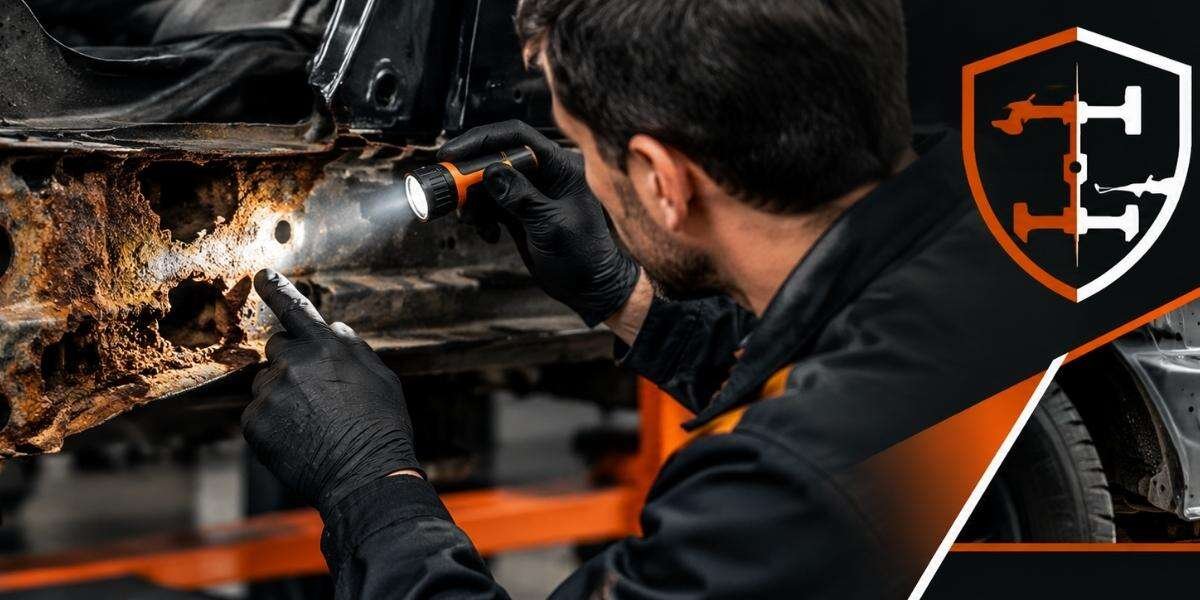
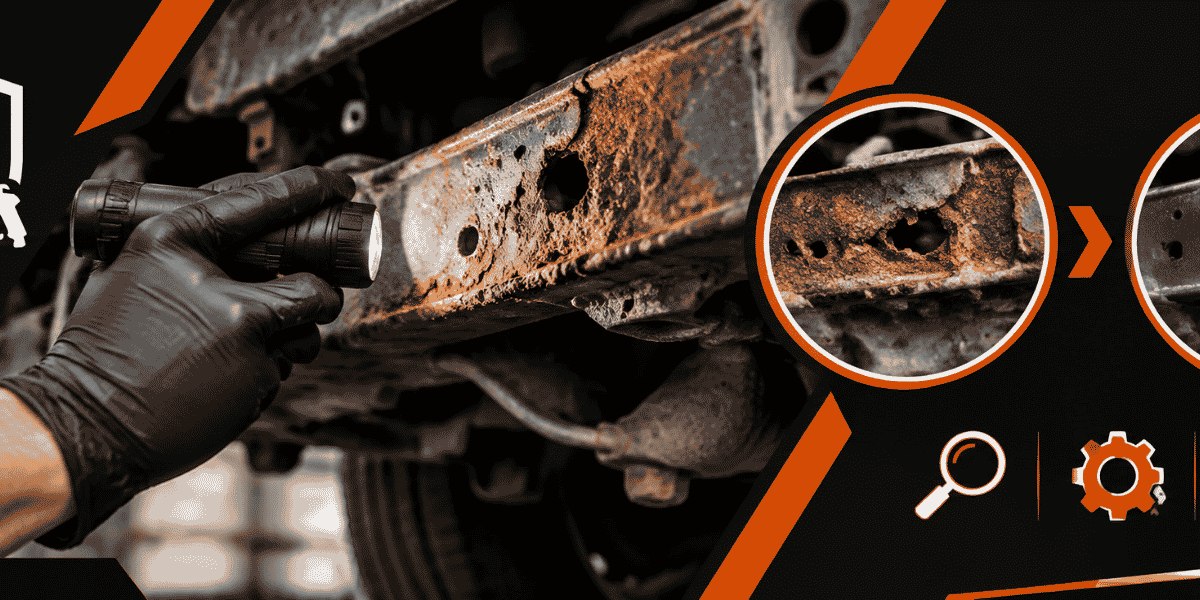
Frame rail rust repair is the process of evaluating, removing, and structurally rebuilding corrosion in the boxed or open steel rails that carry a vehicle’s suspension, powertrain, body, and towing loads. It is not the same as covering surface rust with paint or applying an undercoating over weakened metal. For a Central Massachusetts truck, passenger car, fleet vehicle, or restoration project, the repair must answer a more important question first: how much load-bearing steel remains, and where has the corrosion changed the rail’s shape?
That distinction matters because a frame can look acceptable from the outside while rust has expanded between overlapping layers, weakened a spring hanger, or opened a perforation on the inside of a boxed section. A lasting repair therefore combines inspection, controlled rust removal, accurate fabrication, welding by a qualified practitioner, and protection of the repaired steel. The right approach depends on the rail’s geometry, the location of the damage, the vehicle’s construction, and whether the vehicle is being driven, restored, or used for work.
What Frame Rail Rust Repair actually includes
A frame rail is a primary structural member, usually running longitudinally beneath the vehicle. On a body-on-frame truck, the rails are visible beneath the cab and bed and connect with crossmembers, suspension brackets, steering mounts, and sometimes towing equipment. On a unibody car, the equivalent rails are integrated into the floor and front or rear structure. In either design, the rail is not merely a platform for body panels. Its cross-section gives it resistance to bending, twisting, and local crushing.
Rust repair begins with a structural diagnosis, not a choice of coating. The technician needs to establish whether the problem is:
- Surface oxidation: discoloration, scale, or light pitting with sound steel beneath it.
- Layer corrosion: rust lifting a flange, seam, bracket, or overlapping sheet from between the layers.
- Perforation: a hole or a thin area that can no longer carry its intended load reliably.
- Section loss: enough missing metal that the original rail shape, bracket support, or cross-sectional strength has been compromised.
- Deformation: a rail bent, buckled, crushed, or stretched by an impact in addition to corrosion.
Why a hole is not the whole diagnosis
A visible opening is often the end of a longer process. Road spray enters through drain holes, seams, chipped coatings, and fastener interfaces. In a boxed rail, moisture and salt residue can remain against the inside surface long after the outside appears dry. The rust product occupies more volume than the original steel and can force seams apart. That creates a path for more water, which accelerates corrosion around the opening.
The repair area therefore has to extend beyond the obvious edge. A technician may remove loose scale, coating, and compromised steel until the remaining edge is solid enough to accept a designed patch or replacement section. Cutting only the visible hole leaves the weakest metal in the repair boundary. Conversely, cutting away large sections without a structural plan can remove alignment references and create unnecessary heat distortion.
Frame rails are engineered shapes
A rail’s strength comes from its shape as well as its thickness. A boxed rail, channel, hydroformed rail, or multi-layer section responds differently when steel is removed. A flat patch placed over a curved or boxed section may close the hole but still create a stress concentration, trap moisture, or fail to restore the original load path.
Before metal is cut, the practitioner should identify:
- The rail’s original profile and thickness.
- Nearby crossmembers, body mounts, spring hangers, steering mounts, and brake or fuel lines.
- Factory seams, drain openings, access holes, and reinforcement layers.
- Reference points needed to preserve wheelbase, axle position, ride height, and body alignment.
- Whether the corrosion continues inside the rail or behind a bracket.
For an older truck with a heavily rusted rear rail, the repair may involve a fabricated section, a replacement rail portion, or a frame component sourced for that specific chassis. For a classic vehicle, preserving original geometry and appearance may be as important as restoring strength. For a working fleet truck, access, downtime, and dependable load carrying may dictate a more direct structural replacement.
Why rail corrosion becomes a safety and ownership decision
Corrosion is not automatically a reason to discard a vehicle, but structural corrosion deserves a higher level of caution than fender rust. A weak rail can affect suspension attachment, steering alignment, body mounting, towing behavior, and the way loads move through the chassis. The consequences may not appear during a short unloaded drive. They can become more serious under braking, cornering, a loaded bed, a trailer tongue weight, or an impact.
Do not treat an undercoating inspection as a substitute for structural inspection. A coating can slow exposure on sound steel, but it cannot restore missing metal. A thick layer over scale may also conceal the edges of a perforation. If a vehicle is being considered for purchase, the buyer should ask for the coating to be examined at known corrosion points rather than accepting a recently blackened frame as proof of condition.
The National Highway Traffic Safety Administration explains that a safety recall occurs when a vehicle or equipment creates an unreasonable safety risk or fails to meet a minimum safety standard, and it provides the official VIN lookup for open recalls as of 2026: NHTSA recall lookup. A recall search does not diagnose frame rust, but it is a useful separate check before investing in structural work. The vehicle’s recall status, frame condition, accident history, and repair quality are different questions.
Where Central Massachusetts vehicles take the hardest exposure
Central Massachusetts vehicles commonly see repeated wetting, freezing, thawing, and contact with treated winter roads. Salt residue is particularly persistent where it collects behind liners, above crossmembers, around body mounts, and inside frame cavities. The U.S. Environmental Protection Agency describes road salt as a source of chloride pollution that can move into surface water and groundwater; its 2026 road-salt information is available through the EPA road salt resource. For a vehicle owner, the practical lesson is that winter residue is not harmless dirt that disappears when the pavement dries.
Places worth examining closely include:
- Rear spring hangers and shackle mounts on pickup trucks.
- Front lower rails near bumper mounts, tow hooks, and suspension brackets.
- Crossmember-to-rail joints where mud stays trapped.
- Body mounts beneath the cab, doors, and rear seat area.
- Brake and fuel line clips that hold damp debris against the rail.
- Drain holes and seams where internal corrosion can begin.
Safety changes the decision threshold. A small cosmetic blister on a nonstructural bracket may be a maintenance issue. A perforation beside a spring hanger, steering mount, or suspension attachment is a structural assessment that should be handled before normal use. If the rail flexes, a bracket moves, a jack point collapses, or a mounting bolt has pulled through rusty steel, continuing to drive the vehicle for a second opinion is a poor trade.
Used-car and restoration decisions
A buyer evaluating a rust-prone vehicle should distinguish between repairable corrosion and a chassis that has been repeatedly patched without a coherent structural plan. Warning signs include overlapping plates with irregular edges, welds laid over scale, fresh coating around an otherwise neglected underside, missing drain paths, and mismatched rail shapes from side to side.
For a restoration business, the question is often not “can this spot be welded?” It is “will the completed chassis be straight, inspectable, and serviceable after the repair?” A frame-off project provides better access and may justify extensive cleaning and metal replacement. A daily driver may need a targeted repair that preserves sound surrounding structure while avoiding unnecessary disassembly. Those are different scopes, and the estimate should say which one is being proposed.
How a sound repair is planned and performed
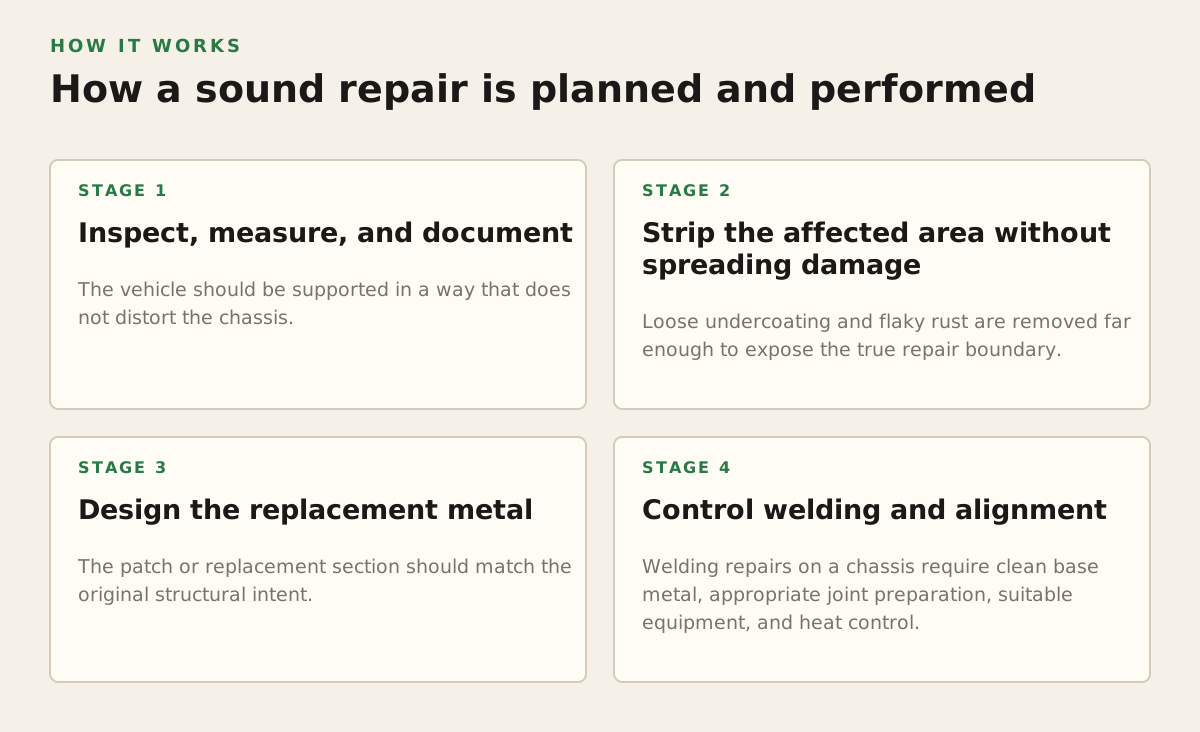
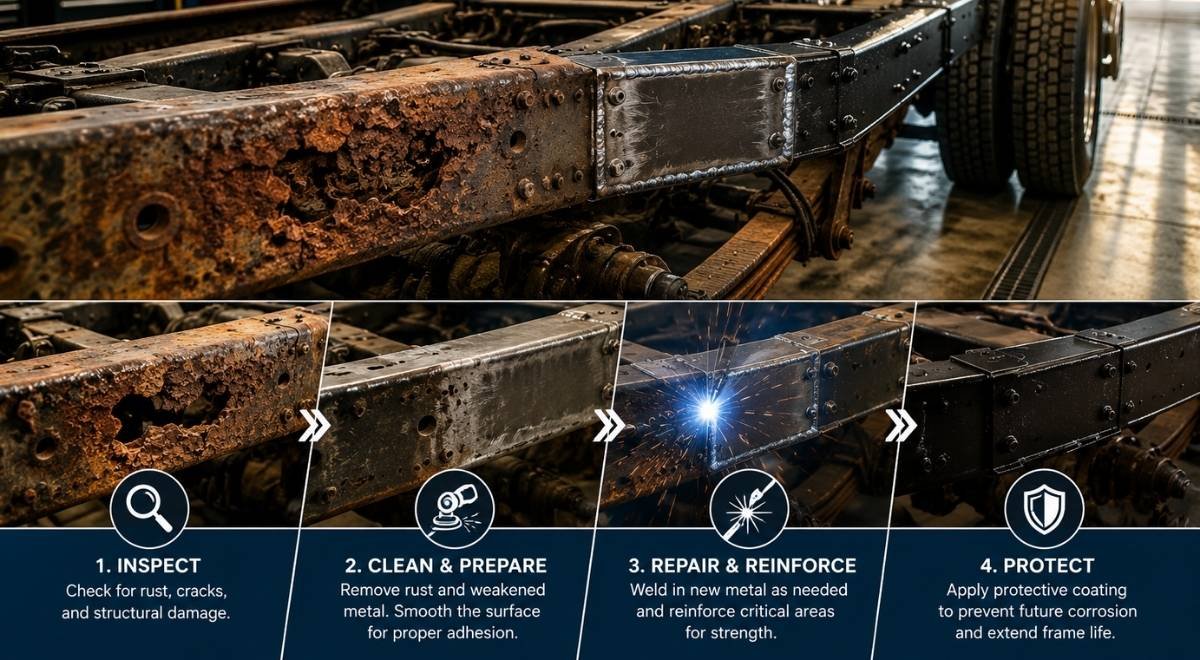
A professional repair is a sequence of decisions. The sequence may change with the vehicle, but skipping a stage usually transfers risk to the next one. Cleaning is part of diagnosis: mud, loose coating, and scale hide boundaries that determine how far the repair must go.
1. Inspect, measure, and document
The vehicle should be supported in a way that does not distort the chassis. The technician records the damaged areas, checks adjacent components, and looks for evidence that the frame is already out of position. Measurements can include diagonal references, mount locations, rail spacing, and the relationship between suspension points. A damaged rail may require a frame machine or dedicated fixture if impact and corrosion are both present.
Inspection should also include the inside of accessible cavities. A probe, borescope, or carefully placed inspection opening can reveal scale on the inner wall. Thickness measurements may help distinguish sound steel from metal that only looks solid because rust scale is holding its shape. Measurements are not a substitute for judgment: a reading taken on a clean island of steel cannot represent a concealed rust pocket beside it.
2. Strip the affected area without spreading damage
Loose undercoating and flaky rust are removed far enough to expose the true repair boundary. Abrasive blasting, mechanical cleaning, needle scaling, or other controlled methods may be selected according to the rail’s condition and the surrounding vehicle. A frame-off project allows substantially better access than a vehicle repaired in place, but either method requires attention to wiring, seals, bearings, brake components, and other parts that should not be contaminated.
Bay State Rust Prevention uses frame-off rust removal for projects where removing the body or major components allows the frame and related parts to be cleaned and assessed more completely. That approach is especially relevant when corrosion is widespread, when hidden surfaces must be reached, or when a restoration requires a consistent finish rather than a small visible repair.
3. Design the replacement metal
The patch or replacement section should match the original structural intent. That does not always mean copying every factory contour, but it does mean preserving the rail’s load path, clearance, drainage, and connection to adjoining members. A patch should have adequate overlap or a properly prepared joint, avoid abrupt corners where stresses concentrate, and not interfere with suspension travel or service access.
Common repair errors include using metal that is too thin, placing a patch over unsound steel, closing a drain opening, and welding a flat plate across a location that needs a formed section. Another error is repairing the rail while ignoring the bracket that transferred the original load. The patch, the joint, and the surrounding rail must be judged as one structure.
4. Control welding and alignment
Welding repairs on a chassis require clean base metal, appropriate joint preparation, suitable equipment, and heat control. The vehicle’s construction, steel type, thickness, and manufacturer repair information matter. A sequence of short welds may reduce distortion compared with one long, concentrated pass, but there is no universal welding pattern that makes an incorrectly designed patch safe.
Before welding, the technician should protect fuel, brake, and electrical systems and establish where heat and sparks can travel. After welding, the repair should be checked for incomplete fusion, undercut, porosity, cracking, distortion, and unintended contact with adjacent components. Grinding a weld smooth for appearance can remove useful material and conceal a defect, so cosmetic finishing must not replace inspection.
The Society of Automotive Engineers publishes J2334, a laboratory cyclic corrosion test procedure for evaluating automotive materials and coatings; the current standard listing is available from SAE International. That type of test can compare corrosion resistance under controlled conditions, but it does not certify a particular frame repair or predict the condition of an individual Massachusetts vehicle. Laboratory corrosion performance and structural repair quality are separate questions.
5. Protect the repaired steel
Once the repair is accepted, the steel needs a coating system suited to the surface and the vehicle’s use. The surface should be clean, dry, and free of residues that prevent adhesion. Seams and joints may need sealing, while cavities require a product that can reach and remain on internal surfaces without blocking drainage.
Protection should be applied as a system:
- Prepare the repaired and surrounding steel to a sound surface.
- Use a compatible primer or corrosion-resistant base where appropriate.
- Seal exposed seams while preserving designed drain paths.
- Apply cavity protection to accessible internal areas.
- Use a durable exterior coating on areas exposed to spray and impact.
- Record what was repaired and leave access for future inspection.
For owners seeking ongoing seasonal protection, rust prevention undercoating can be considered after the frame is clean and structurally sound. WaxOyl is the corrosion-protection product used by Bay State Rust Prevention. It should be viewed as part of a maintenance plan, not as a substitute for removing active scale or rebuilding a weakened rail.
Where frame rail repairs break down
Most poor outcomes are not caused by a lack of enthusiasm. They come from a mismatch between the repair method and the actual failure mechanism. Understanding those failure points helps a vehicle owner ask better questions and helps a repair shop decide when to outsource blasting, fabrication, or frame work.
Covering active rust
Applying coating over loose scale leaves an unstable layer beneath the new finish. Moisture can continue moving through seams and pinholes, and the coating may make later inspection more difficult. A dark, uniform appearance is not evidence that the steel underneath has been restored.
Welding to contaminated or thin metal
Rust, oil, old undercoating, and trapped moisture interfere with a consistent weld. Thin remaining steel can burn away or distort before it forms a useful joint. If the edge crumbles while being cleaned, the repair boundary has not yet reached reliable material.
Using a cosmetic patch at a load point
A plate that looks neat around a hole may still fail to restore the way forces enter a spring hanger, body mount, or crossmember. Load points need enough surrounding structure to distribute force. A repair that makes the hole disappear without restoring that transfer path is cosmetic work wearing structural clothing.
Ignoring the inside of a boxed rail
External cleaning can reveal a clean-looking perimeter while internal corrosion continues. Closing the repair without checking the cavity can trap rust and moisture inside. Where access is limited, the final plan should identify how the cavity will be inspected and protected later.
Creating new corrosion with the repair
Heat damage, bare edges, unsealed overlaps, blocked drains, and incompatible coatings can shorten the life of otherwise sound work. Fasteners and brackets also need attention because a repaired rail connected to a rusted mount may simply move the failure to the next weak point.
Use this practical screening list before approving a repair. The figures below are illustrative examples and starting policies, not universal engineering thresholds:
- Illustrative example: if a rail has one visible opening but loose scale extends several inches around it, inspect and clean the larger area instead of ordering a patch sized only to the opening.
- Illustrative example: if a spring hanger moves relative to the rail during loading, stop treating the issue as surface rust and request a structural evaluation before driving normally.
- Illustrative example: if a recently coated frame shows fresh bubbling along seams, request an inspection of the coating boundary and underlying steel rather than adding another coat.
- Illustrative example: if both rails have similar corrosion and several brackets are affected, compare a broader restoration scope with isolated repairs before beginning fabrication.
- Illustrative example: if a fleet truck operates through every winter, make post-repair inspections part of the maintenance calendar rather than waiting for the next visible hole.
For shops, another limitation is documentation. A customer should receive a clear description of the affected structure, the metal removed, the material added, the areas protected, and any remaining corrosion that was not included. This is useful for future inspections and prevents a later technician from mistaking an old repair plate for factory construction.
How practitioners apply the method to real vehicle decisions
The same corrosion mechanism can lead to different recommendations depending on the vehicle’s purpose. A contractor’s truck, a leased crossover, a collectible muscle car, and a restoration shop’s rolling chassis do not have the same acceptable downtime or repair objective. The best repair scope is the smallest scope that reliably restores the intended structure and leaves the next inspection possible.
Daily drivers and newer vehicles
For a newer truck or car, the first step is usually an underside inspection before corrosion becomes widespread. Owners who drive through Central Massachusetts winters should identify drain holes, wash salt from the underside when practical, and avoid sealing dirty or wet surfaces under a heavy coating. Lease owners should document existing corrosion and ask the leasing company or authorized repair channel about structural damage before modifying the vehicle.
If corrosion is localized and the rail remains dimensionally sound, the work may involve cleaning, limited metal replacement, coating, and cavity protection. If a suspension mount or body mount is affected, the inspection should expand to its surrounding rail and attachment hardware. Repair early when the surrounding structure is still usable; waiting for a larger opening can turn a contained job into a multi-component restoration.
Older pickups, work trucks, and fleets
Work vehicles deserve a repeatable inspection policy because they accumulate salt, mud, payload cycles, and towing loads. A fleet manager can ask technicians to photograph the same frame zones at each service interval and classify them as clean, scaled, perforated, repaired, or awaiting structural evaluation. That creates a trend instead of relying on a driver’s report that the frame “looks rusty.”
- Inspect rails and suspension brackets after winter operations.
- Check around body mounts, crossmembers, and tow equipment.
- Look for changes in ride height, alignment, unusual movement, or cracked coatings.
- Keep repair records tied to the vehicle identification number.
- Schedule corrosion removal before a planned high-load season when possible.
A fleet repair should also consider whether the vehicle can be isolated safely while work proceeds. Repeated spot repairs may be reasonable for a sound chassis with separate localized failures. They may be false economy when corrosion is present on both rails, several crossmembers, and the mounting points that support the body.
Classic and specialty vehicles
Classic restoration requires more than making the underside strong. The owner may need original contours, correct seams, visible factory details, and compatibility with a future show finish. A frame-off process can expose areas that cannot be reached with the body installed and gives the restoration team a chance to inspect brackets, crossmembers, and suspension components as a system.
Before blasting or fabrication, establish what must remain original, what can be reproduced, and what will be concealed after assembly. Photographing routing, shims, mounts, and bracket orientation before disassembly can prevent reassembly problems. For rare vehicles, preserving a damaged original section may matter for historical reasons, but preservation should not be confused with retaining unsafe metal in service.
Repair shops needing outside support
An independent shop does not need to perform every stage internally. It can retain the customer relationship while sending a heavily scaled frame for specialized cleaning, fabrication, or structural repair. The handoff should include the vehicle’s intended use, known impact history, areas of concern, measurements, and any components that must remain untouched.
Ask an outside provider:
- How will the vehicle or frame be supported during inspection and repair?
- How will hidden corrosion inside boxed sections be evaluated?
- What determines the cut line for a patch or replacement section?
- How will alignment and nearby mounting points be protected?
- What preparation and protection will be applied after welding?
- What areas remain outside the approved scope?
Those questions do not require the owner or shop manager to perform the engineering. They require the repair plan to be specific enough that safety-critical assumptions are visible.
A practical recommendation for Central Massachusetts owners
Do not select a frame rail rust repair method from photographs of a single hole or from the presence of fresh black coating. Arrange an inspection that exposes the rail, checks adjacent mounts and crossmembers, considers internal corrosion, and separates cosmetic rust from section loss. If the chassis is structurally sound after cleaning, protect it with a maintenance plan. If the rail is weakened, prioritize accurate metal replacement and alignment before appearance.
Bay State Rust Prevention serves Worcester and Central Massachusetts with corrosion prevention undercoating, rust removal, frame-off cleaning, and automotive frame repair using WaxOyl for corrosion protection. For a vehicle that needs a documented assessment and a repair plan matched to its use, start at Bay State Rust Prevention through baystaterustprevention.com, with rust prevention undercoating considered for sound metal after the structural work is complete.