
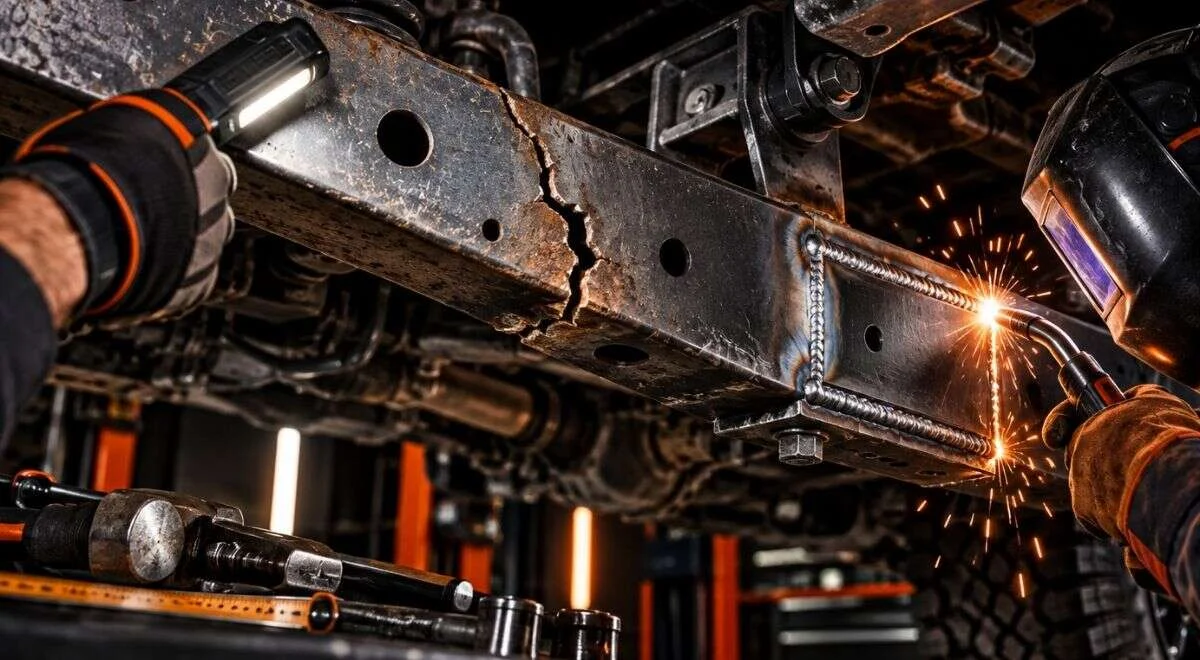
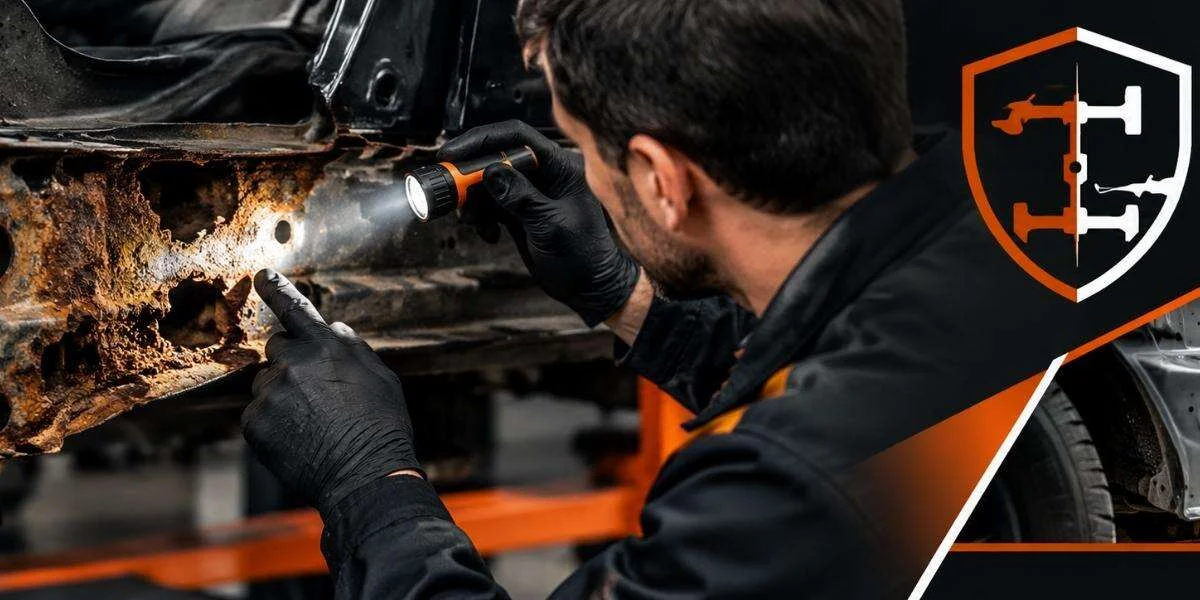
Cracked frame repair starts by taking the vehicle out of service and having the crack and surrounding metal inspected—not by welding over the visible split. A qualified frame repairer can determine whether sound metal remains for a repair or whether a section or frame must be replaced. This guide walks you through securing the vehicle, documenting the damage, evaluating a repair plan, and protecting the work afterward.
Take the vehicle out of service and record what happened
A frame crack can spread under load, and rust may have weakened metal beyond the visible line. If the crack is near a suspension, steering, cab, or body mount, or the vehicle sits unevenly, do not drive it to a repair shop. Arrange a tow. A commercial truck should also be kept out of service until its condition is assessed; federal rules for covered commercial vehicles address cracked or deteriorated frames and their repair. Check the applicable requirement in 49 CFR § 393.201.
Before moving anything, note when the crack appeared and what changed: a new clunk, shifting alignment, a trailer load, an impact, or fresh rust flakes. Photograph the area from a safe position. Do not crawl under a vehicle supported only by a jack, and do not scrape, grind, or coat the crack before the inspection. Those actions can expose you to danger or remove evidence about the crack’s direction and condition.
- Park on firm, level ground if the vehicle is already safely parked.
- Keep passengers and loads out of the vehicle until it has been assessed.
- Tell the shop about recent impacts, towing, modifications, and symptoms—not just where the crack is.
Find the full extent of the damage
Inspect beyond the visible split
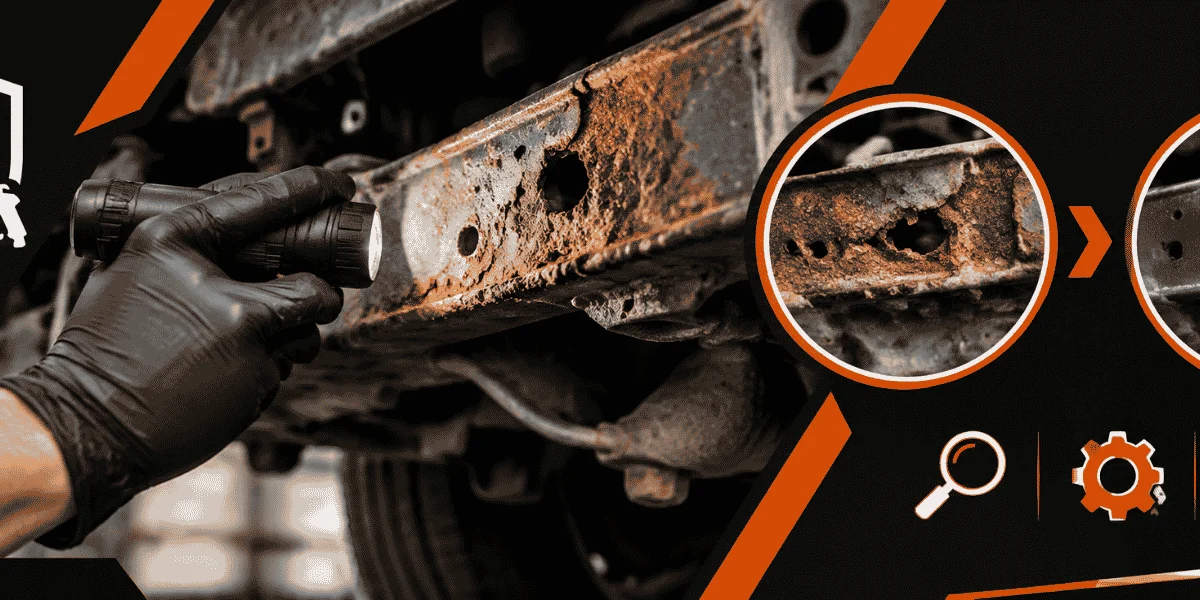
A crack is a symptom; the repair decision depends on the surrounding frame. Salt and moisture can attack seams, boxed sections, and overlaps where corrosion is hard to see. A narrow opening can sit beside deeply thinned metal, while a longer-looking surface mark may not penetrate the frame. A repairer should clean the area enough to inspect it and check nearby metal, mounts, and both sides of an accessible section.
Ask whether the inspection includes the inside of boxed rails where access permits, nearby crossmembers, and the attachment points that transfer load. If rust scale, swelling seams, or perforation extends beyond the crack, the usable repair area may be smaller than it appears from underneath. Photos help you understand the finding, but they do not establish metal thickness or prove a frame is sound.
Separate a crack from other damage
Look for clues that change the scope: buckling, a bent rail, displaced brackets, damaged fasteners, or fresh metal at an impact point. A crack near a spring hanger on a Central Massachusetts pickup, for example, calls for an assessment of the hanger and adjacent rail—not just a bead over the line. If the vehicle has a known recall or safety campaign, check its VIN through NHTSA’s recall lookup; a recall check does not replace a physical frame inspection.
Decide whether to repair, replace, or stop
There is no safe universal patch for every cracked frame. The repairer needs to identify the frame material and design, the crack’s location, the amount of sound metal available, and any manufacturer repair restrictions. Do not approve a repair based on appearance alone. If corrosion has removed the metal needed to anchor a repair, adding more material may conceal a weak area rather than restore a dependable structure.
| Finding | What to ask | Possible direction |
|---|---|---|
| Local crack with sound surrounding metal | What procedure applies to this frame, and how will alignment be checked? | Repair may be considered if the design permits it. |
| Crack beside a mount or loaded attachment | Are the mount, fasteners, and adjacent structure also damaged? | Repair scope may include connected parts, not only the crack. |
| Perforation, scaling, or thinning around the crack | How much unaffected metal remains, including inside the rail? | Section replacement or broader restoration may be needed. |
| Multiple structural areas badly corroded | Can the frame be restored safely, and is the work practical for this vehicle? | Replacement or retiring the vehicle may be the sounder choice. |
For a Massachusetts vehicle, ask the repairer and inspection station what documentation or follow-up is appropriate after structural work. The state’s vehicle safety inspection information explains the inspection program; an inspection appointment should not be treated as a substitute for a frame-repair assessment.
Get a repair plan before authorizing welding
Request a written scope that identifies the damaged area, the proposed repair or replacement, and how the shop will verify the finished structure. Ask whether applicable manufacturer procedures have been checked and whether the repairer has experience with that frame type. The answer matters for a modern pickup as well as a classic restoration: rails, materials, reinforcements, and attachments are not interchangeable just because they look similar.
- What will be removed to expose sound metal and inspect the affected area?
- Will the repair preserve required clearances for brake lines, fuel lines, wiring, and moving suspension parts?
- How will the shop check frame position and connected components after the work?
- What corrosion protection will be applied, and which surfaces will remain accessible for future inspection?
A repair that involves cutting or welding also needs appropriate control of fire risk and welding hazards. OSHA’s guidance on welding, cutting, and brazing covers hazards such as fumes and fire; this is one reason structural welding is not a casual driveway task. Do not accept a coating as proof of a sound repair: protection belongs after the metal and repair have been assessed.
Use a worked example to test the recommendation
Pickup crack at a spring hanger
Imagine a salt-used pickup with a crack beside a rear spring hanger. The first view shows a short split, but cleaning reveals flaky rust along the seam and a second damaged area on the inside of the rail. A surface weld would not answer whether the hanger can transfer load into sound metal. The next useful step is to have the repairer document the rail and hanger condition, check the frame design’s repair requirements, and explain whether a localized repair or section replacement can be anchored to sound structure.
If the shop proposes a patch, ask what material it attaches to and how the finished frame will be checked. If it recommends replacement, ask which connected components must be transferred or renewed and how the alignment will be verified. The decision should follow the condition of the surrounding metal, not a preference for the quickest-looking fix. A classic vehicle may justify a more involved restoration; a heavily corroded work truck may not be a practical candidate for it.
Verify the work, then protect the repaired frame
Before pickup, request an explanation of the completed work and any limitations or follow-up inspections. Look for repaired areas that remain inspectable rather than being buried under a thick coating. Ask the shop to confirm that nearby lines, brackets, and suspension components are correctly routed and secured. If the vehicle still has a handling change, new noise, or uneven stance, report it before returning to normal use.
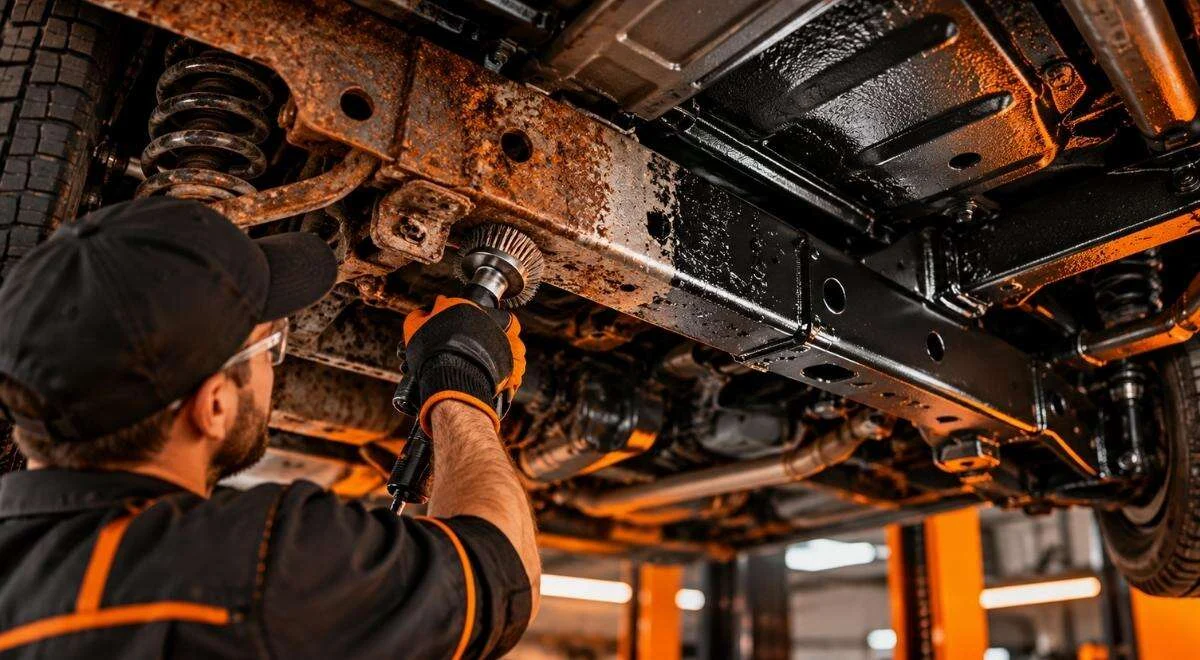
Once the repair is accepted, address the conditions that helped corrosion progress. Clean salt and packed mud from accessible areas, keep drain openings clear, and inspect the repaired zone after winter use. For a vehicle that is structurally sound, a properly selected rust prevention undercoating can help protect accessible surfaces; it is not a remedy for active structural rust. If extensive corrosion must be removed during a restoration, frame-off rust removal may be appropriate when the vehicle and repair scope justify disassembly.
- Keep repair records and photos with the vehicle’s service history.
- Recheck the repair area when cleaning the underbody, especially after exposure to road salt.
- Ask for reassessment if a new crack, flaking rust, movement, or related noise appears.
Start by arranging a safe structural inspection
Your first action is to stop driving the vehicle if the crack may affect a loaded or safety-related area, then contact a frame repairer and share the location, symptoms, and photos. Ask for an inspection of the surrounding metal before approving welding or coating. Bay State Rust Prevention provides frame repair, rust removal, and corrosion protection for vehicles in Worcester and Central Massachusetts; see what the shop offers at baystaterustprevention.com.