
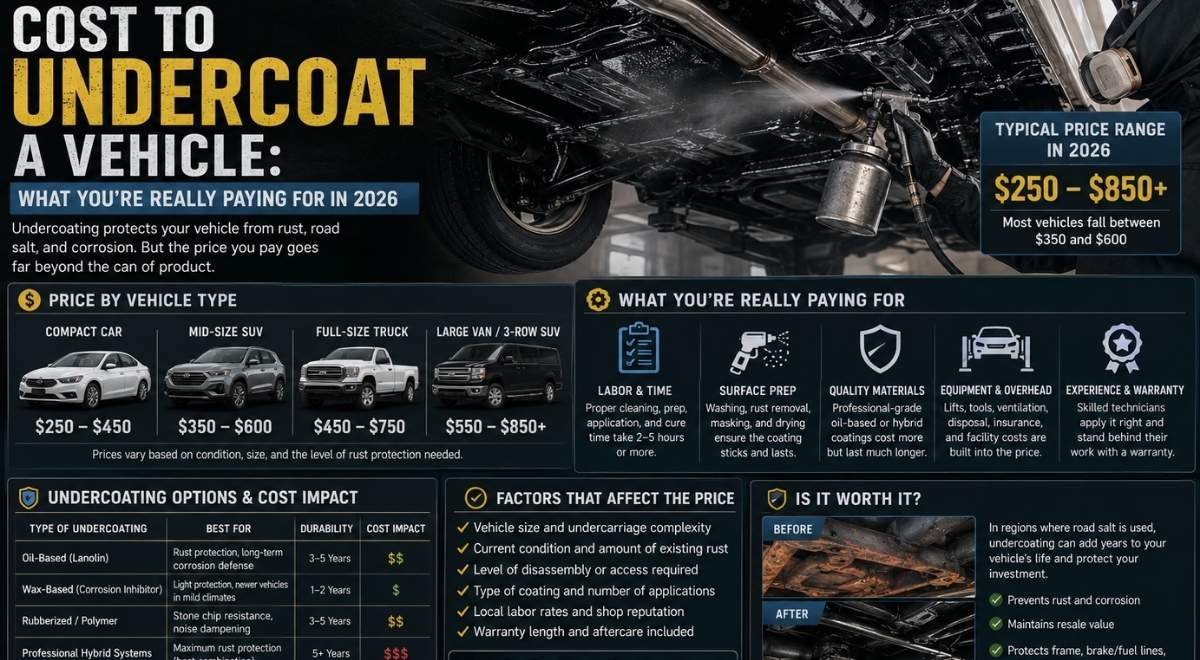
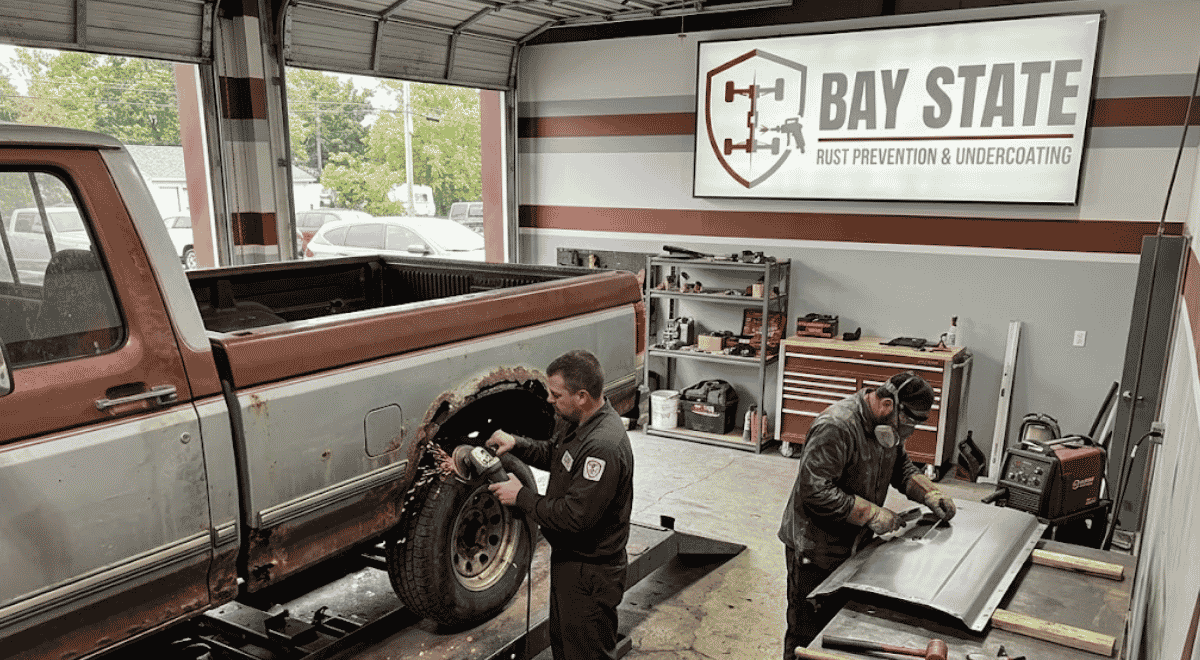
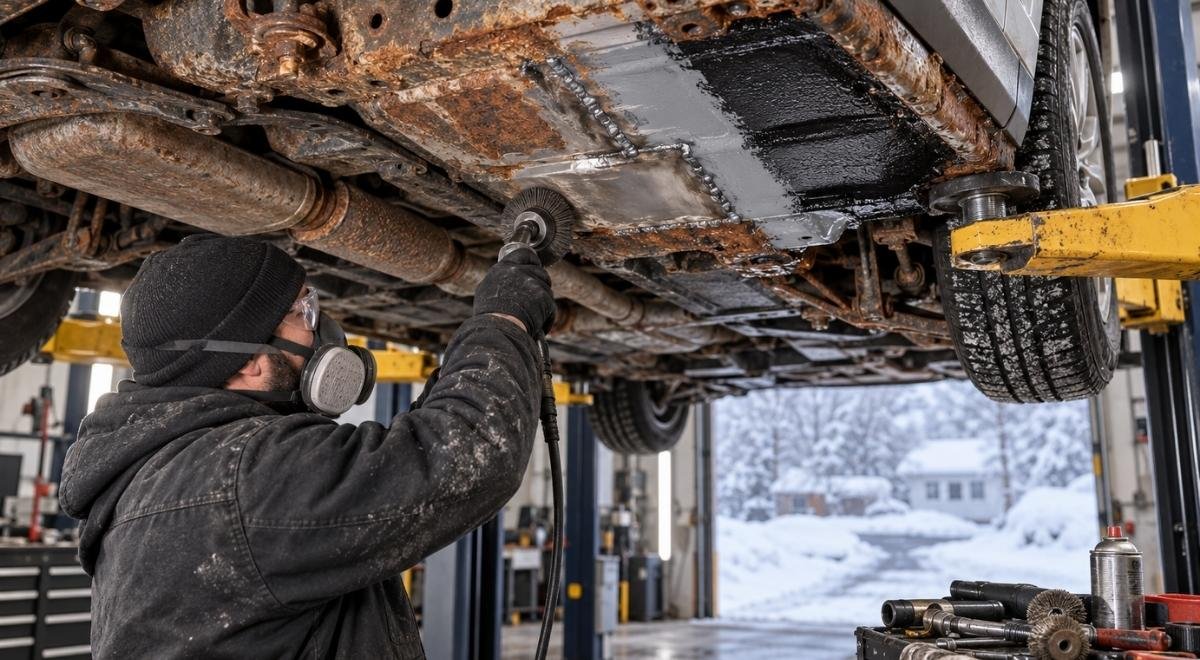
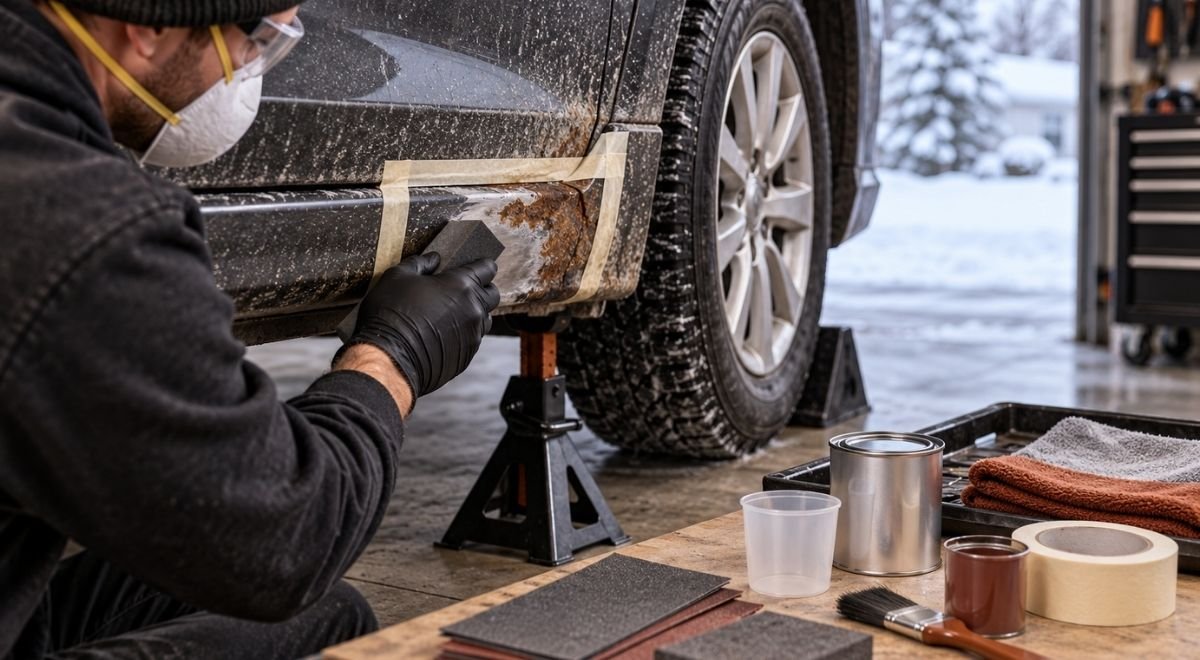
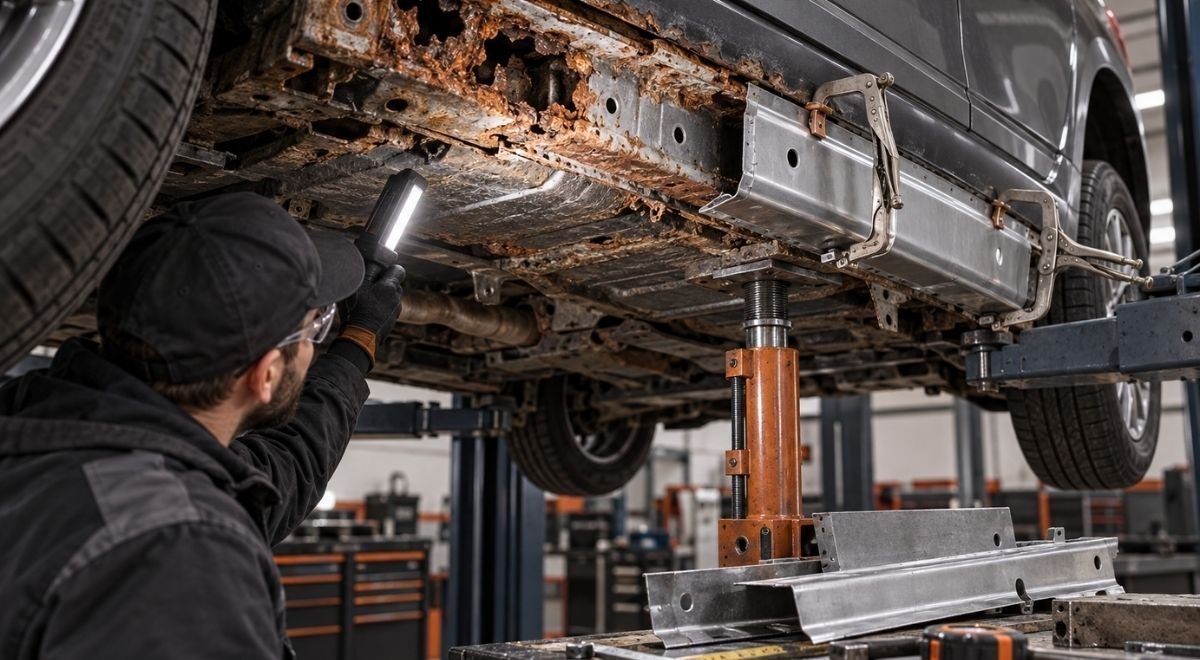
The cost to undercoat a vehicle is not a single number because “undercoating” can mean anything from a quick coating over an intact underbody to a labor-intensive corrosion-control process involving washing, drying, rust removal, masking, inspection, and access to enclosed frame sections. For a Central Massachusetts vehicle, the useful question is not simply “What does a gallon of material cost?” It is which surfaces are being protected, how clean and dry they are, and what preparation is required before the product can do its job.
A responsible estimate separates prevention from repair. A nearly new truck may need inspection, cleaning, drying, and application to exposed underbody and cavity areas. A ten-year-old vehicle that has spent many winters on salted roads may need loose-scale removal, damaged coating removal, weld inspection, or frame work before any protective product is applied. Those are different jobs, even if both are casually called undercoating.
What the Cost To Undercoat A Vehicle actually includes
Undercoating is a corrosion-control treatment applied to selected underside and, when appropriate, enclosed or semi-enclosed vehicle areas. It is not a structural repair, a substitute for replacing perforated metal, or a guarantee that rust will stop everywhere on the vehicle. Its purpose is to reduce the access of water, oxygen, and salt contamination to prepared metal and existing sound surfaces.
The price is therefore a combination of vehicle size, condition and preparation, coverage plan, and accessibility. A compact car with clean, reachable panels can require much less labor than a pickup with a boxed frame, skid plates, heavy flaking, and years of accumulated salt and mud. A classic vehicle undergoing restoration may require an entirely different sequence because the goal is preservation, documentation, and finish quality rather than a quick winter-service treatment.
Material is only one line item
Protective material matters, but it is rarely the dominant variable in a careful job. Labor may include lifting or positioning the vehicle, removing selected shields, cleaning packed debris, allowing moisture to leave seams, protecting brakes and exhaust components, and inspecting the frame. If the coating is sprayed over mud or loose scale, the material may be present but the process is weak.
WaxOyl is a product family used for corrosion protection, but the product name does not remove the need for preparation or determine the final quote by itself. The manufacturer’s product information should be checked for the particular formulation and intended use; product claims and application directions can change by product and market, so the official WaxOyl product pages are the appropriate reference for current product descriptions.
A quote should describe the treatment boundary
Ask whether the estimate includes only visible underbody surfaces or also covers practical access points such as frame interiors, seams, rocker areas, wheel arches, and other corrosion-prone cavities. “Full coverage” is too vague unless the shop identifies what will be cleaned, what will be coated, and what will be excluded.
- Basic prevention example: an illustrative starting scope for a newer sedan could include inspection, underbody cleaning, drying, masking, and application to accessible underside surfaces.
- Truck example: an illustrative scope could add frame rails, crossmembers, wheel arches, and selected cavity access points after removing packed road debris.
- Restoration example: an older vehicle may require coating removal, abrasive or media cleaning, metal inspection, welding, seam treatment, and a separate protective finish.
- Fleet example: a written policy might define inspection intervals and coverage areas for ten identical service trucks, but the starting policy should still allow exceptions for vehicles with damaged frames or leaks.
Those examples are scopes, not universal prices. A credible shop should be able to explain why one vehicle costs more than another without hiding the difference behind a generic “package” label.
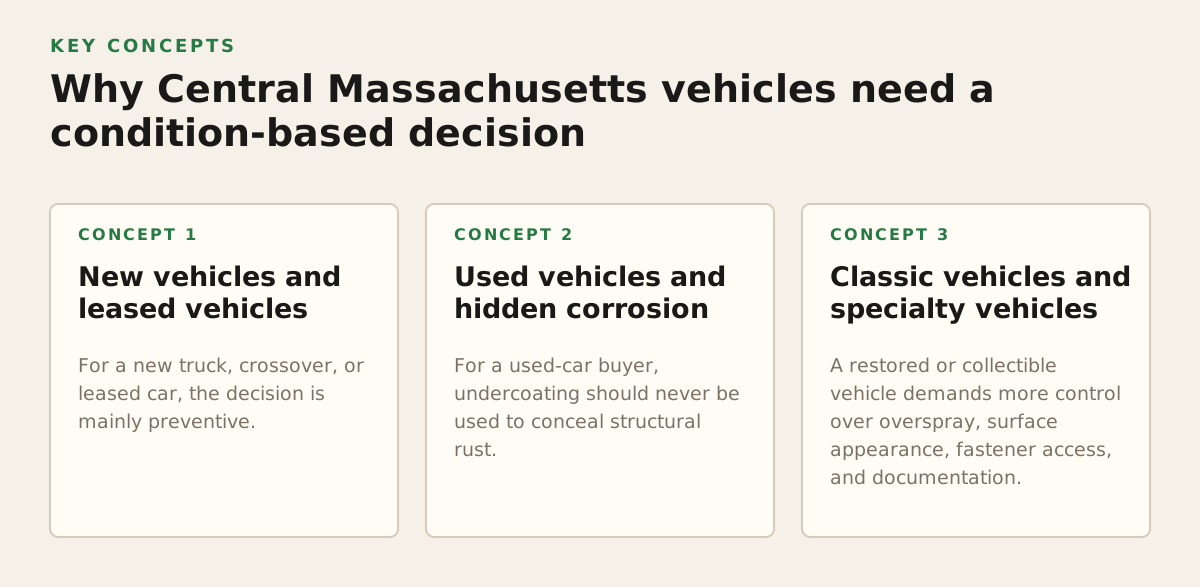
Why Central Massachusetts vehicles need a condition-based decision
Road salt changes the maintenance problem because it leaves a conductive residue that helps moisture remain active against metal. The Federal Highway Administration describes chloride-based deicers as corrosive to vehicles and infrastructure; its road-salt research report discusses corrosion effects and the role of deicing materials in winter operations. That is why a vehicle can look clean from above while corrosion progresses underneath brackets, seams, brake lines, fasteners, and frame sections.
Massachusetts winter maintenance also means that vehicles may repeatedly encounter treated roads, slush, and wet freeze-thaw cycles. The Massachusetts winter road-treatment information explains the state’s use of materials and methods for managing winter travel. The practical consequence for an owner is simple: salt exposure is a recurring maintenance condition, not a one-time event that disappears when spring arrives.
New vehicles and leased vehicles
For a new truck, crossover, or leased car, the decision is mainly preventive. The owner should confirm that any treatment will not obstruct drain holes, interfere with service points, cover identification labels, or create confusion about warranty-related inspection. A dealership or lease agreement may have its own inspection expectations, so the written terms deserve review before treatment.
Early protection can be sensible when the vehicle will be kept through several Massachusetts winters, particularly for a work truck that regularly travels unplowed or heavily treated roads. It is less sensible to coat a dirty, wet, or mechanically leaking underbody merely because the odometer is low. A new vehicle still needs inspection for shipping damage, seam sealant defects, exposed fasteners, and trapped debris.
Used vehicles and hidden corrosion
For a used-car buyer, undercoating should never be used to conceal structural rust. A fresh dark coating can make visual inspection harder, especially around frame sections and suspension mounting points. Before purchase, look for flaking scale, swollen seams, distorted metal, holes, weld patches, crushed frame rails, and corrosion around body mounts. If the vehicle’s history is unclear, an independent inspection is more valuable than assuming a clean-looking coating means a sound frame.
The National Highway Traffic Safety Administration maintains a searchable vehicle recall database. A recall search will not replace a rust inspection, but it is a useful separate step when evaluating a used vehicle. Structural corrosion, safety recalls, and routine surface rust are different questions and should not be blended into one “undercoating” decision.
Classic vehicles and specialty vehicles
A restored or collectible vehicle demands more control over overspray, surface appearance, fastener access, and documentation. The owner may want photographs before and after preparation, a written list of repaired areas, and a coating compatible with the intended topcoat or storage environment. A product chosen for a daily driver may not be appropriate for a concours-visible underside, a vehicle being media blasted, or a body shell awaiting paint.
For a classic frame, the most important cost question is often whether the metal is merely oxidized or has lost section thickness. Coating can preserve sound steel; it cannot restore missing steel. Once corrosion has perforated a frame rail or weakened a suspension attachment, the sequence should change to inspection and repair before preservation.
How a professional undercoating process works
A durable treatment is a sequence rather than a single spray event. Each stage addresses a different failure mechanism: contamination prevents adhesion, moisture supports ongoing corrosion, poor masking creates safety problems, and blocked drains trap water after the vehicle leaves the shop.
1. Inspect before washing
The technician should identify leaks, loose shields, damaged wiring, brake components, exhaust parts, drain openings, frame seams, and areas where rust scale is already separating. This is also the point to determine whether the requested job is prevention or requires rust removal and repair.
Inspection should be especially deliberate around:
- frame rails, crossmembers, and suspension mounting points;
- brake and fuel lines, clips, brackets, and fasteners;
- rocker panels, wheel arches, body mounts, and pinch welds;
- boxed frame openings and seams where salt-laden moisture can remain;
- areas previously coated with a brittle, detached, or incompatible material.
2. Remove contamination and create access
Mud, salt film, oil, and loose rust are not equivalent contaminants. Packed mud can hold water against metal. Oil can interfere with adhesion and may indicate an active leak. Loose scale can continue breaking away under a new film, carrying the coating with it. Cleaning must be matched to the material and the vehicle’s condition rather than treated as cosmetic detailing.
Access may require removing selected splash shields or skid plates. It does not mean blindly spraying every visible component. Sensitive areas such as brake friction surfaces, belts, pulleys, hot exhaust surfaces, oxygen sensors, electrical connectors, and drain paths need deliberate protection or exclusion.
3. Dry the vehicle completely enough for the product
Water trapped in seams and cavities is a major limitation. A surface can feel dry while moisture remains behind a flange or inside a boxed section. The appropriate drying method depends on the vehicle, ambient conditions, and product instructions. The key decision is not whether the outside looks dry; it is whether the intended coating can be applied without sealing active moisture into a problem area.
This is one reason winter scheduling can affect the estimate. A shop may need more time for washing, drying, and inspection during a cold, wet period than during a dry season. That is a process constraint, not an arbitrary surcharge.
4. Prepare rust without pretending all rust is removable
Light surface oxidation may respond to mechanical cleaning and an appropriate preparation system. Thick, layered scale requires a more serious assessment. If cleaning reveals thin metal, holes, cracked welds, or movement at a mounting point, the job has crossed into repair territory.
For extensive corrosion, frame-off rust removal may be more appropriate than applying a protective film over an unstable surface. Frame-off or component-level work can expose areas that are inaccessible on a complete vehicle, but it also increases disassembly, reassembly, masking, inspection, and repair requirements. The benefit is a better view of the actual metal condition; the trade-off is time and scope.
5. Apply the protective material deliberately
Application should follow the product’s instructions for equipment, surface condition, coverage, ventilation, and curing or settling time. The technician should build coverage into seams and appropriate cavities without creating dams over drain holes. A heavy layer is not automatically a better layer: excessive material can hide future inspection points, collect dirt, or make service work more difficult.
The intended result is continuous protection on prepared surfaces, not a thick cosmetic shell. Areas that must remain visible or serviceable should stay identifiable. A good work order states which components were deliberately excluded and why.
6. Document the finished condition
Photographs and written notes are valuable for fleet managers, used-vehicle owners, and restoration projects. Documentation can show pre-existing rust, repaired sections, access panels removed, and the final coverage boundary. It also helps the next technician distinguish a maintained protective film from fresh leakage or newly developing corrosion.
| Quote question | Why it changes the work | What a useful answer sounds like |
|---|---|---|
| Are shields or panels removed? | Removal creates access and adds labor, but leaving them in place can hide untreated surfaces. | “We remove these listed panels and reinstall them after inspection.” |
| How is loose scale handled? | Coating over detached rust can produce a short-lived surface. | “We clean unstable scale and identify metal that needs repair.” |
| Are cavities included? | Boxed sections and seams may hold salt and moisture out of sight. | “These frame openings and cavity areas are included; drains remain open.” |
| What is excluded? | Brakes, exhaust surfaces, leaks, and damaged wiring require special treatment. | “These components are masked or excluded, with reasons noted.” |
Where undercoating breaks down—and why a low quote can be expensive
Undercoating fails when the coating is asked to solve a problem it was never designed to solve. The most common error is confusing surface coverage with corrosion control. A covered surface can still corrode underneath if salt, water, oxygen, or unstable rust remains trapped below the film.
Applying over active rust or trapped moisture
Some protective products are intended to tolerate or penetrate limited oxidation, but that does not mean they can stabilize deep scale or repair perforation. The product’s technical directions control what surface condition is acceptable. If the base metal is flaking, swollen, wet, or contaminated, the correct answer may be cleaning or repair rather than application.
A particularly bad shortcut is coating around a leaking differential, engine, transmission, power-steering system, or fuel-related component without addressing the leak. The coating may become softened or contaminated, while the source of the problem remains. A quote should identify whether leak diagnosis and repair are included, excluded, or required first.
Blocking drainage and service access
Vehicle bodies and frame sections are designed with paths for water to leave. If a coating blocks a drain, the treatment can increase retention rather than reduce it. The same concern applies to fasteners, inspection holes, jacking points, suspension adjustment areas, and labels needed for future service. Drainage and inspection access are part of the application, not afterthoughts.
Using one treatment for every vehicle
A boxed pickup frame, unibody crossover, work van, classic ladder frame, and utility trailer do not have the same corrosion map. A one-size process can miss cavities on one vehicle and over-apply material to another. The correct scope follows geometry, use, age, and existing damage.
For a fleet, a standardized procedure is useful but should include an exception path. For example, an illustrative fleet policy could require inspection at every scheduled treatment, photograph any frame perforation, and remove vehicles from the coating queue when a safety-critical repair is identified. That is a starting policy, not a universal interval or legal standard.
- Stop and repair: holes, cracked structural welds, severe section loss, or loose suspension attachments.
- Clean and reassess: thick scale, old detached coating, oil contamination, or mud packed into cavities.
- Proceed with prevention: sound metal with manageable oxidation, clean access, open drains, and no unresolved leak.
- Document and monitor: borderline areas that are stable but deserve photographs and a scheduled reinspection.
These categories help explain why two vehicles parked beside each other can receive very different recommendations. A low quote that omits preparation may simply be pricing a smaller job.
How to compare estimates and decide what your vehicle needs
When comparing the cost to undercoat a vehicle, compare the written scope rather than the headline total. Ask each shop to describe preparation, access, exclusions, product, inspection findings, and what happens if rust damage is discovered. The goal is to prevent an apparently inexpensive application from becoming a hidden repair problem later.
Use the vehicle’s job, not just its age
A daily commuter that travels treated roads has a different exposure pattern from a summer-only classic. A plow truck, contractor pickup, delivery van, and leased sedan also have different downtime costs. A vehicle used for work may justify a documented treatment plan because preventing avoidable corrosion supports uptime, but it should not be coated past a known structural defect simply to return it to service faster.
For a used-car purchase, request an inspection before agreeing to treatment. For a new vehicle, confirm lease and warranty considerations. For a restoration, decide whether the priority is hidden cavity protection, a visible finished frame, preservation of original metal, or repair of weakened sections. The answer determines the process and therefore the quote.
Questions that expose the real scope
- What areas will be treated, and which will intentionally remain untreated?
- Will the shop remove or loosen shields, liners, or access covers?
- How will salt, mud, oil, and loose scale be removed?
- How will the vehicle and enclosed areas be dried before application?
- What happens if a frame rail, body mount, or suspension attachment is unsafe?
- Will drain holes, labels, brake parts, exhaust components, and service points be protected?
- What product is being used, and where can its current application instructions be reviewed?
- What documentation will the owner receive after the work?
A shop that cannot explain the boundary between coating and repair is not giving you enough information to make a cost decision. Conversely, a detailed estimate may legitimately change after washing exposes hidden damage. That is not necessarily a bait-and-switch; it depends on whether the original quote clearly stated that concealed conditions could alter the scope.
Illustrative planning numbers, not universal benchmarks
The following figures are examples of how to organize a decision, not market prices or guaranteed timelines:
- An illustrative three-level estimate might separate “clean metal and application,” “cleaning plus limited rust preparation,” and “repair or restoration before protection.”
- An illustrative fleet starting policy might group vehicles by condition—sound, contaminated, or structurally damaged—rather than charging every truck under one identical assumption.
- An illustrative restoration plan might use separate work orders for disassembly, blasting, welding, coating, and reassembly so that repair discoveries do not get hidden inside a vague undercoating line.
- An illustrative maintenance record might include the treatment date, odometer reading, product, areas covered, photographs, exclusions, and recommended inspection condition.
Do not treat any of those examples as a universal budget, performance guarantee, or required service interval. Actual cost depends on the vehicle, access, condition, preparation method, repair findings, and shop’s written process.
When rust removal or frame repair is the better purchase
If inspection shows extensive scale, perforated rails, damaged crossmembers, or rust at structural attachments, spend the next dollar on diagnosis and metal repair. Covering the problem can delay recognition and complicate later welding or blasting. If the frame is sound but the surface is heavily contaminated, cleaning and preparation may be the correct intermediate step before rust prevention undercoating is applied.
For owners restoring a classic or specialty vehicle, consider whether the frame should be separated from the body or components removed for complete access. Frame-off work is not automatically necessary, but inaccessible rust is a reason to discuss it. The decision should be based on the condition and the desired level of restoration, not on a label that promises “full coverage.”
Recommendation: buy a documented process, not the lowest coating quote
For a newer Central Massachusetts vehicle with sound metal, choose a shop that will inspect, clean, dry, mask, protect drainage, and clearly define the coverage area. For an older used vehicle, require a condition report before authorizing application. For a truck, fleet, or classic frame, separate preservation from structural repair so the coating does not conceal a safety problem.
A practical starting policy for 2026 is to schedule an inspection before the salt season or after the vehicle has been exposed to winter roads, then make the next decision from the observed condition. That is an illustrative maintenance approach, not a universal interval. The right timing depends on storage, mileage, road treatment, existing corrosion, washing practices, and whether the vehicle is exposed year-round.
The most defensible estimate will tell you what preparation is included, what areas are covered, what components are excluded, and what happens when rust is worse than expected. It should leave you knowing whether you are purchasing prevention, rust removal, frame repair, restoration, or a combination of those services.
Bay State Rust Prevention serves Worcester and Central Massachusetts with rust prevention undercoating, rust removal, frame-off sandblasting, and frame repair, using WaxOyl for corrosion protection where appropriate. If your vehicle needs more than a surface application, baystaterustprevention.com can help you determine the proper sequence before coating.