

Chassis rust repair is a structural job when corrosion has weakened a frame, crossmember, or other load-bearing part: the damage must be exposed and assessed before a shop can decide whether to repair or replace the affected section. Surface rust may need cleaning and protection; perforation, scaling, or deformation calls for a closer structural evaluation. Photos and a quick glance underneath cannot establish that a repair is safe, so ask for an inspection that distinguishes sound metal from metal that has lost strength.
Rust on your chassis or frame rails? See our frame rust repair service for how the repair works, starting prices and booking.
What Chassis Rust Repair is, and what it is not
The chassis is the vehicle’s supporting structure. Depending on the design, that can include a separate frame, structural rails, crossmembers, and the points where suspension or other major components attach. A repair aims to restore the affected structure using a method suitable for that vehicle and the damage. It is not simply covering rusty metal with a coating or welding a patch over an unexamined area.
Rust removal and structural repair are different jobs. Cleaning can reveal the extent of corrosion, but it does not restore metal that has become too thin or perforated. Conversely, a rusty-looking surface is not, by itself, proof that the whole chassis needs replacement. The decision depends on what remains after loose scale and coatings are removed, where the corrosion sits, and how the vehicle is built.
Surface corrosion, scaling, and perforation
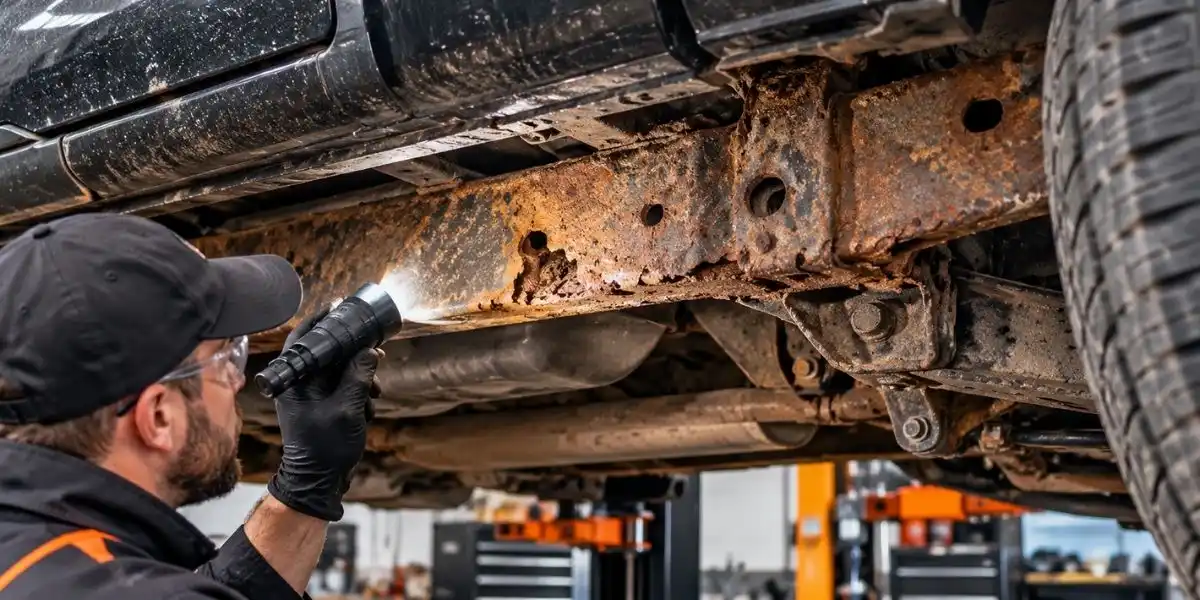
Surface oxidation may leave the metal continuous and its shape intact. Heavier scale can hide deeper loss: flakes may come away and expose thin edges, pits, or holes. Perforation is visible evidence that the metal has been eaten through, but an area can also be dangerously weakened before a hole is obvious. A coating can obscure these signs, which is why an assessment should identify what has been cleaned or opened up and what remains inaccessible.
- Surface rust: discoloration or light oxidation without an obvious change in the section’s shape.
- Scaling: layers of corrosion that lift, crack, or break away, potentially concealing substantial metal loss.
- Perforation or distortion: holes, cracked areas, collapsed edges, or a visibly changed structural shape that need professional evaluation.
These descriptions help you explain what you see; they are not a pass/fail test. Rust near a suspension mounting point, structural joint, or frame connection deserves particular attention because the location affects what the structure supports. A technician must assess the actual vehicle before declaring it safe to drive or suitable for repair.
How to assess a rusted chassis before choosing a repair
Start with the vehicle’s identity and history: make, model, year, prior repairs, and any known collision or corrosion work. Rust can be concealed by undercoating, replacement panels, dirt, or previous patching, so the visible surface may not tell the full story. Ask the inspector to explain which areas were examined directly and which could not be seen without removing parts or coatings.
Look for location and pattern, not just rust color
Record visible concerns with clear photos, but do not scrape, drill, jack, or crawl under a vehicle unless you can do so safely. Useful observations include whether corrosion is isolated or widespread; whether it follows a seam or joint; and whether there are patches, fresh coating, cracks, or visibly distorted sections. Those clues can guide an inspection, but none independently measures remaining strength.
- Note rust or flaking near frame rails, crossmembers, suspension attachment points, and structural joints.
- Photograph both sides of an area where it is safe and practical to do so; differences can help an inspector locate the concern.
- Tell the shop about recent coating or repair work that might conceal the original metal.
- Ask whether the assessment requires disassembly or cleaning to see the metal beneath the surface.
For Massachusetts owners, a state inspection result and a structural repair assessment answer different questions. The state’s vehicle inspection information describes the inspection program; it is not a substitute for a detailed evaluation of concealed corrosion or a repair plan for a particular chassis.
If a warning light, handling change, unusual noise, or visible damage accompanies the rust, mention it when arranging an inspection. Do not rely on a photo-based opinion to clear a vehicle for driving if a load-bearing area may be compromised. The shop should tell you what it can confirm, what remains uncertain, and whether the vehicle should be moved or transported for assessment.
What a proper repair process needs to establish
A useful estimate explains the repair decision, not just the proposed operation. Before work begins, ask what area will be exposed, how the shop will determine where sound metal ends, and what it will do if cleaning reveals more damage than expected. A documented scope makes it easier to understand why the plan changes after disassembly.
Expose, inspect, and define the repair boundary
Loose rust and existing coatings may need to be removed from the affected area so the remaining metal can be evaluated. On a vehicle requiring more extensive access, frame-off disassembly and sandblasting can expose rust-damaged frame surfaces for inspection and preparation. That approach is not automatically necessary for every rusty chassis: the access required depends on the vehicle, the corrosion, and the intended repair. Bay State’s frame-off rust removal page describes the owned-page topic; confirm directly what scope is appropriate for a specific vehicle.
The repair boundary matters. The plan should identify the affected component or section and explain how the shop will avoid leaving weakened metal at the edge of the repair. If more corrosion appears after cleaning, the shop should pause, document the finding, and explain the revised options rather than treating the initial estimate as proof that the hidden area is sound.
Choose a method that fits the vehicle
Structural repair methods are not interchangeable across vehicles. Materials, section shapes, factory joints, nearby components, and the manufacturer’s repair requirements can all affect the acceptable approach. I-CAR’s Repairability Technical Support resources point repairers toward vehicle-specific technical information; ask the shop which applicable procedures inform its plan rather than assuming that a generic patch method suits every frame.
A shop should explain whether the affected part can be repaired, whether a section or component needs replacement, and what evidence supports that choice. If replacement is proposed, ask what parts and adjoining areas are included. If a welded repair is proposed, ask how the shop will confirm the surrounding metal is sound and how it will restore corrosion protection after the structural work. The exact method and acceptance criteria should be confirmed for the vehicle in question.
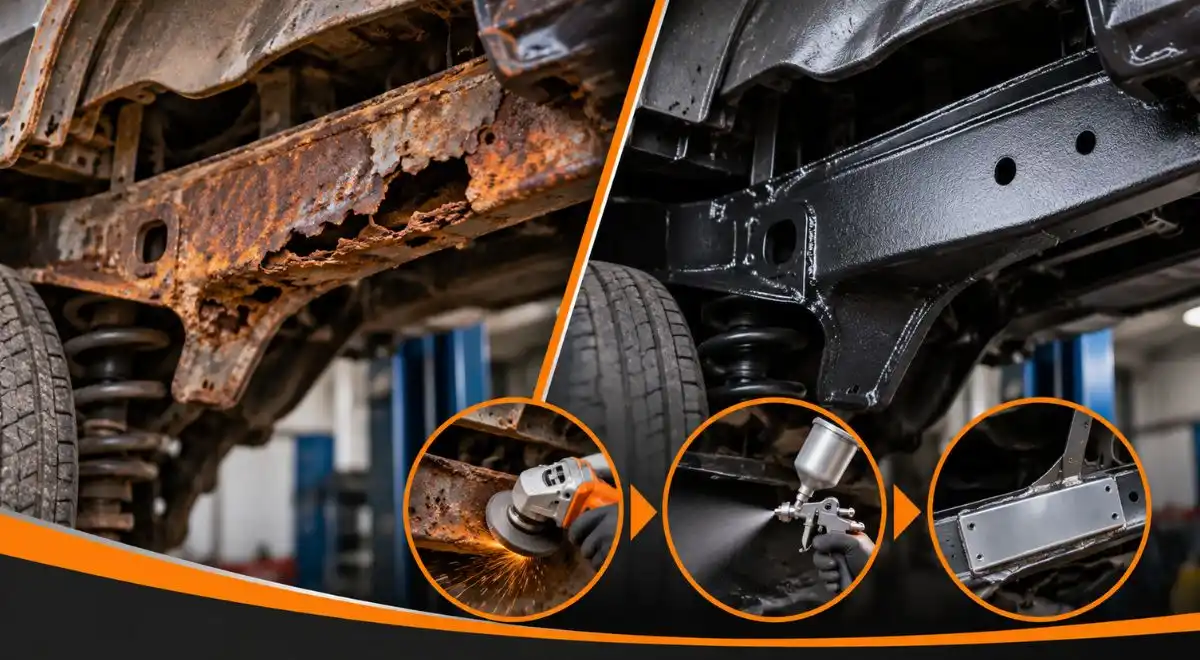
- Document the starting condition: identify the affected areas and any known previous repairs.
- Expose and assess: remove enough scale or coating to define the actual corrosion and sound-metal boundary.
- Agree on the scope: explain the repair or replacement plan and how newly revealed damage will be handled.
- Complete and protect: carry out the structural work, then address exposed metal and accessible cavities or joints as appropriate.
- Review the result: provide a clear account of what was repaired, replaced, or left inaccessible.
When repair may be possible, and when replacement deserves discussion
Repairability is a finding, not a promise. A localized damaged area surrounded by metal suitable for the selected procedure may have a repair option. Widespread thinning, corrosion across important joints, or damage extending into multiple structural sections can make a localized patch inappropriate. The boundary between those cases cannot be set from a universal rust-depth number here; no vehicle-specific inspection or manufacturer procedure has been supplied to establish one.
Ask the shop to show or describe the evidence behind its recommendation. If the answer is “repair” or “replace” without identifying the affected areas and the condition of nearby metal, request a clearer explanation. A second assessment can be reasonable when the damage is extensive, the proposed scope changes substantially after disassembly, or the vehicle’s value and intended use make the decision consequential.
- Ask what was directly inspected and whether any corrosion remains hidden behind parts or coatings.
- Ask why the recommended repair boundary is adequate for the observed damage and vehicle construction.
- Ask what could change the plan once cleaning or disassembly exposes more of the chassis.
- Ask what the shop cannot confirm and whether that uncertainty affects safe use or the scope of work.
Also separate a repair decision from a recall check. If you are buying a used vehicle or assessing a known corrosion concern, use the NHTSA recall lookup to check for recalls by VIN, then ask a qualified shop to assess the actual chassis. A recall search does not inspect a vehicle or establish that its frame is structurally sound.
Cost can be difficult to compare before the extent of hidden corrosion is known. Rather than treating an early estimate as fixed, ask whether it includes access, rust removal, structural work, and corrosion protection, and how the shop will seek approval if the findings require a different scope. No price can be responsibly estimated without the vehicle and inspection details.
After the repair: protect the work and verify what was done
Structural work exposes or disturbs surfaces that need suitable protection. Ask what was applied to repaired areas, seams, joints, and cavities, and which areas could not be reached. A protective coating is not a substitute for sound metal or a structural repair; it belongs after the repair decision and preparation, not over active, unassessed damage.
For a rust-free vehicle or a chassis that has been properly repaired and prepared, ongoing corrosion prevention is a separate decision. Bay State uses WaxOyl for full-vehicle undercoating and protection of seams, panels, joints, and cavities; learn more about rust prevention undercoating. Confirm with the shop whether the vehicle’s condition and any recent repair make it suitable for the treatment being considered.
When collecting the vehicle, request a written description of repaired or replaced areas and any recommendations for follow-up inspection. Keep before-and-after records with the vehicle’s maintenance history. If you are evaluating a used car, a seller’s claim that it was “undercoated” does not establish what preparation was done or whether corrosion was already present beneath the coating.
Best next step: if rust may involve a load-bearing area, arrange an in-person corrosion assessment before choosing between cleaning, structural repair, or replacement. Bay State Rust Prevention provides vehicle corrosion assessment, frame-off disassembly, sandblasting, bare-metal preparation, and automotive frame repair for vehicle owners across Worcester and Central Massachusetts; see baystaterustprevention.com to review the relevant services and ask whether your vehicle’s condition fits the work described.