
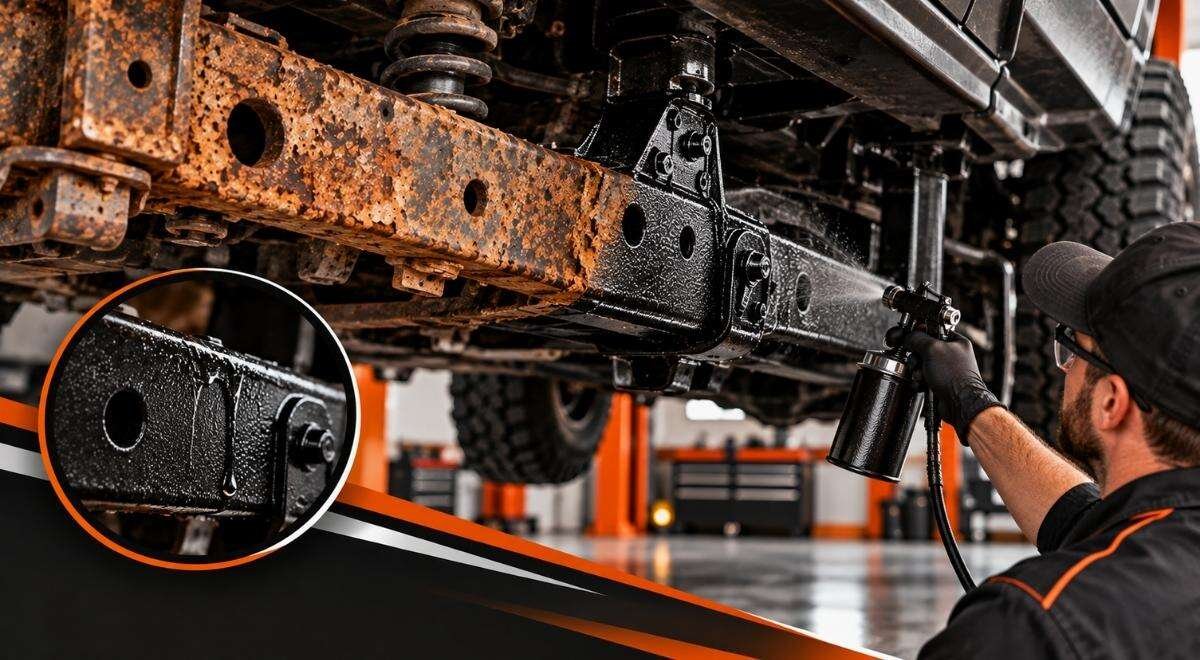
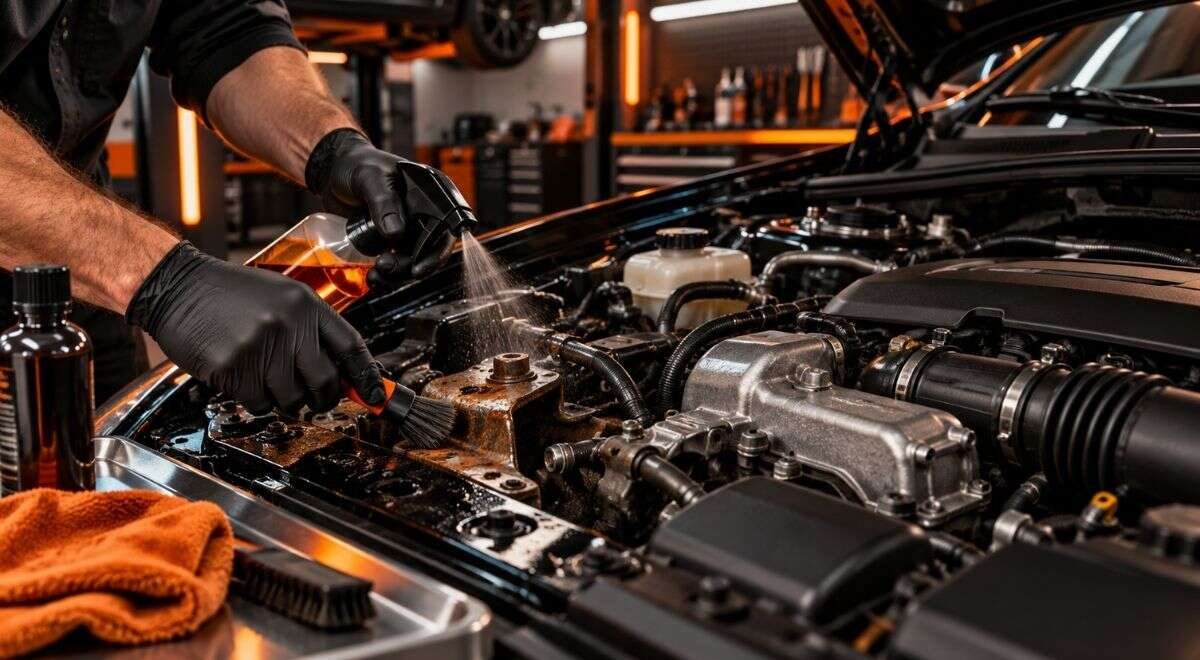
Automotive frame coating is a corrosion-control system applied to a cleaned, inspected vehicle frame—not a substitute for structural repair or a way to bury active rust. For a new truck, leased vehicle, fleet vehicle, or restorable classic, the correct process is to inspect the frame, remove loose scale and contamination, repair unsafe metal, prepare dry sound surfaces, and apply a compatible protective coating to slow salt, water, and oxygen from reaching the steel. In Central Massachusetts, that process is especially relevant because winter road treatments can remain trapped inside frame rails, crossmembers, seams, and brackets long after the outside of the vehicle looks clean.
What Automotive Frame Coating actually is
A frame coating is the protective layer over prepared steel. Depending on the product and application area, it may be a cavity treatment, a wax-based corrosion film, a paint-like barrier coating, or part of a multi-stage system. “Undercoating” is often used as a general label, but the useful distinction is whether the material is intended to protect clean metal, displace moisture in cavities, seal a repaired surface, or remain flexible while the frame moves and receives road debris.
The coating does not restore lost thickness. A frame rail with perforation, a cracked suspension mount, or a weakened spring hanger still requires evaluation and repair. Applying a thick material over that area can make the outside look finished while concealing the condition that matters most: remaining structural section and the integrity of the load path.
Barrier, film, and cavity products serve different jobs
A hard coating can shield a prepared exterior surface from splash and abrasion, but it may crack where a frame flexes or where two panels move against each other. A softer wax or oil-based film can creep into seams and displace moisture, yet it may attract dirt or need periodic inspection. A cavity product is useful inside boxed rails and enclosed sections, but it cannot be expected to bridge a hole or reinforce thin steel.
That is why a sound treatment plan may use more than one material. The outer frame may receive a durable coating after cleaning and repair, while internal cavities receive a compatible corrosion-protection film through access holes. Product compatibility matters: one layer should not soften, lift, or trap solvent beneath another.
It is a maintenance system, not a permanent shield
Corrosion is an electrochemical process that needs an anode, a cathode, an electrolyte, and an electrical path. Water containing dissolved road salts makes that environment easier to sustain. The Association for Materials Protection and Performance explains the basic corrosion mechanism and the role of environmental exposure in its corrosion overview: AMPP’s corrosion fundamentals. A coating interrupts contact between the steel and the environment, but chips, seams, trapped salt, and damaged edges create pathways around it.
Consequently, annual inspection is part of the protection. A vehicle that sees salted roads, muddy construction sites, coastal air, or frequent winter hauling needs more attention than a summer-only collector vehicle stored indoors.
Why road salt makes frame protection difficult
Road salt is not dangerous because it instantly eats through a frame. The problem is repeated wetting, drying, and contamination. Salt residue can hold moisture against steel and enter areas that are difficult to rinse. When a truck travels through slush, spray reaches the underside at pressure; when it parks in a warm garage, the residue can stay active while the visible exterior dries.
The U.S. Environmental Protection Agency describes road salt and other deicing materials as pollutants that can affect water and ecosystems after winter application; its 2026 guidance is useful context for why salt remains widespread in winter maintenance: EPA’s road salt and deicing materials resource. For the vehicle owner, the practical implication is simple: salt removal must precede coating. Sealing dirty, damp residue under a protective film works against the purpose of the treatment.
Where corrosion begins on real frames
- Seams and overlaps: water enters between brackets, boxed sections, and doubled steel plates.
- Drain holes: blocked openings allow salty water to remain inside a rail instead of escaping.
- Weld toes: heat-affected areas, rough weld edges, and unsealed joints can collect moisture.
- Fastener zones: bolts, rivets, and mounts create crevices where coatings are easily damaged.
- Impact points: gravel chips the coating near the front crossmember, wheel wells, and lower rails.
Look beyond the broad flat face of the rail. Pay attention to body mounts, steering and suspension attachment points, brake-line clips, fuel-tank straps, bump stops, and crossmember connections. These are not all equally structural, but they can reveal how far corrosion has traveled.
Illustrative exposure examples
The following are illustrative planning examples, not universal service intervals or corrosion thresholds:
- A two-year-old pickup driven 12 miles each way through winter slush may need a wash-and-inspect routine several times during the salt season, followed by a coating inspection in spring.
- A leased sedan with 30,000 miles and no visible scale may be a good candidate for cavity and underside protection before its third winter, provided the underside is clean and dry.
- A 25-year-old four-wheel-drive truck with bubbling scale around a spring hanger needs metal assessment before any coating; cosmetic coverage is not a structural repair.
- A restored classic driven fewer than 500 summer miles per year may need less frequent reapplication, but its storage humidity and any damp garage floor still matter.
How a professional frame coating process works
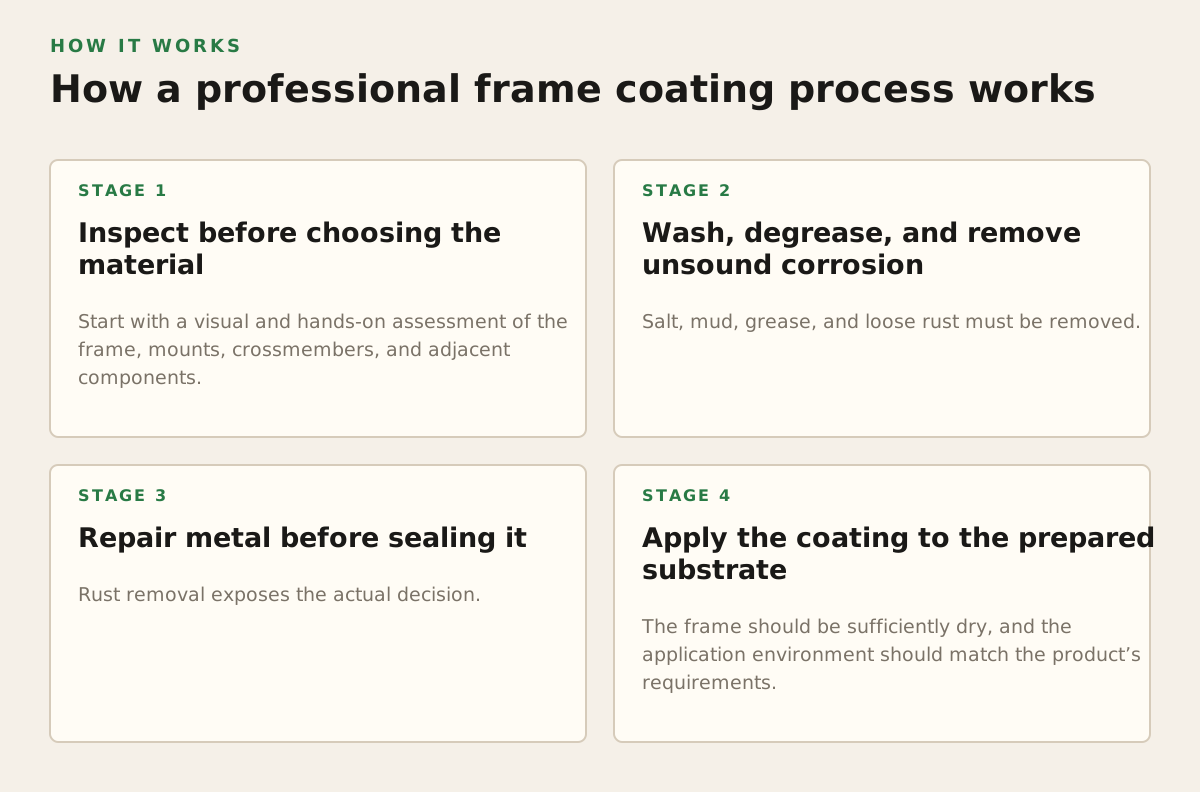
The reliable sequence is preparation first, coating second. Skipping steps can produce a smooth-looking underside with poor adhesion, trapped contamination, or concealed damage. The exact equipment and product vary, but the decision logic should remain consistent.
1. Inspect before choosing the material
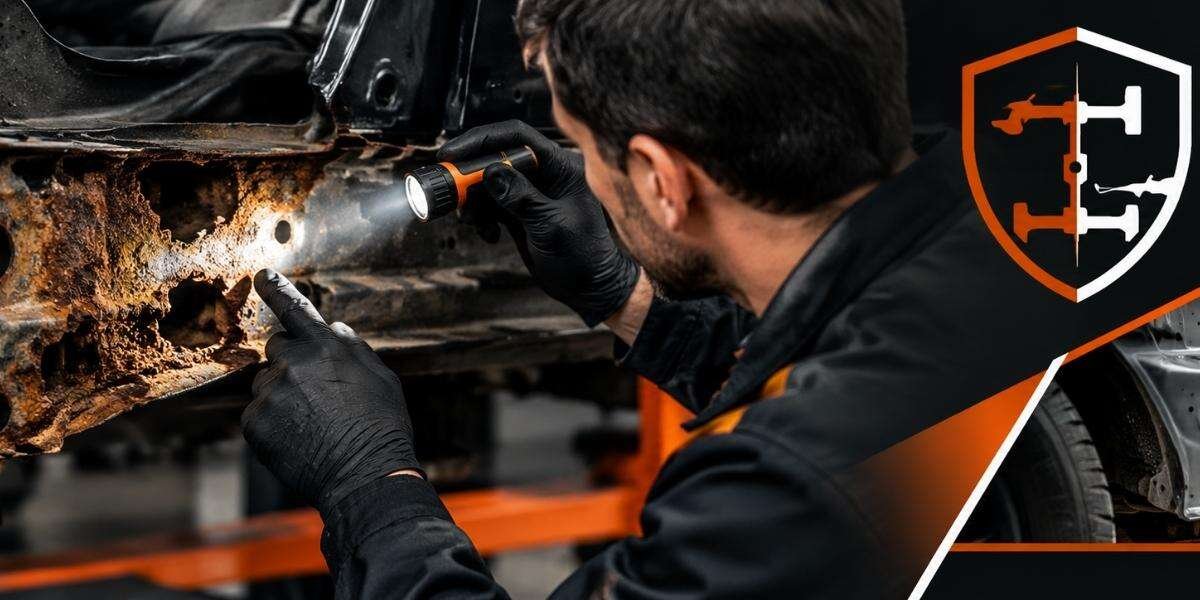
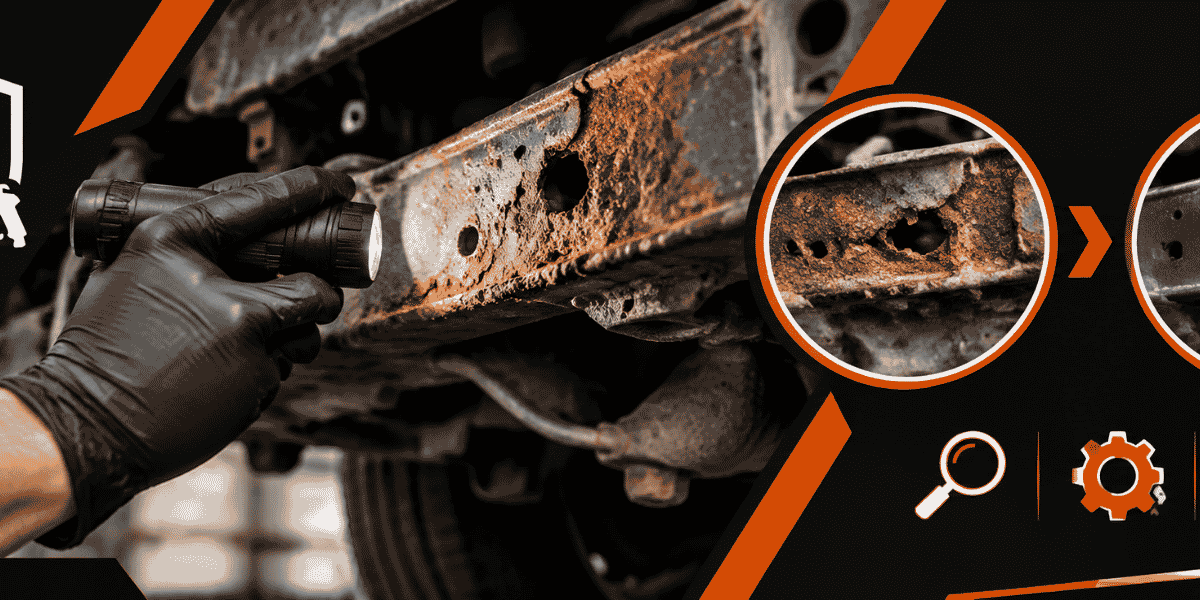
Start with a visual and hands-on assessment of the frame, mounts, crossmembers, and adjacent components. A technician should identify loose scale, perforation, previous coatings, oil leakage, damaged brake or fuel lines, and areas where a coating could interfere with service. If the frame has questionable thickness, probing and additional inspection may be appropriate. Coating selection follows the condition assessment; it should not be used to avoid one.
2. Wash, degrease, and remove unsound corrosion
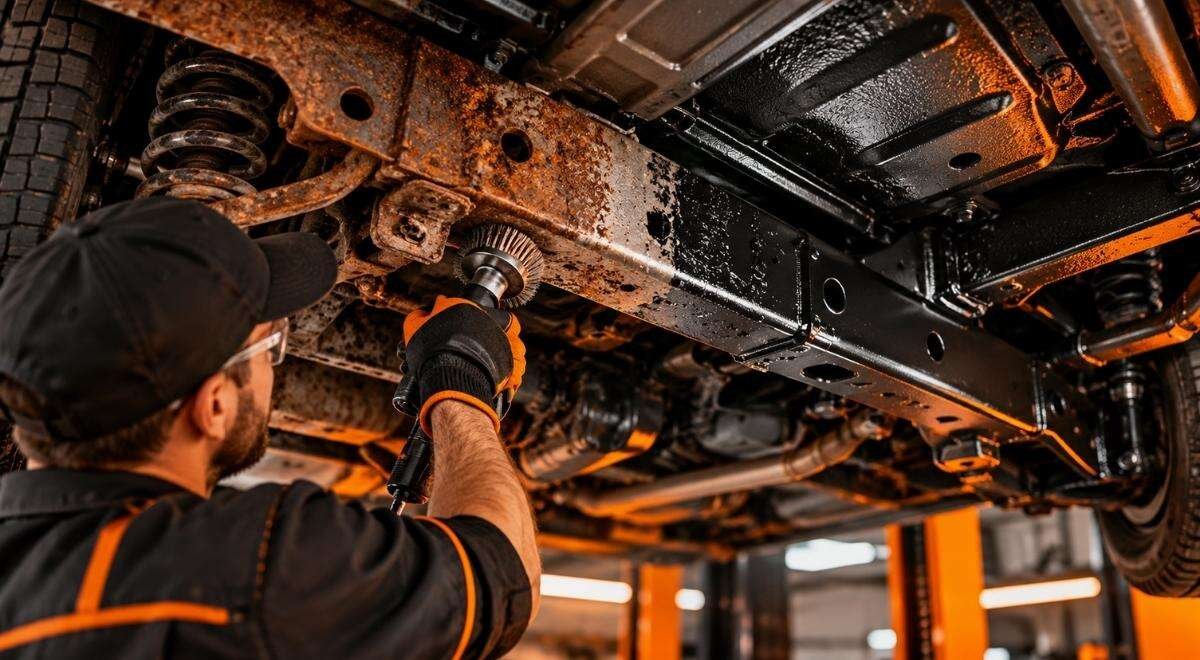
Salt, mud, grease, and loose rust must be removed. Depending on access and vehicle condition, preparation may involve pressure washing, mechanical abrasion, needle scaling, abrasive blasting, or localized hand tools. The objective is not always bright white metal over every square inch. The objective is a clean, stable, inspectable surface that will accept the selected coating.
Abrasive blasting introduces a separate safety issue. OSHA identifies hazards associated with abrasive blasting, including airborne dust, noise, and the need for appropriate respiratory, skin, eye, and hearing protection; its requirements and guidance are summarized at OSHA’s abrasive blasting safety page. A frame-off restoration therefore requires controlled media handling, containment, cleanup, and protection of bearings, seals, wiring, glass, and other components—not simply a powerful blast nozzle.
3. Repair metal before sealing it
Rust removal exposes the actual decision. Light surface oxidation may be prepared and coated. Deep pitting may need localized metal replacement or reinforcement designed around the frame’s loads. Perforated rails, cracked brackets, and weakened suspension mounts require a repair plan that preserves alignment and strength.
For a vehicle with extensive scale, frame-off rust removal can provide access that is impossible with the body and components installed. Removing the frame or major assemblies may increase labor and disassembly risk, but it allows inspection of hidden faces, full cleaning, accurate welding, and coating coverage around joints. It is most appropriate when the vehicle’s value, restoration goal, or corrosion extent justifies that level of work.
After repair, welds and replacement plates should be cleaned and shaped appropriately, sharp coating edges should be addressed, and drain paths should remain open. Do not fill a designed drain hole merely because it appears untidy.
4. Apply the coating to the prepared substrate
The frame should be sufficiently dry, and the application environment should match the product’s requirements. Coating too soon after washing can trap moisture. Coating over oil can cause adhesion failure. Applying a thick layer in one pass can create runs, skinning, or slow curing beneath the surface.
Important application controls include:
- Coverage: reach seams, brackets, weld edges, and accessible internal surfaces without coating moving parts.
- Film behavior: choose a flexible or wax-like product where movement and cavity penetration matter, and a more durable barrier where abrasion is expected.
- Drainage: keep factory drains, inspection openings, and service points functional.
- Overspray control: protect brakes, exhaust components, belts, tires, sensors, and electrical connectors.
- Cure and reassembly: follow the product’s stated flash, cure, and handling requirements rather than assuming every coating dries the same way.
Wax-based corrosion protection is often selected for its ability to remain flexible and renew a film in cavities, while a harder exterior coating may be preferred where impact resistance is important. The best choice is not the thickest product. It is the material whose adhesion, flexibility, serviceability, and exposure resistance fit that specific surface.
Where frame coatings fail—and how to recognize it
A coating fails when the steel beneath it remains contaminated, when the film is damaged, or when water has an unprotected route behind the film. Failure can be obvious, such as peeling sheets, but it can also be subtle: bubbling, swollen seams, rust staining from an edge, or a soft area that feels different from surrounding steel.
Common failure modes
- Sealing active scale: loose rust continues to detach and lifts the coating from underneath.
- Coating wet salt: contaminants remain between steel and film, allowing corrosion to continue out of sight.
- Using a hard film on a moving joint: flexing creates cracks that admit water.
- Blocking drainage: water becomes trapped inside a rail or around a mount.
- Ignoring oil leaks: engine, transmission, or differential fluid softens some protective materials and attracts abrasive dirt.
- Covering a repair without inspection: a cosmetic finish hides perforation or a poorly executed weld.
Do not confuse color with condition. A black underside may be coated, painted, or simply covered in oily road dirt. A professional inspection should distinguish sound steel from layered corrosion rather than treating every dark surface as protected.
When coating is the wrong next step
Pause the coating project when you see a perforated load-bearing rail, cracked suspension attachment, significant distortion, loose body mounts, or corrosion that prevents reliable inspection. Brake and fuel-line deterioration also deserves separate attention because those systems have safety consequences independent of the frame coating.
Massachusetts vehicle inspection rules are administered through the state’s vehicle-check program, which includes safety and emissions inspection information at Massachusetts Vehicle Check. Passing or scheduling an inspection should not be treated as proof that a frame is structurally sound; the practical lesson is to address visible corrosion and safety defects before relying on any protective finish.
How to choose an approach for your vehicle
The right treatment depends on the vehicle’s age, use, existing corrosion, access, and future service plans. A new vehicle generally benefits from prevention before salt has entered seams. A used vehicle needs condition assessment first. A restoration vehicle may require disassembly and metalwork before protection is meaningful.
| Vehicle situation | Practical priority | What to avoid |
|---|---|---|
| New truck or leased car | Clean inspection, cavity access, and compatible preventive coating | Waiting until visible scale appears or spraying over mud |
| Daily driver with surface rust | Salt removal, loose-scale removal, dry preparation, and recurring inspection | Assuming one thick application ends maintenance |
| Older truck with heavy scale | Structural assessment and targeted repair before coating | Using coating to conceal thin rails or damaged mounts |
| Classic or specialty vehicle | Controlled disassembly, metal restoration, cavity protection, and finish compatibility | Allowing abrasive media into bearings, seals, or enclosed components |
| Fleet or work vehicle | Repeatable inspection points, wash access, and documented maintenance | Applying an inconsistent product without tracking damage and rework |
Questions to ask before authorizing work
- Will the frame be inspected before the coating is selected?
- How will loose scale, salt, grease, and existing coating be removed?
- Will the technician document structural defects separately from cosmetic rust?
- Which drains, fasteners, brake components, and service points will be masked or kept open?
- Is the proposed material intended for exterior surfaces, internal cavities, or both?
- What areas should be reinspected after the next winter?
For fleets, documentation matters as much as the initial application. Record the vehicle identification, preparation performed, repaired areas, product family, application date, and photographs of critical mounts. That creates a baseline for comparing new damage instead of guessing whether a dark patch is old coating or new corrosion.
For Central Massachusetts owners, a sensible starting policy is to inspect after winter, clean contamination before summer storage, and check high-impact areas whenever suspension or exhaust work is performed. This is a starting policy, not a universal interval; vehicles used on salted roads, unpaved sites, or near coastal air may need more frequent attention.
Choose automotive frame coating when the steel is sufficiently sound to protect and the preparation can be verified. Choose frame repair or restoration when corrosion has reduced strength. Bay State Rust Prevention serves Worcester and Central Massachusetts with rust prevention undercoating, rust removal, frame repair, and restoration work; owners needing extensive access can ask about frame-off rust removal. For an inspection-led plan using WaxOyl corrosion protection where appropriate, baystaterustprevention.com is the practical next step before coating hides the evidence you need to evaluate.