Frame rust repair starts by exposing and assessing the affected metal, then choosing between surface cleanup, structural repair, or replacement according to the damage and the vehicle’s repair requirements. A coating can protect properly prepared, sound metal, but it cannot restore steel that corrosion has weakened. If rust is near a suspension, steering, or other attachment point—or you see perforation, cracking, or distortion—have the structure assessed before relying on the vehicle.
Find out whether the corrosion affects the structure
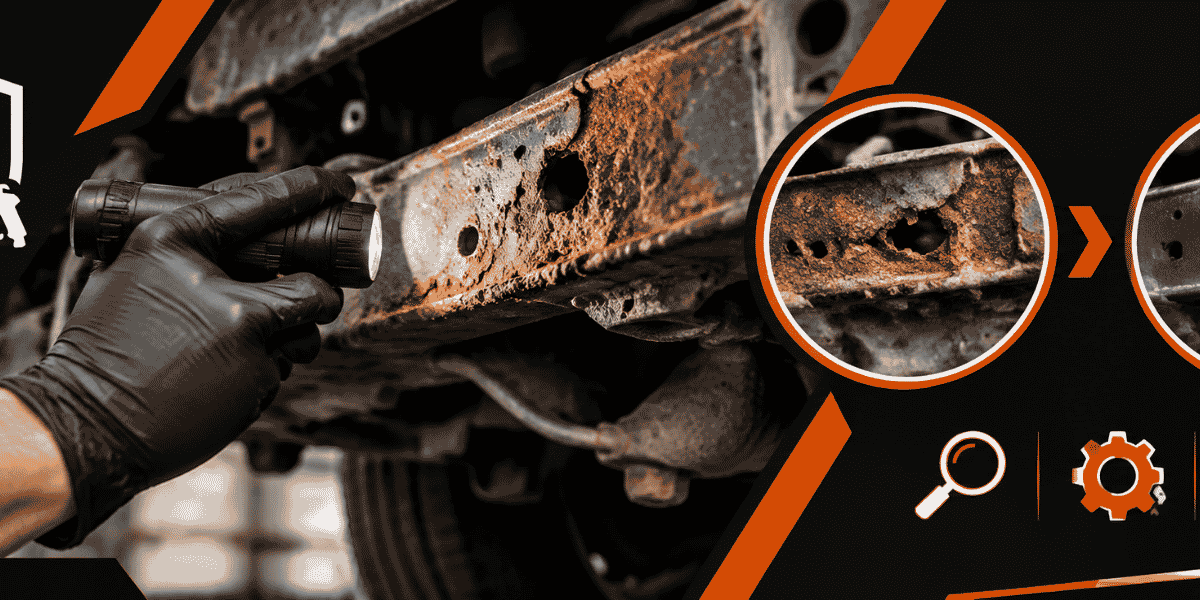
Rust color alone does not tell you whether a frame is repairable. A rough, scaly surface may conceal sound metal underneath, while a cleaner-looking outer face can hide corrosion inside a boxed rail or along a seam. The key question is where the metal remains sound and where it has lost material. That boundary determines whether cleaning and protection are appropriate or structural work is needed.
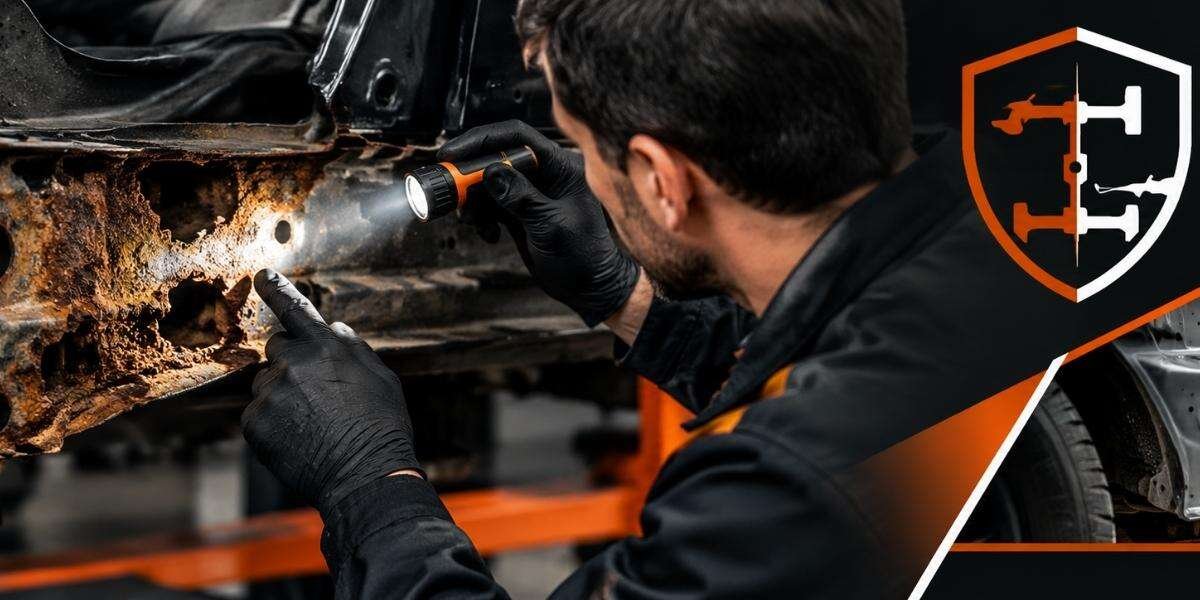
Inspection should account for places where moisture, road debris, and old coatings can obscure the condition: overlapping seams, brackets, crossmembers, body mounts, and the inner faces of boxed sections. A shop may need to remove dirt, loose scale, undercoating, or other material to see the metal. That is why an estimate made before the affected area is exposed may be preliminary: the visible rust can understate or overstate the work required.
Signs that call for a closer look
- Layered scale or flaking on a rail, crossmember, bracket, or mounting area.
- Perforation, cracking, or visible distortion in a structural member.
- Rust around attachment points where suspension, steering, or body components connect.
- Fresh coating over rough or uneven metal that prevents a clear view of the surface below.
- Corrosion on both sides of a seam or around a boxed section that is difficult to inspect from outside.
These are reasons to investigate, not a diagnosis by themselves. Unusual movement or noise near a mount also needs a mechanical assessment; applying a rust product does not identify or correct its cause. Do not crawl under a vehicle supported only by a jack, and avoid probing a suspected weak section while beneath an unstable vehicle.
For a vehicle registered in Massachusetts, the state’s annual safety inspection information and vehicle-inspection regulations provide relevant inspection references, but an inspection is not the same as a detailed restoration assessment. Ask what parts of the frame were examined and what remained inaccessible. See the Massachusetts annual safety inspection information and Massachusetts vehicle-inspection regulations.
Choose cleanup, structural repair, or replacement
Once the metal is visible, the decision depends on remaining sound material, the extent of corrosion, access, and the repair requirements for that vehicle. Surface rust on sound metal may be removed and the prepared surface protected. A localized area of compromised metal may be repairable if sound metal surrounds it and an appropriate repair method is available. If corrosion extends through a larger structural section, replacing a section or component may be more suitable than patching the damaged area.
There is no dependable universal hole-size rule for frame repair. Frames differ in design, section shape, reinforcements, and the location and function of the affected area. A patch that might be appropriate in one situation could be unsuitable in another. Ask the repairer to explain what material will be removed, what will remain, and why the proposed method suits that location. If the metal has not yet been exposed, ask what could change after cleaning.
Match the work to the finding
- Sound metal with surface corrosion: Remove corrosion and loose coating, prepare the surface, and protect it using a method appropriate to the area.
- Localized structural damage: Remove compromised material and restore the section using a repair method appropriate to the vehicle and the affected location.
- Extensive or poorly bounded damage: Consider further exposure and assessment before deciding whether section or component replacement is needed.
- Concern about a critical attachment point: Get a professional assessment before driving; ask whether the vehicle should be transported rather than driven.
Structural repair is not simply a matter of adding metal over a hole. Cutting, welding, or altering a frame in the wrong location can affect the member’s shape and function. Ask whether the repair plan uses information applicable to the vehicle and affected area. Massachusetts inspection rules describe inspection requirements; they are not a vehicle-specific repair procedure or a substitute for repair guidance.
Decide whether frame-off rust removal is warranted
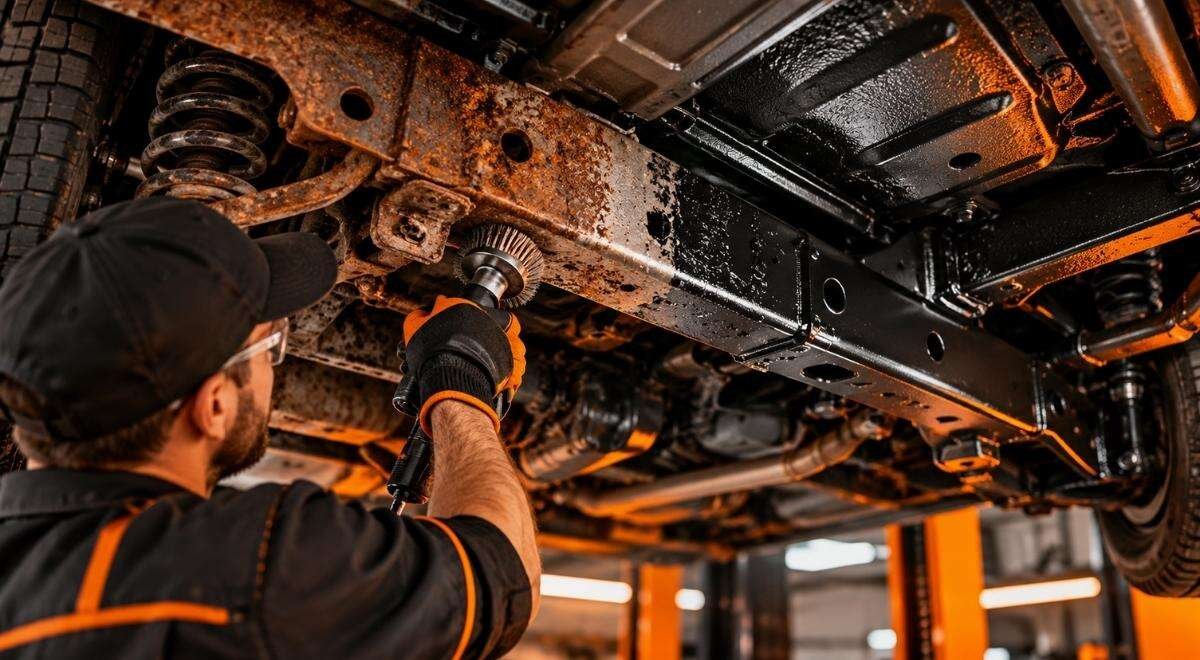
Frame-off work can make sense when the body and attached components block access to the areas that need inspection, cleaning, or repair. Disassembly can expose more of the structure; abrasive cleaning can remove rust and old coatings from accessible surfaces. Those steps may reveal the boundaries of the damage, but neither disassembly nor blasting restores steel that has already been lost. A cleaned frame still needs to be assessed before anyone decides it is suitable for use.
A practical sequence is to inspect the vehicle, expose affected areas, remove coatings or corrosion where appropriate, reassess the bare metal, complete any required structural work, and then apply suitable protection. The assessment after cleaning matters: corrosion hidden by scale or coating may become clearer once those layers are gone. If the newly exposed frame is more damaged than expected, revisit the repair plan before coating it.
Balance access against scope and process
Frame-off disassembly is not automatically necessary whenever a vehicle has rust. It adds work and should be tied to a real access or inspection need. A more limited repair may be sufficient when the damaged area can be assessed and reached without removing the body or major components. For a restoration project, broader access may help the owner and repairer understand the condition of the structure before deciding how much work is justified.
Abrasive blasting also creates dust and debris, and its hazards depend on the material and work conditions. OSHA’s abrasive-blasting guidance describes relevant hazards and protective measures. When discussing the job with a shop, ask how the process is controlled and how openings, components, and surrounding work areas are protected. That question concerns the work process; it does not establish whether the underlying frame is structurally sound.
- Ask what access is needed: Which areas cannot be adequately inspected or prepared while the vehicle is assembled?
- Clarify what blasting will do: Which coatings or corrosion will be removed, and what will happen if cleaning reveals deeper damage?
- Confirm the next decision point: Will the repairer reassess the exposed metal before structural work or protective coating proceeds?
Bay State Rust Prevention’s verified capabilities include frame-off vehicle disassembly, rust removal through sandblasting, bare-metal preparation, and automotive frame repair. Its frame-off rust removal page is relevant when considering whether broader access and cleaning fit the condition and scope of a project.
Review the estimate before authorizing structural work
A useful estimate distinguishes what the inspection found from what the shop proposes to do. If the frame is still covered or assembled, ask whether the estimate is conditional and what findings could change it. Agree on how the repairer will document newly discovered damage and obtain approval before work expands beyond the authorized scope. This is particularly useful for used-car buyers, restoration owners, and fleet managers who may need to review the decision later.
Ask for enough detail to understand the repair boundary—not just a line item called “rust repair.” A written description, photographs, or an opportunity to review the exposed area can make the basis for the plan clearer. Also ask what parts of the frame were inspected, which areas could not be reached, and whether old repairs or coatings limited visibility.
- Inspection scope: Which rails, crossmembers, brackets, seams, and mounting areas were checked?
- Limits of visibility: What remained covered, enclosed, or inaccessible without more disassembly?
- Repair boundary: What metal will be removed or retained, and what supports that decision?
- Method and procedure: Is the plan surface treatment, localized structural repair, or replacement, and what vehicle-specific information applies?
- Change approval: How will additional corrosion be shown and authorized before the work proceeds?
- After-repair protection: Which prepared surfaces or accessible cavities will be protected, and what care or inspection is recommended?
If you are buying a used vehicle, treat a coating as evidence of a coating—not proof that the metal underneath was sound or that structural repairs were completed. Ask for records describing the inspection and any repair. If a safety recall may involve the vehicle, use the VIN in NHTSA’s recall lookup and follow up on any result with the manufacturer or an appropriate repair provider. A recall lookup does not diagnose rust or determine the correct repair for separate corrosion damage.
Protect repaired metal and manage future corrosion
Structural repair and corrosion protection solve different problems. Repair addresses compromised metal; protection helps limit future exposure on surfaces that have been properly prepared. Coating over loose scale or unrepaired structural damage does not make the frame sound. After the repair, ask which surfaces were cleaned and protected, whether seams or accessible cavities were treated, and what inspection or maintenance the protection requires.
Prevention is a separate decision for a sound or rust-free vehicle. Road-salt exposure, existing factory coatings, vehicle use, lease conditions, and the need to inspect or repair the vehicle later can all affect what is appropriate. Bay State Rust Prevention uses WaxOyl for corrosion protection and has verified capabilities for full-vehicle undercoating and treatment of seams, panels, joints, and cavities. Its page on rust prevention undercoating can help an owner understand the relevant prevention service; confirm the proposed scope and care instructions for the specific vehicle.
Keep inspection notes, photographs, and repair paperwork with the vehicle’s service history. They can help a future buyer, fleet manager, or repairer distinguish documented structural work from an older coating whose preparation is unknown. If the damage is uncertain or extensive, prioritize an assessment that exposes enough metal to support a repair decision rather than a quick application that hides the evidence. Bay State Rust Prevention provides frame assessment, rust removal, frame repair, and WaxOyl corrosion protection; review its services at baystaterustprevention.com and confirm which scope fits your vehicle.