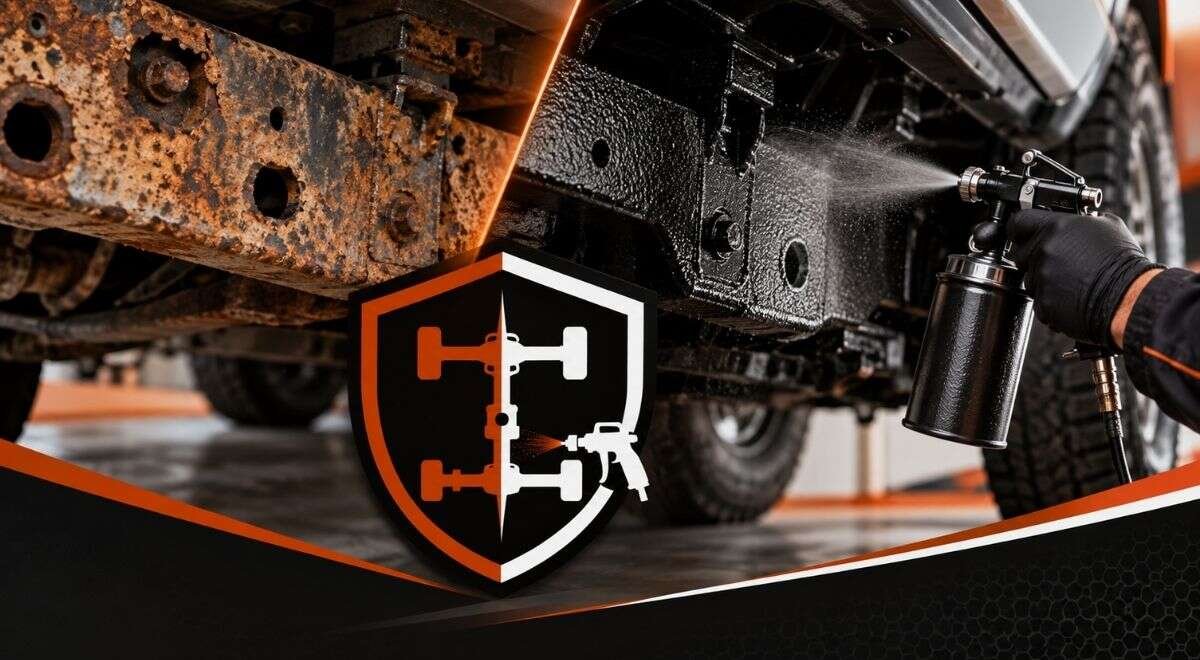
Rust prevention paint can slow corrosion when it is applied to clean, properly prepared metal, but it is not a complete substitute for cavity protection, underbody coatings, drainage, or structural rust repair. For a Central Massachusetts vehicle exposed to winter salt, the practical approach is to remove loose corrosion, seal sound metal with the correct primer and topcoat, protect enclosed seams and cavities separately, and inspect the coating before hidden rust spreads. Paint is most useful on accessible, stable surfaces; it is the wrong tool for packed rust, wet seams, perforated frames, or corrosion hidden inside boxed sections.
What “Rust Prevention Paint” actually means
“Rust prevention paint” is a practical search term rather than one precise coating category. It can describe an epoxy primer, a direct-to-metal chassis coating, a moisture-cured urethane, a rust-converting coating, or a paint formulated for prepared steel. These products do not all work by the same mechanism. Some create a dense barrier. Some chemically react with residual iron oxide. Others provide a durable top layer over a compatible primer.
The important distinction is between protecting sound steel and covering active corrosion. A coating can block water and oxygen only while its film remains continuous and bonded. If scale remains underneath, the coating may bridge over weak material, trap moisture in a seam, or conceal a condition that should have triggered metal replacement.
Paint, primer, converter, and coating are different jobs
- Epoxy primer: a bonding and sealing layer for clean, abraded steel or a compatible prepared surface.
- Rust converter: a chemical treatment intended for tightly adherent residual oxide; it is not a substitute for removing flaky scale.
- Chassis or frame paint: a protective topcoat designed for an exposed structural or underbody surface after preparation.
- Cavity wax or corrosion preservative: a creeping or flexible material for seams, boxed sections, doors, rockers, and other areas where rigid paint cannot reach or tolerate movement.
- Rubberized or elastomeric underbody coating: a thicker impact and moisture barrier that requires a sound substrate and careful inspection planning.
That distinction matters when comparing a painted frame with professional undercoating; the linked resource helps compare professional vehicle undercoating with rust prevention paint for corrosion protection, including where a flexible underbody barrier is more appropriate than a rigid paint film. Neither option repairs thin metal or replaces a missing drain path.

What a successful paint system must accomplish
A useful coating system performs three jobs: it adheres to the substrate, isolates the metal from water and salts, and remains intact when the vehicle flexes, vibrates, and encounters road debris. The system may include more than one product because no single coating is ideal for every location.
For example, a cleaned frame rail may receive a corrosion-resistant primer followed by a durable topcoat. The inside of that same boxed rail may need inspection, drying, and a cavity preservative instead. The outside and inside face different conditions: the exterior sees impact and spray, while the interior may hold condensation and salt residue where a brush cannot reach.
Why road salt makes the choice important in Central Massachusetts
Winter road salt does more than make a surface dirty. Dissolved salt creates an electrically conductive film that helps corrosion reactions continue when bare or damaged steel is wet. Road spray also carries grit into lap joints and seams, where it holds moisture against the metal. The Federal Highway Administration describes chloride-based deicers as a corrosion concern for vehicles and infrastructure; its technical material on winter maintenance is a useful explanation of why deicing chemicals create more than an appearance problem. FHWA’s corrosion and deicing research supports treating salt exposure as a recurring environmental load rather than a one-time spill.
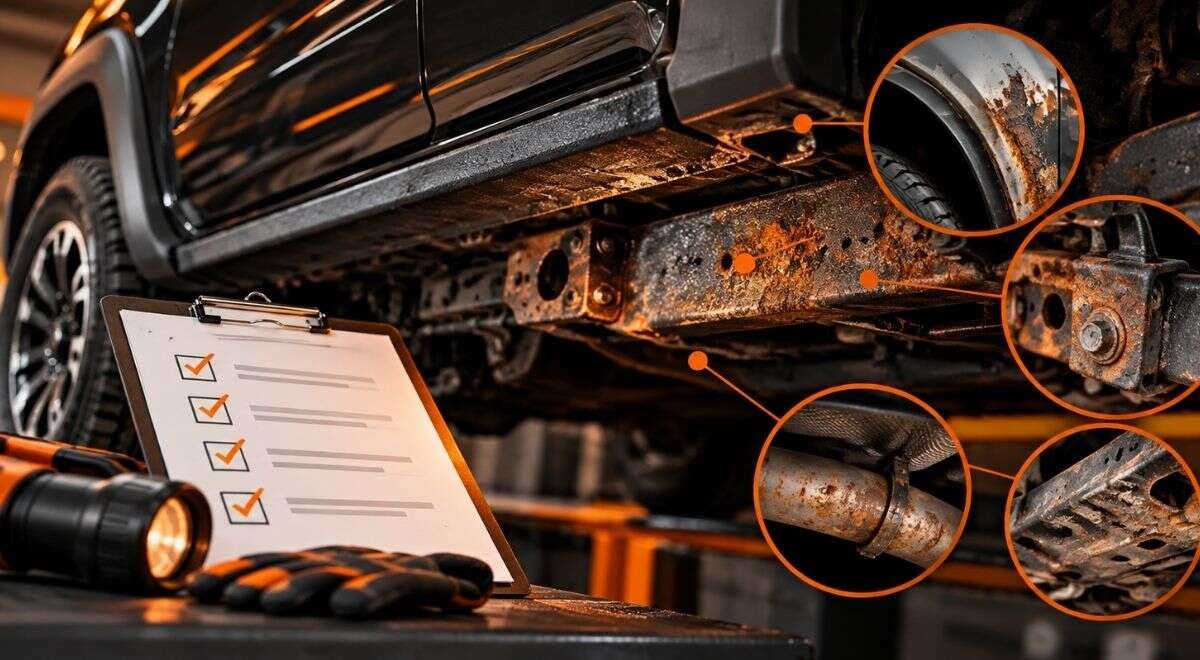
Corrosion is usually uneven. A broad frame surface may look acceptable while the lower flange, spring perch, brake-line bracket, or body mount is deeply affected. The worst locations are often the ones that collect wet debris or have a crevice between two pieces of steel.
Why a clean-looking vehicle can still have structural rust
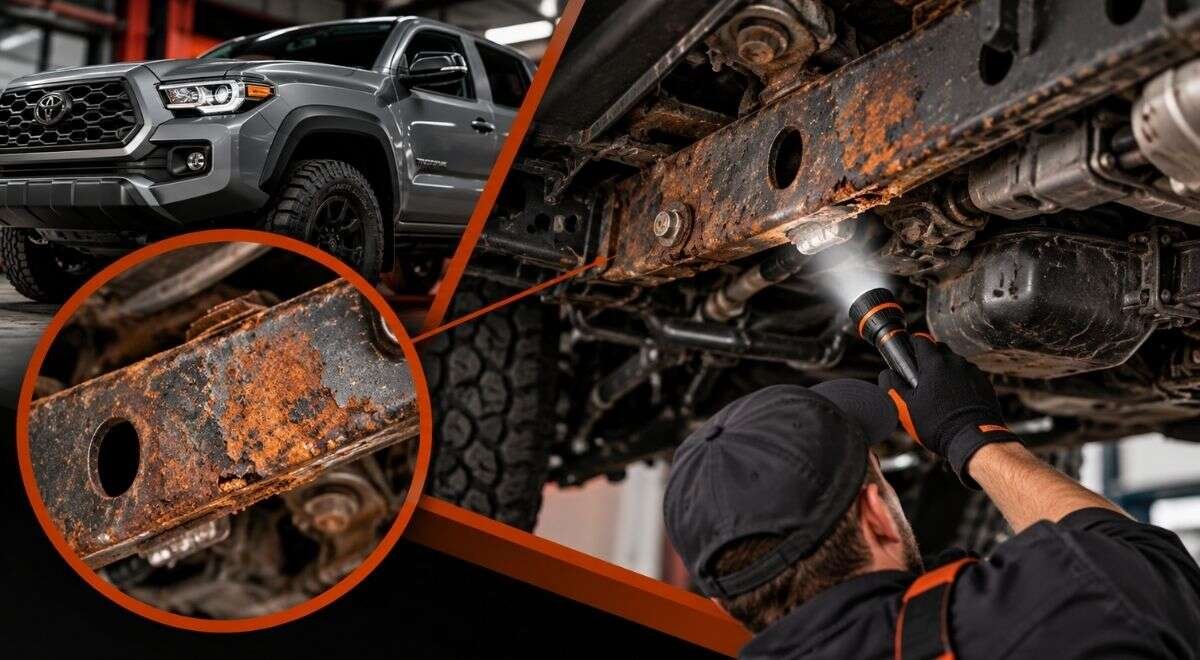
Paint and underbody dirt can hide section loss. A frame rail may retain its general shape while losing thickness from the inside or along a seam. A coating applied over that area can improve appearance without restoring strength. That is why structural evaluation must come before cosmetic sealing.
As an illustrative inspection policy, a shop might divide a vehicle into three categories:
- Sound metal: firm steel with surface oxidation only; clean, prime, and coat.
- Questionable metal: layered scale, swelling seams, or visible pitting; remove scale and measure or probe before coating.
- Failed metal: perforation, torn mounts, severe thinning, or deformation; repair or replace the affected section before protective coating.
Those categories are a decision framework, not a universal thickness standard. A qualified repairer must judge load paths, attachment points, and the vehicle manufacturer’s construction. If rust affects a suspension mount, steering component, seat-belt anchor, body mount, or brake-line support, appearance should not be the deciding factor.
Salt also changes the maintenance burden. The U.S. Environmental Protection Agency explains that chloride from road salt can enter water resources through runoff and can persist in the environment; its discussion of road salt is a reminder that washing a vehicle is not merely cosmetic, but part of removing deposited chlorides before they remain in seams. EPA’s road-salt and water-quality guidance provides useful context for why residue should be rinsed away rather than allowed to accumulate.
How Rust Prevention Paint works as a coating system
Steel corrosion requires an electrochemical reaction. In simple terms, exposed iron gives up electrons at an anodic area while another area supports a reduction reaction; water and dissolved salts make that process easier to sustain. A paint film interrupts the contact between the steel, moisture, oxygen, and contaminants. It does not make the steel permanently inert, and it cannot stop corrosion where the film has been cut, undercut, or detached.
Surface preparation controls the result
Preparation is where most coating failures begin. Oil, silicone, road film, loose scale, blasting dust, and trapped moisture can each prevent reliable adhesion. The correct sequence depends on the substrate and product, but the underlying decisions are consistent:
- Wash and degrease: remove salt, mud, oil, and wax without pushing contamination into seams.
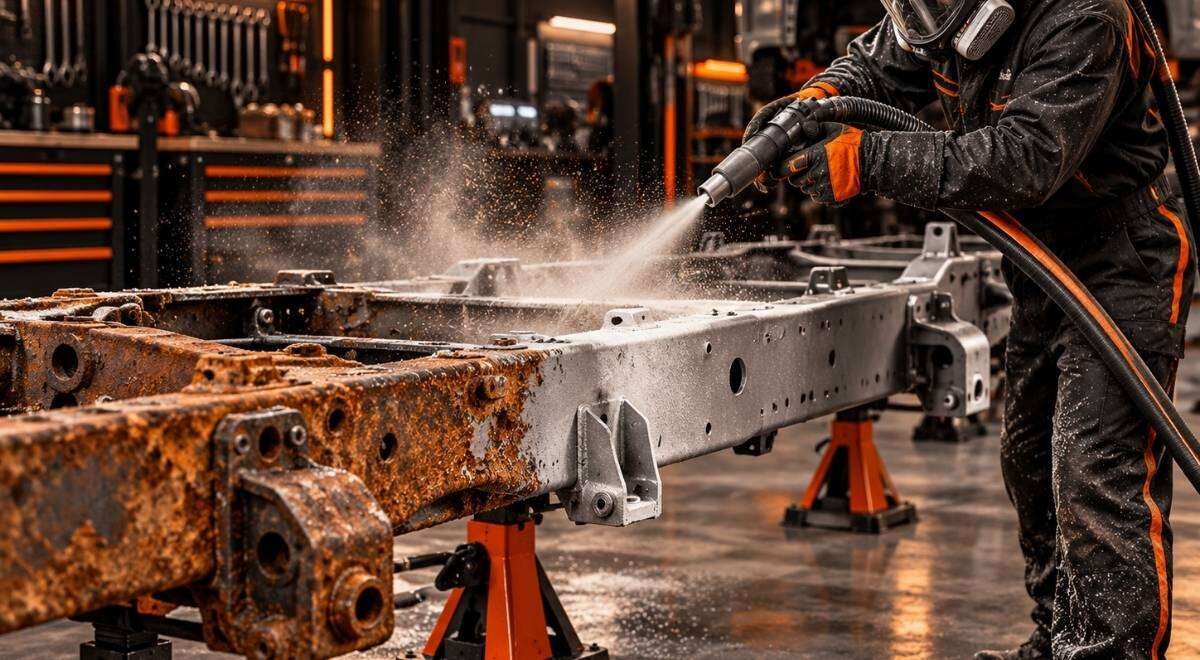
- Remove weak corrosion: scrape, wire-brush, mechanically abrade, or blast until loose scale and poorly bonded material are gone.
- Inspect the remaining steel: look for pinholes, sharp-edged pits, swollen seams, and distortion.
- Dry completely: water in a lap joint or boxed section can continue corroding beneath a new film.
- Apply within the product’s recoat and environmental limits: temperature, humidity, surface condition, and film thickness affect adhesion and cure.
Abrasive blasting can expose sound metal and remove tightly bonded contamination, but it also creates dust, noise, rebound, and a need for containment and respiratory protection. OSHA’s official abrasive-blasting guidance covers hazards including silica exposure, flying particles, and protective equipment; the guidance is relevant to shops deciding whether a frame can be prepared safely in place or should be handled as a dedicated restoration operation. OSHA’s abrasive-blasting safety guidance explains why blasting is a controlled process rather than simply “spraying sand” at a rusty component.
Film integrity matters more than a thick-looking finish
A heavy coat is not automatically a better coat. Excessive thickness can skin over while remaining soft underneath, crack during movement, or hide runs and pinholes. A thin area at an edge may fail first, allowing water to travel under the film. Product instructions govern application, but the practitioner should always inspect edges, drain holes, fasteners, welds, and overlaps rather than judging protection by gloss alone.
Different coating chemistries also have compatibility limits. A converter may require a particular cure or residue condition before primer. An epoxy may require a specific recoat window. A solvent-heavy product may soften an earlier layer. If the system is improvised from unrelated products, the failure may occur between coats rather than at the steel.
Where Rust Prevention Paint breaks down
Paint fails when the substrate, geometry, environment, or maintenance exceeds what the film can handle. The most common mistake is treating a visible coating as proof that corrosion has stopped. Rust can continue below a detached film, behind a seam, or inside a closed cavity while the outside remains smooth.
Hidden cavities and overlapping metal
Doors, rocker panels, boxed frame rails, crossmembers, tailgates, and quarter panels may contain folds and overlaps that cannot be fully painted from the outside. A rigid coating may not creep into those spaces, and drilling access holes without a plan can create new corrosion points. These locations generally need inspection, drainage verification, and a suitable cavity treatment rather than an exterior paint-only solution.
Impact, flex, and trapped moisture
Underbody surfaces are struck by stones and contaminated by wet grit. A hard coating can chip; a flexible coating can tear or lift if applied over scale. Suspension and body components also move relative to one another. A coating that bridges a joint or drain opening may crack or retain water.
Paint is especially risky over:
- Loose scale: the coating bonds to rust that is already separating from the steel.
- Wet seams: trapped moisture remains active after the visible surface dries.
- Greasy components: oil and wax interfere with adhesion.
- Perforated sections: a film disguises holes without restoring load-bearing capacity.
- Moving interfaces: rigid paint can crack where parts flex or rub.
- Drain paths: blocked openings allow water and salt to stay inside the structure.
For a used-car buyer, the practical lesson is to inspect the edges of the coating and the metal around it. Fresh black paint on a frame is not proof of a sound frame. Look for abrupt transitions, covered fasteners, filled drain holes, blistering, raised seams, and areas where coating stops just short of a rusted mount. A pre-purchase inspection should include the structure, not only the engine and body panels.
For a fleet operator, coating failure also has an operational consequence: it can make repeat inspections harder. A maintenance plan should record the coating date, areas treated, products used, and locations intentionally left accessible for inspection. That record helps technicians distinguish an intact protective layer from a repaired area that needs closer examination.
How practitioners apply the right treatment
A professional process begins with an assessment, not a product choice. The vehicle’s age, use, construction, existing corrosion, and access determine whether paint is appropriate. A newer truck may need preventive protection on clean underbody metal and inside cavities. A salt-exposed work truck may need cleaning and targeted repairs before any coating. A classic vehicle may require complete disassembly so that seams, brackets, and the back sides of panels can be treated correctly.
A practical workflow for vehicles and components
- Document the starting condition: photograph frame rails, mounts, seams, brake and fuel-line areas, and drain points.
- Clean the vehicle: remove salt and packed debris, then allow hidden areas to dry.
- Separate cosmetic from structural findings: identify whether rust is surface oxidation, section loss, or a failed attachment area.
- Remove or repair compromised metal: do not seal over perforation or a weakened mount.
- Prepare sound surfaces: degrease, abrade or blast as appropriate, and remove preparation residue.
- Build the coating system: use compatible primer and topcoat layers suited to the location.
- Treat cavities separately: preserve internal seams and boxed sections without blocking drainage.
- Inspect after curing: check edges, fasteners, welds, plugs, drain holes, and missed areas.
- Set a maintenance interval: rinse salt regularly and reassess before each winter or heavy-use season.
The sequence can change for a restoration. A frame-off project allows access to the entire component, makes blasting and repair more thorough, and avoids coating over hidden dirt. The site’s frame-off rust removal service page is relevant when a frame or component needs corrosion and scale removed before a protective system is selected.
Choosing among paint, undercoating, and repair
Use rust prevention paint when the metal is accessible, structurally sound, and capable of accepting a bonded coating. Use a flexible underbody or cavity product where the surface needs protection from water and debris but must accommodate movement or reach enclosed areas. Choose metal repair when corrosion has reduced thickness, opened a hole, distorted a mount, or compromised a load path.
An illustrative decision example makes the distinction clearer:
- New pickup with clean frame: wash, dry, inspect, and apply a compatible protective system before winter contamination builds up.
- Five-year-old commuter with surface scale: remove weak scale, check seams and mounts, then coat only after sound steel is exposed.
- Older truck with a perforated spring perch: repair or replace the affected metal first; paint is a finishing step.
- Classic body with rust inside rocker cavities: open or access the affected area, repair the metal, preserve the cavity, and verify drainage.
- Fleet chassis with repeated stone impact: choose a maintainable system and schedule documented inspections of high-wear zones.
Product labels still matter. Follow the manufacturer’s instructions for preparation, mixing, application temperature, cure, recoating, and compatible topcoats. The best general recommendation is not “apply the thickest rust paint.” It is match the coating to the substrate and exposure, leave structural decisions to inspection and repair, and make future inspection possible.
Recommendation for a salt-exposed vehicle
For a vehicle operating in Worcester or elsewhere in Central Massachusetts, begin with a corrosion inspection and a thorough salt-removal wash. If the frame and components are sound, a professionally prepared primer-and-topcoat system can provide useful protection on accessible metal. Add cavity protection where paint cannot reach, keep drain openings clear, and plan periodic inspections for chips, lifted edges, and new scale.
If rust has already affected a frame, mount, bracket, or boxed section, do not let a fresh black finish decide the repair. Have the metal evaluated first, then combine repair, preparation, rust prevention paint, and appropriate underbody or cavity protection as one system. Bay State Rust Prevention provides rust prevention undercoating, rust removal, frame-off sandblasting, and frame repair for vehicles and components across Central Massachusetts; its main site can help you choose an evaluation path for preventive protection or restoration.