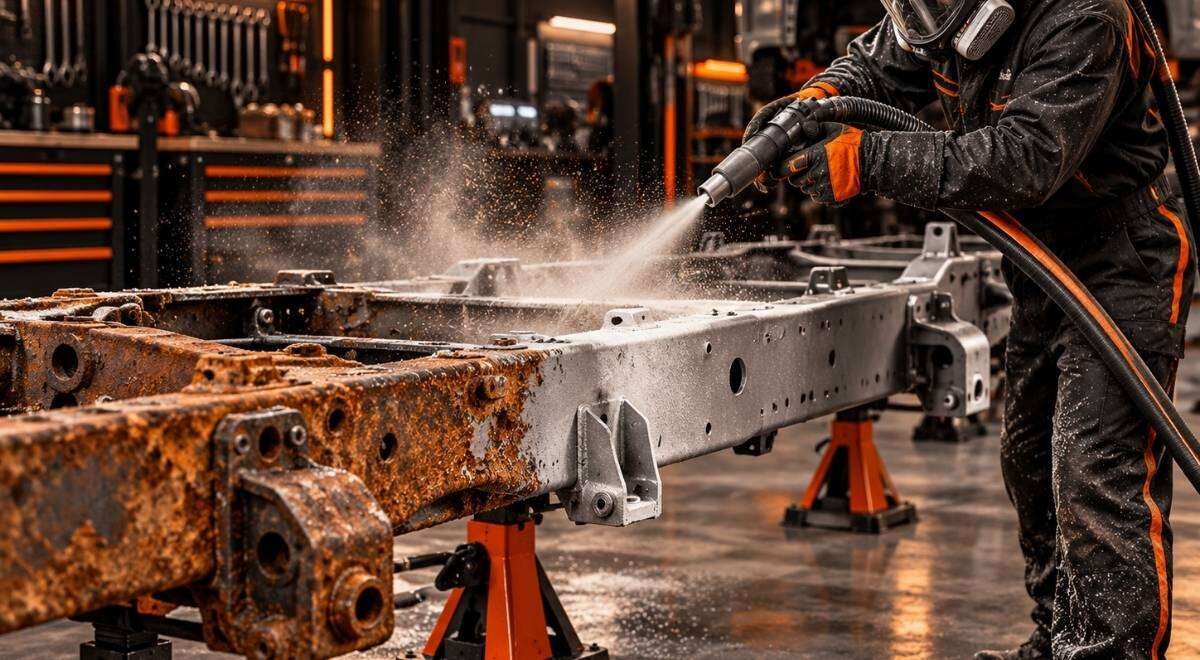
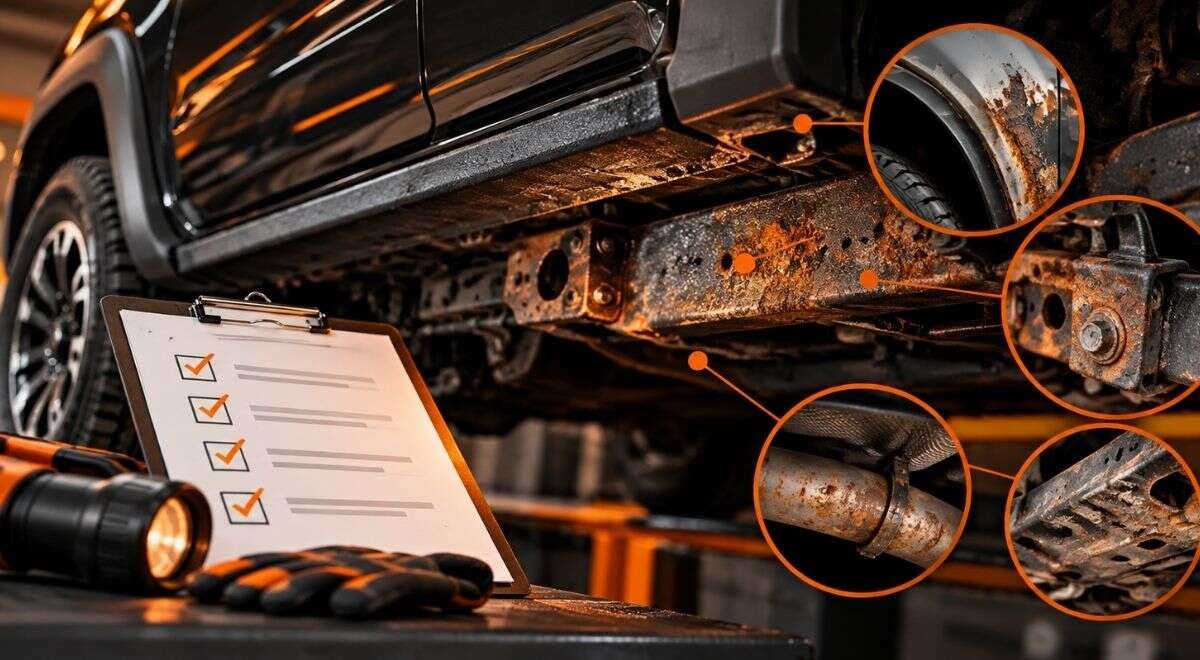
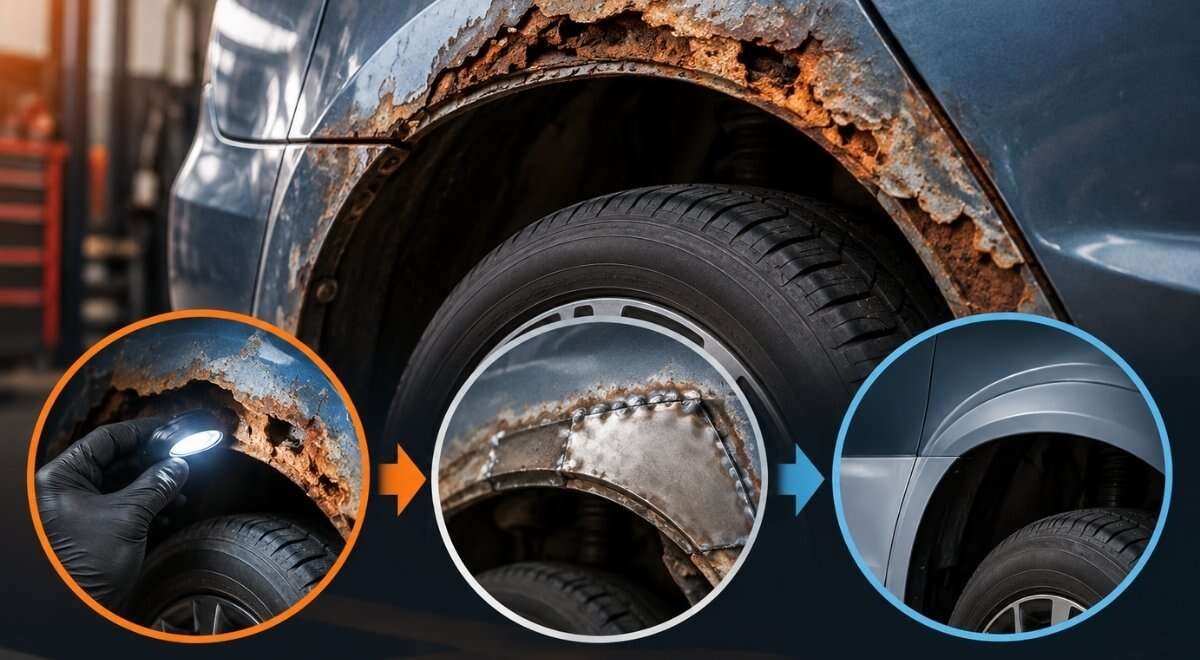
Frame sandblasting removes rust, scale, and old coatings from accessible vehicle-frame surfaces by driving abrasive media against them with compressed air or blasting equipment. It can reveal damage that paint or undercoating hides, but it does not repair weakened steel: the frame must be inspected, repaired where needed, and protected soon after cleaning. For a Central Massachusetts vehicle exposed to salted winter roads, the useful question is not simply whether to blast, but whether the frame can be safely accessed and what work should follow.
What Frame Sandblasting does—and what it does not
“Sandblasting” is commonly used as a general name for abrasive blasting. The process does not necessarily use sand. A shop selects an abrasive and blasting method suited to the surface, coating, access, and condition of the metal. The objective is to remove unwanted material and expose a surface that can be assessed or prepared for a coating—not to make every part look uniformly new.
That distinction matters on a vehicle frame. A clean outer rail may still have corrosion inside a boxed section, between overlapping plates, or behind a bracket. Conversely, dark staining on a sound surface is not by itself proof that the frame needs a structural repair. Blasting is a cleaning and inspection step; it cannot restore metal lost to corrosion or establish that a frame is safe without a competent inspection.
- It can remove loose rust scale, paint, and some existing protective coatings from surfaces the abrasive can reach.
- It can expose pits, cracks, old welds, patch edges, and areas where corrosion has reduced the metal.
- It cannot reach every cavity through a narrow opening, and it does not automatically clean the inside of a boxed rail.
- It cannot replace metal, correct a distorted frame, or determine a vehicle maker’s repair limits.
The practical result is a better view of the exposed surface and a cleaner starting point for repair or corrosion protection. For a vehicle that only needs preventive treatment, blasting may be unnecessary; an appropriate rust prevention undercoating service is a different job from stripping a frame for inspection or restoration.
Why the condition under the coating matters
Corrosion progresses when steel, moisture, and oxygen interact; road salt can make wet conditions more corrosive by helping an electrical current flow across the surface. A protective coating separates metal from that environment, but rust and scale can undermine the coating’s bond. Coating over loose scale may hide a problem without stopping it, especially where salt-laden water can collect at seams or behind brackets.
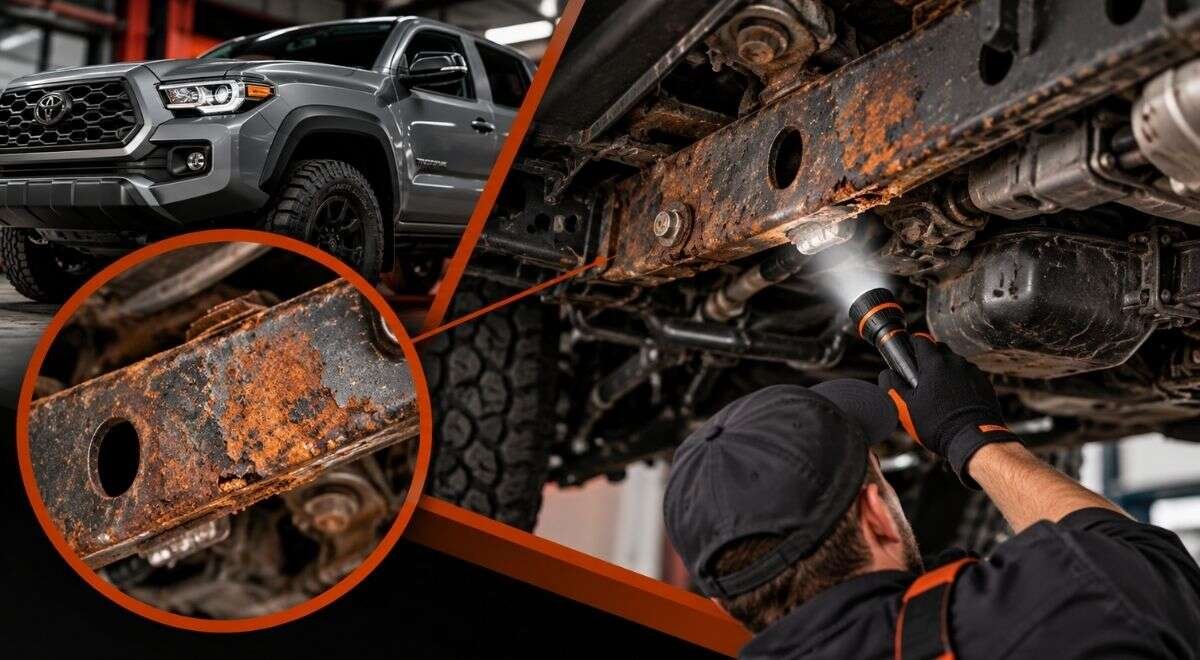
Frames are especially challenging because their shapes create places where water and debris can sit: rail flanges, crossmember joints, suspension mounts, brake-line clips, and enclosed sections. A visible coating that looks intact from below does not prove the metal underneath is sound. Removing selected coatings can help a technician distinguish between a surface-cleaning job and a repair job, provided the work reaches the area in question.
Access determines the value of the inspection. Blasting only the easy-to-see outer faces may improve appearance while leaving the most relevant corrosion untouched. If a truck has heavy buildup around a body mount, for example, removing material from the accessible area may reveal a thin or perforated edge that changes the repair plan. It is the discovered condition—not the freshly cleaned appearance—that should guide the next step.
For a newer truck or a leased vehicle, the decision may be to preserve sound factory coatings rather than strip them. For a used vehicle, a buyer may want an independent inspection before any fresh coating obscures the frame. For a restoration, the goal may be broader exposure so the shop can assess old patches and plan metalwork. In each case, blasting is justified when the information or preparation it provides is worth the coating removal, disassembly, and refinishing that follow.
How a responsible blasting job is planned and completed
Prepare the vehicle and control what can be damaged
Before abrasive is introduced, the shop needs to understand the vehicle and the intended scope. A frame-off restoration allows broader access than a job performed with the body and mechanical components in place. In either case, the operator should identify sensitive parts, openings, and contamination risks before starting. Abrasive entering a bearing, wiring connector, brake component, or engine opening can create a separate repair problem.
A practical pre-blast checklist includes:
- Photographing the frame, prior repairs, and visible corrosion before cleaning.
- Removing or protecting vulnerable components and sealing openings that must stay clean.
- Removing grease, oil, and packed debris that can interfere with blasting or conceal the surface.
- Choosing a contained work area and a cleanup plan for spent abrasive and removed coatings.
- Agreeing on what happens if blasting reveals a crack, perforation, or questionable prior repair.
These steps are not administrative extras. Grease can smear rather than come off cleanly, and a coating that contains hazardous material can create a dust-control and waste-handling issue. OSHA identifies dust, noise, and other exposure hazards associated with abrasive blasting; its guidance describes controls such as containment, ventilation, and appropriate protective equipment (OSHA abrasive blasting guidance).
Match the abrasive and method to the frame
Media selection is a trade-off. A harder or more aggressive abrasive may remove stubborn material quickly, but it can also be a poor choice for thin sections, delicate parts, or areas where surrounding components cannot be protected. A less aggressive approach may preserve the surface better but take longer or leave a coating that needs another method. The operator also controls pressure, nozzle distance, angle, and dwell time. There is no single setting that suits every frame and coating.
Silica sand is not a safe default simply because “sandblasting” is the familiar term. Blasting can create respirable dust, and exposure to crystalline silica can cause serious lung disease. OSHA’s silica standard sets requirements for controlling occupational exposure, while NIOSH’s Pocket Guide describes health hazards associated with silica (OSHA silica standard; NIOSH Pocket Guide: silica). A shop should select suitable media and use effective dust controls rather than assume the abrasive is harmless because the job is outdoors.
Inspect, repair, and protect the exposed metal
After cleaning, the frame should be examined in good light, including the edges of brackets, joints, welds, and previously patched areas. A technician should distinguish superficial pitting from section loss or a crack, and determine whether further cleaning is needed to judge a suspect area. If structural damage is present, the repair plan must account for the vehicle and the affected location. Removing rust does not authorize an improvised patch or make a damaged rail structurally sound.
The exposed steel also needs a defined next step. If it will be repaired, the shop should complete the necessary metalwork and prepare the surface for the selected coating system. If it is sound and ready for protection, suitable primer or corrosion protection should follow the coating manufacturer’s preparation requirements. OSHA’s respiratory-protection standard covers requirements for employers whose workers must use respirators, including a written program and fit testing where applicable (OSHA respiratory protection standard); a respirator alone is not a substitute for controlling dust at its source.
For an illustrative decision—not a universal repair threshold—imagine a 10-centimeter section of a rail edge that remains solid after cleaning but has surface pitting. That may call for assessment and protective coating, not automatic metal replacement. If blasting instead exposes a through-hole at a suspension attachment, the issue becomes structural evaluation and an appropriate repair plan. Appearance alone does not set the repair boundary.
Where Frame Sandblasting can go wrong
Blasting is useful, but it is not a risk-free shortcut. The following problems are reasons to pause and revise the plan rather than simply increase pressure or keep going:
- Thin or delicate metal: Aggressive blasting can damage metal that is already thin, or distort a component if the method is poorly suited to it.
- Hidden cavities: Abrasive may not clean the inside of a boxed rail, while loose media left inside can become an unwanted contaminant.
- Unprotected components: Media and dust can damage or contaminate parts that were not removed or effectively masked.
- Uncontrolled dust: Blasting coatings can release hazardous dust. OSHA’s abrasive-blasting and silica guidance supports evaluating exposure and using appropriate controls, not treating open-air visibility as evidence of safety.
- Delay before protection: Clean bare steel is vulnerable to renewed corrosion. The work schedule should make room for inspection, repair, and coating rather than leaving stripped surfaces exposed.
- Coating over unresolved damage: A new protective layer can conceal a defect if the frame was not adequately inspected first.
These limitations affect whether to blast the whole frame, selected sections, or not at all. If the vehicle is assembled and important areas cannot be reached without unacceptable risk to nearby parts, a limited inspection or further disassembly may be more useful than a cosmetic blast. Likewise, if the frame has advanced structural deterioration, the first decision is whether repair is feasible—not which abrasive will make it look clean.
How owners, restorers, and fleets should apply the process
The right scope depends on what the vehicle needs next. A classic vehicle under restoration may benefit from broad access and frame-off rust removal so the shop can evaluate old repairs and prepare components. A daily driver with surface corrosion may need selective removal and repair, followed by a coating suited to its use. A fleet manager may prioritize inspection records and minimizing downtime: stripping every vehicle when only a few have a specific corrosion concern can add work without improving the decision.
Use these examples as planning prompts, not universal specifications. The dimensions are illustrative scenarios, not repair limits:
- New pickup: If the frame coating is intact and the vehicle has no repair need, ask whether inspection and a compatible preventive treatment are more appropriate than removing factory protection.
- Used work truck: If a 15-centimeter patch edge is visible near a crossmember, request inspection of the repair and surrounding steel before applying another coating.
- Classic car: If a boxed rail has interior corrosion, ask how the shop will inspect and protect the cavity; exterior blasting alone cannot answer that question.
- Fleet vehicle: If corrosion appears concentrated around similar mounts on several vehicles, document those locations and have each frame assessed before setting a consistent maintenance scope.
Before authorizing work, ask the shop to explain what will be removed, what will be masked or disassembled, how dust and spent media will be controlled, and what protection will be applied afterward. Also ask how newly discovered cracks, holes, or old repairs will be documented and priced or approved before additional work proceeds. A clear scope makes it easier to compare a restoration plan with a preventive-maintenance plan without confusing “cleaned” with “repaired.”
Choose the next step from the frame’s actual condition
Authorize frame sandblasting when it provides needed access, surface preparation, or information—and when the job includes inspection and a plan for the bare metal afterward. For an intact newer frame, preserving existing sound coatings may be the better choice. For a restoration or a frame with concealed corrosion, disassembly and controlled cleaning may be necessary to reveal what can be repaired. If the exposed steel has lost section or is cracked, stop treating the job as surface preparation and get a repair assessment before applying a protective coating.
Bay State Rust Prevention provides rust removal, frame-off sandblasting, frame repair, and WaxOyl corrosion protection for vehicle owners in Worcester and Central Massachusetts. If you need help deciding whether a frame needs cleaning, structural work, or preventive protection, see what baystaterustprevention.com offers and discuss the vehicle’s condition and intended use before choosing a scope.