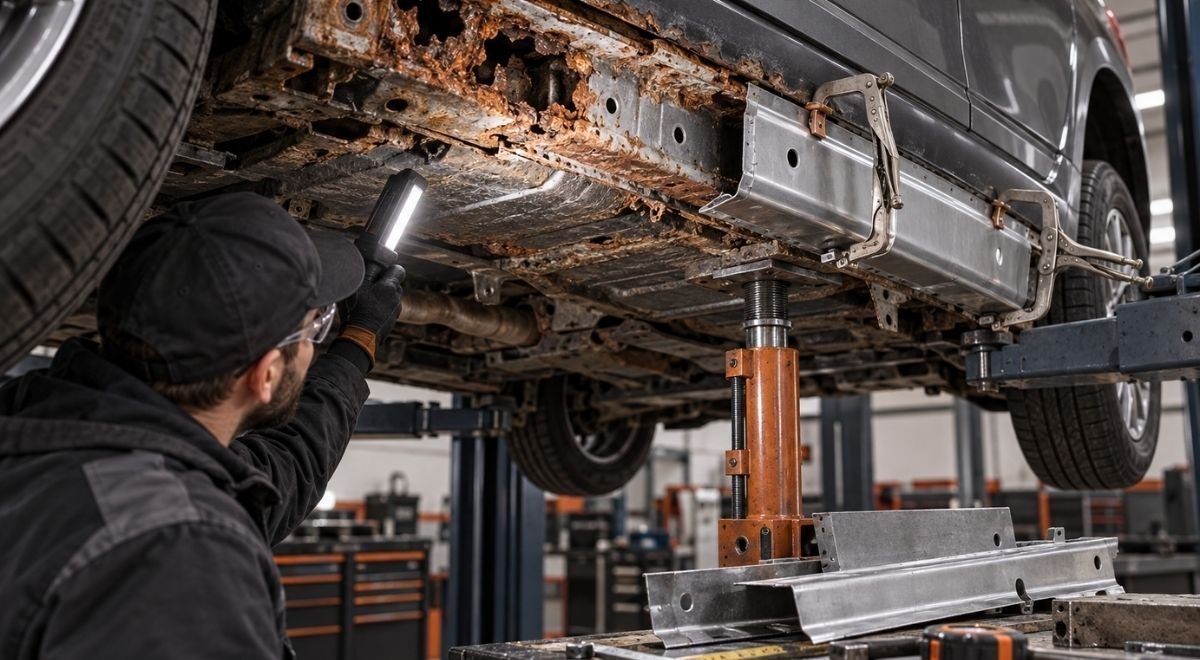
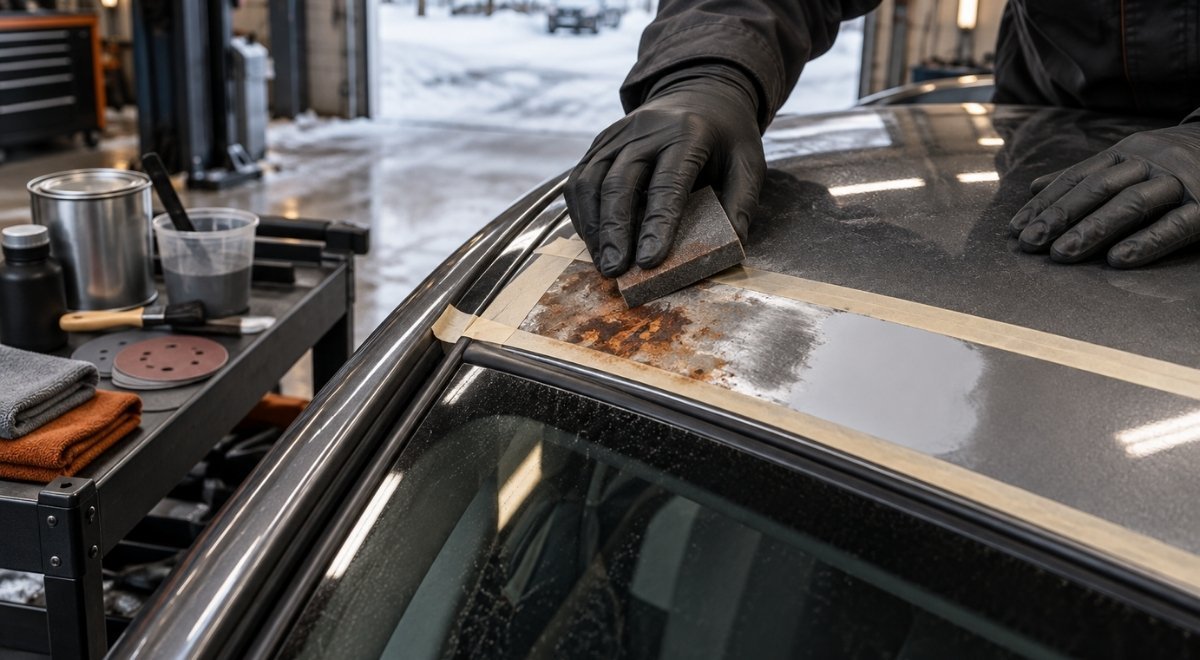
Automotive frame repair is the process of inspecting, stabilizing, cutting out, replacing, aligning, and protecting a vehicle’s structural frame or unibody sections after collision damage, severe corrosion, or failed previous repairs. For a Central Massachusetts vehicle exposed to winter salt, the job is not simply “welding a plate over rust.” A sound repair must restore the intended load path, preserve alignment, remove contamination, and leave the repaired steel protected against renewed corrosion.
That distinction matters to owners of pickup trucks, older cars, fleet vehicles, and specialty restorations. Surface scale on a frame may be cosmetic, while layered rust around a spring hanger, crossmember, suspension mount, or body mount can affect how forces travel through the vehicle. The correct decision may be cleaning and coating, a localized structural replacement, or a more extensive teardown and restoration. The visible hole is only one part of that decision.
What Automotive Frame Repair actually restores
A vehicle frame is a structural assembly, not just a platform that holds the body. On a traditional body-on-frame truck, the rails and crossmembers carry the cab, bed, powertrain, suspension, and towing loads. On a unibody car, rails, floor sections, pillars, rocker panels, and other reinforced stampings work together as one structural shell. A repair is successful when the replacement steel and welds restore the intended geometry and force transfer—not merely when the opening is covered.
Frame, subframe, and unibody are different jobs
“Frame damage” can describe several conditions. A full-length ladder frame may have corrosion along the lower rail, around a crossmember, or at a suspension bracket. A removable front or rear subframe may be badly rusted while the passenger compartment remains serviceable. A unibody vehicle may have corrosion at a pinch weld, rocker, floor reinforcement, or strut tower. Each requires a different inspection strategy and repair sequence.
Before discussing repair, identify four things:
- Which structure is carrying the load? Determine whether the affected part supports suspension, steering, drivetrain, towing, body mounting, or crash-management loads.
- How far the corrosion extends? Rust often travels inside boxed sections and beneath overlapping layers where the exterior still looks intact.
- Has the geometry changed? Sagging, shifted mounts, uneven wheel positioning, or doors that no longer fit can indicate movement rather than surface deterioration.
- Can the surrounding steel accept a weld? Thin, laminated, oil-soaked, or heavily pitted metal may not provide a reliable weld boundary.
The repair plan should also distinguish between a cosmetic patch and a structural replacement. A cosmetic patch closes an opening or improves appearance. A structural repair replaces unsound material with steel of suitable thickness and shape, reconnects it to sound structure, and controls distortion during welding. A patch may be appropriate in a non-load-bearing area; it is not automatically appropriate near a suspension attachment.
Why “still drives” is not a structural inspection
Many unsafe conditions do not produce an immediate driving symptom. A vehicle can track straight while a spring hanger, control-arm mount, or frame rail has lost section thickness. Tires may still wear evenly because the damaged part has not yet shifted. The vehicle’s ability to move under its own power is therefore a poor test of structural integrity.
Massachusetts inspection requirements are a useful reminder that roadworthiness includes more than emissions or lighting. The official 2026 Massachusetts vehicle safety inspection information is available through the [Massachusetts Registry of Motor Vehicles](https://www.mass.gov/info-details/vehicle-safety-inspection), including inspection categories and safety-related requirements. That page should be treated as the current starting point for owners checking state requirements; a repair decision still needs a physical assessment of the specific structure.
For a used-truck buyer, the practical question is not “Is there rust?” There is likely some rust on a Massachusetts vehicle. The better questions are: Is the corrosion structural? Is it progressing inside a boxed rail? Has someone welded over scale? Are suspension and body mounts still attached to sound metal? Those answers determine whether the vehicle is a reasonable candidate for repair.
Why road salt turns a small defect into structural damage
Corrosion is an electrochemical process. Bare steel gives up electrons at an anodic area, while a nearby cathodic area consumes them. Water containing dissolved salts carries current between those areas. The result is accelerated oxidation, especially where moisture remains trapped against steel or where a coating has been cut, scraped, or punctured.
Road salt does not need to cover an entire frame to cause trouble. A thin film of salty water can enter a seam, drain slowly, and remain active long after the outside surface appears dry. Repeated freeze-thaw cycles enlarge cracks and gaps. Dirt holds moisture against the coating. Mud packed above a crossmember creates a damp pocket that may receive little airflow or washing.
Where corrosion concentrates
Frame damage tends to develop at interfaces and low points rather than randomly across a clean, exposed rail. Inspect these areas with particular attention:
- Spring and suspension mounts: Loads enter the frame through brackets, so corrosion around their welds can be more consequential than scale on the middle of a rail.
- Crossmember ends: Overlapping boxed sections can retain salt and hide corrosion behind flanges.
- Body mounts: A deteriorated mount can allow movement, noise, alignment changes, and additional stress on nearby structure.
- Drain holes and seams: Blocked drains trap water inside boxed rails and behind reinforcement layers.
- Brake and fuel line routes: Clips and brackets can hold moisture against both the line and the frame.
- Previous repairs: Welded plates, undercoating, and seam sealer can conceal rust if the area was not cleaned before application.
The important mechanism is section loss. A frame rail does not need to disappear completely before its capacity changes. Pitting reduces the effective thickness of steel; elongated holes interrupt continuity; corrosion at a bracket can reduce the area transferring load into the rail. The effect depends on location, shape, material thickness, load direction, and how much sound metal remains around the defect.
Why coatings do not reverse weakened steel
A corrosion-prevention coating can isolate clean steel from water and oxygen, but it cannot restore metal that has already been consumed. Applying a coating over heavy scale may slow access to fresh moisture while leaving a weak section underneath. It may also make later inspection more difficult.
That is why rustproofing and structural repair are related but separate decisions. Owners of newer trucks and leased vehicles may reasonably prioritize preventative treatment before deep corrosion develops. Owners of a rust-damaged classic or work truck should first determine whether the substrate is sound. A protective treatment such as rust prevention undercoating is most useful after loose scale, packed debris, and active problem areas have been addressed.
For 2026 planning, use a simple rule: protect sound steel before salt reaches it, and repair weakened steel before covering it. This is not a promise that any coating lasts forever. It is a sequence that keeps the protective layer from becoming camouflage for an unresolved structural defect.
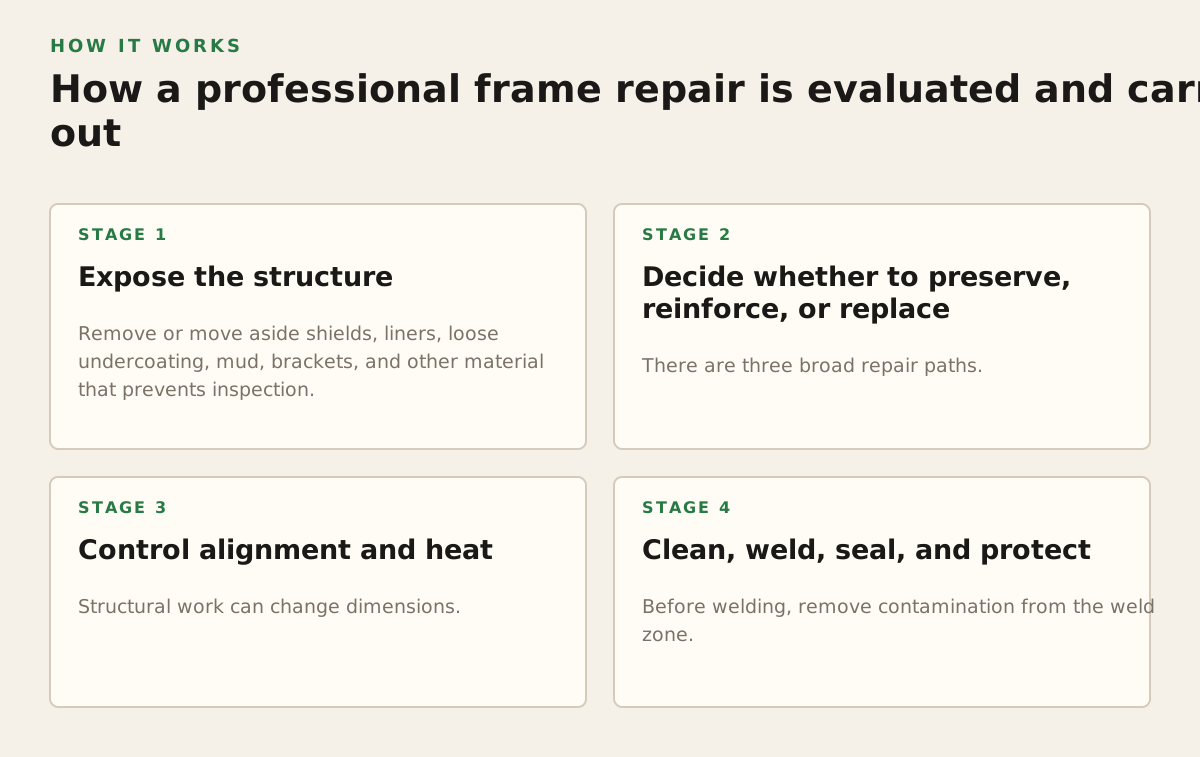
How a professional frame repair is evaluated and carried out
A defensible repair begins with inspection and documentation, not a torch. The technician needs to see the structure, understand the vehicle’s design, and determine whether the repair can be completed without introducing a new weakness. When a frame is badly scaled, the first inspection may be provisional because dirt and corrosion hide the actual boundary.
1. Expose the structure
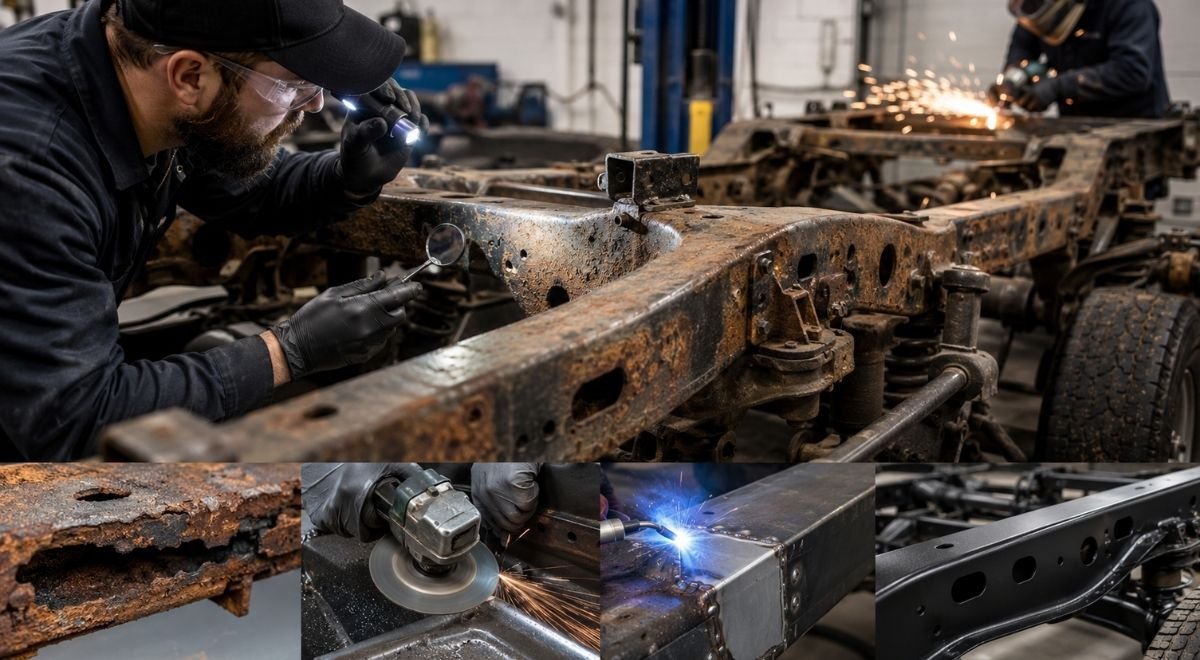
Remove or move aside shields, liners, loose undercoating, mud, brackets, and other material that prevents inspection. Cleaning is not just preparation for appearance; it reveals the transition from sound metal to perforated or laminated steel. The area should be examined from multiple directions, including the inside of boxed sections when access allows.
Useful observations include:
- Whether a probe breaks through at the edge of a visible blister.
- Whether scale is tightly bonded or separating in layers.
- Whether a weld terminates in solid steel or in a paper-thin edge.
- Whether a boxed rail contains loose rust flakes that can obstruct inspection or welding.
- Whether water can drain from the cavity after cleaning.
Mechanical probing and visual inspection have limits. A frame may look acceptable externally while being thin inside a boxed section. Conversely, heavy surface scale can look dramatic while the underlying steel remains suitable for cleaning and coating. The assessment must separate appearance from remaining section thickness.
2. Decide whether to preserve, reinforce, or replace
There are three broad repair paths. Preservation is appropriate when the steel remains structurally sound: remove loose corrosion, clean the surface, address seams and drains, then apply a compatible protective system. Reinforcement may be appropriate when a localized area has lost material but sound surrounding structure can support a correctly designed replacement section. Replacement becomes more appropriate when corrosion extends through a major rail, multiple attachment points, or the surrounding weld zones.
A reinforcement plate is not automatically stronger. If it is welded over rust, the old weak steel remains in the load path. If the plate ends abruptly, stress can concentrate at the termination. If it blocks drainage, the repair can create a new corrosion pocket. A competent plan considers thickness, fit, edge shape, weld access, heat control, and how the repair will be inspected later.
3. Control alignment and heat
Structural work can change dimensions. Cutting a rail or removing a crossmember releases stored stress; welding introduces localized heat and shrinkage. On a vehicle where suspension geometry matters, even a small positional error can affect mount location, wheel alignment, driveline angles, or body fit.
The vehicle should be supported in a way that does not unintentionally twist the structure. Reference points, mount positions, and adjacent geometry should be recorded before cutting. During welding, the sequence should limit heat concentration and distortion. The correct process depends on the vehicle’s steel, access, repair design, and manufacturer information; there is no universal weld setting or plate shape that suits every frame.
Vehicle manufacturers may publish repair procedures, sectioning limits, material specifications, and restrictions on where welding is permitted. For safety recalls and vehicle-specific safety information, owners can consult the [official NHTSA recalls and safety resources](https://www.nhtsa.gov/recalls) in 2026. A recall page is not a substitute for a repair manual, but it is a reliable place to check whether a known structural or corrosion-related campaign applies to a vehicle identification number.
4. Clean, weld, seal, and protect
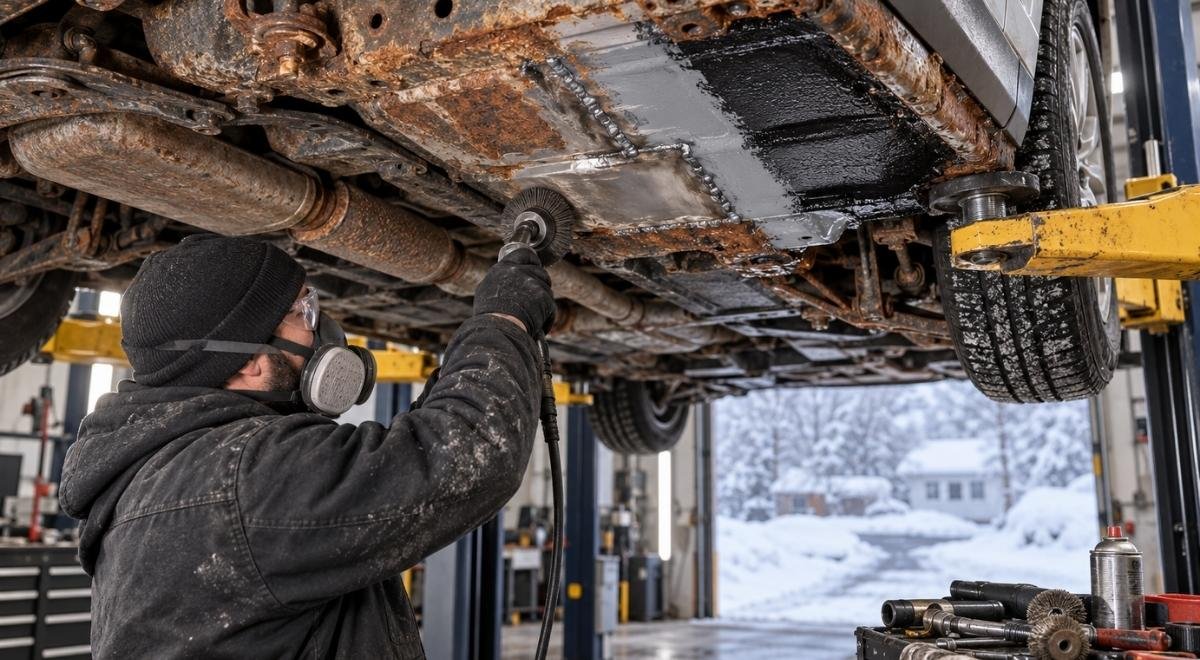
Before welding, remove contamination from the weld zone. Rust, paint, oil, seam sealer, and undercoating can produce porosity, smoke, poor fusion, or an unsafe work environment. After the structural repair, the area should be cleaned again, inspected, sealed where appropriate, and coated in a way that does not trap water or hide an unresolved defect.
Protective work may include a suitable primer, seam treatment, cavity protection, and an external undercoating selected for the surface and future inspection needs. The goal is not to bury every surface under a thick layer. The goal is to keep water and salt away while retaining access to drains, fasteners, inspection points, and serviceable components.
Any abrasive blasting or aggressive cleaning also requires hazard controls. The [Occupational Safety and Health Administration’s abrasive blasting guidance](https://www.osha.gov/abrasive-blasting) describes hazards and controls involving dust, noise, compressed air, respiratory protection, containment, and equipment. That matters for frame-off restoration because blasting can expose hidden perforation while also creating hazardous dust and ricochet if the work area is not controlled.
Where frame repairs fail, and how to recognize the risk
Most poor outcomes are caused by a flawed boundary or sequence rather than by the idea of repairing rusted steel itself. The visible hole is cut out, but the repair stops before reaching sound metal. Or a plate is installed without addressing the bracket that caused the load concentration. Or a coating is applied before moisture and debris are removed from a cavity.
Common failure modes
- Welding over active corrosion: The weld may attach to thin material while the surrounding rust continues to reduce strength.
- Using a cosmetic patch in a load path: A thin flat plate can close a hole without restoring the original boxed shape or bracket support.
- Ignoring the opposite side: Corrosion often affects both sides of a rail, especially around seams and crossmembers.
- Blocking drainage: A patch or sealant that traps water can accelerate corrosion inside the repair.
- Overheating nearby components: Heat and sparks can damage wiring, hoses, fuel-system parts, bushings, coatings, and interior materials.
- Failing to recheck geometry: A repair can be strong yet incorrectly positioned, leaving suspension or body mounting out of specification.
- Covering the evidence: Thick coating over scale may create a clean appearance while making future inspection harder.
There is also a practical limit to repairability. If corrosion has spread through several connected structural members, if suspension loads enter rusted material on multiple sides, or if the cost and scope approach the value of the vehicle, replacement or retirement may be more rational than localized patching. That is not a judgment about the owner’s attachment to a classic or work truck; it is a decision about whether enough sound structure remains to build a predictable repair.
Questions owners should ask before approving work
- Which part is structural, and which part is only a cover, bracket, or heat shield?
- How far beyond the visible opening does the rust extend?
- Will the repair remove the weakened metal or simply cover it?
- How will the vehicle be supported and held in alignment during cutting and welding?
- What will happen to trapped moisture inside the boxed section?
- How will the repaired area remain inspectable after coating?
- Are there vehicle-specific repair instructions or recall information to check?
- What components must be removed or protected from heat, sparks, dust, and abrasive media?
Photographs are useful, but they should show the cleaned boundary, not only the finished coating. For a buyer evaluating a used vehicle, request views of frame rails, spring hangers, body mounts, crossmember ends, and previous welds. Fresh black coating is not proof of structural quality. A repair history that explains what was removed and how alignment was preserved is more informative.
How practitioners apply the process to real vehicle decisions
The right scope depends on the vehicle’s use, structure, corrosion stage, and owner’s goal. A leased crossover that will be returned soon has a different decision from a plow truck expected to work for years or a classic being prepared for a full restoration. The following examples are illustrative planning scenarios, not universal thresholds or promises.
- New truck, light surface scale: A 2023 pickup with intact rails, clean seams, and no loss around suspension mounts may need cleaning, drain inspection, and preventative corrosion protection rather than cutting and welding.
- Work truck with a local perforation: A 2014 utility truck with a small opening near a non-detached bracket may require the area to be opened farther, the unsound section removed, and a formed replacement fitted to sound steel. The visible hole size alone should not determine the repair size.
- Suspension-mount corrosion: A 2008 pickup with layered rust around a spring hanger deserves structural inspection before continued towing or heavy loads. The mount and its load path may need replacement, not a surface plate.
- Classic frame restoration: A 1968 project vehicle with widespread scale may justify body removal and frame-off rust removal so the frame can be accessed on all sides. The scope should include hidden rails, crossmembers, brackets, and drain paths.
- Fleet maintenance: A small Massachusetts fleet can use a starting policy of photographing known corrosion areas during scheduled service and prioritizing vehicles with rust near suspension, steering, brake-line supports, and body mounts. This is an illustrative management policy, not a state-mandated inspection interval.
Choosing between localized repair and frame-off work
Localized repair is generally more practical when corrosion is limited, the surrounding steel is sound, and the affected area can be accessed without dismantling most of the vehicle. It reduces disassembly and helps preserve an otherwise usable vehicle. The trade-off is limited visibility: boxed sections and hidden overlaps may remain difficult to inspect.
A frame-off approach provides access to surfaces that are blocked by the body, bed, fuel tank, exhaust, wiring, and suspension. It can make sense for a valuable classic, a heavily corroded but restorable truck, or a frame with multiple affected sections. The work is more invasive, and the owner should expect a broader decision process involving fasteners, bushings, lines, body mounts, paint systems, and reassembly measurements. Frame-off does not mean every component must be replaced; it means the structure can be evaluated and treated with far fewer blind spots.
Protection after repair
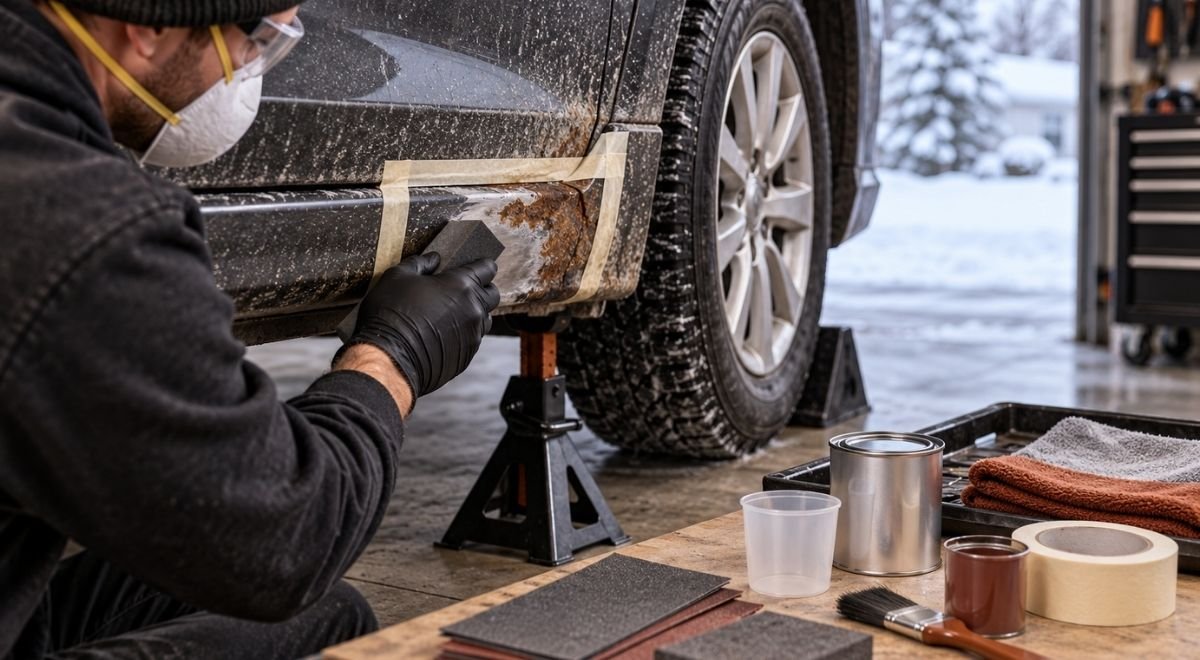
Once structural work is complete, protection should match the repaired surfaces. Bare steel needs a compatible corrosion-control system. Seams and transitions need attention because water often enters at the boundary between old and new metal. Cavities need a way to drain and, where appropriate, a product designed to coat internal surfaces without creating a solid moisture-trapping plug.
Owners should also change the maintenance pattern. Washing the underside during and after salt season removes contamination, but high-pressure water should not be directed indiscriminately into electrical connectors, wheel bearings, or seals. Inspect drains and mud traps. Repair damaged coatings rather than waiting for another winter. For a fleet, document the locations of repairs and schedule follow-up inspections based on operating conditions, not merely on mileage.
Make the structural decision before the protective decision. If the frame is sound, early corrosion protection can preserve it. If the steel is weakened, remove and restore the damaged structure first, then protect the repair so it remains inspectable and serviceable. For Central Massachusetts vehicles, Bay State Rust Prevention provides rust removal, automotive frame repair, frame-off sandblasting, frame restoration, and WaxOyl-based corrosion protection; visit baystaterustprevention.com when you need the vehicle assessed as a structure rather than simply coated.