
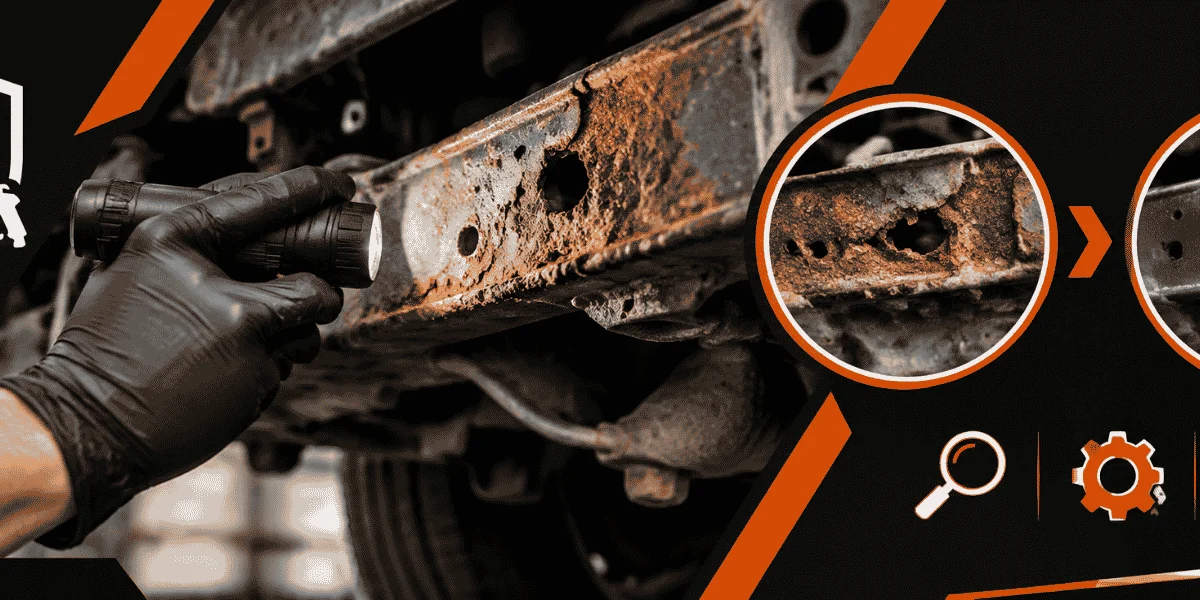
99 06 silverado frame repair starts by identifying the truck’s exact year, series, cab, bed, and drivetrain, then determining whether corrosion is limited to the surface or has weakened a structural area. Silverado 1500 and heavy-duty trucks from these years are not one interchangeable frame-repair job: the right repair depends on the specific configuration and the condition of the rails, crossmembers, and attached mounting points. If rust has perforated or distorted a load-bearing area, have the frame assessed before driving or covering it with undercoating.
Identify the exact Silverado before choosing a repair
Year alone does not identify the frame
The 1999–2006 model range includes different truck series and body, bed, and drivetrain combinations. Those details affect which frame and replacement components may fit. A part advertised for a “Silverado” or a frame described as fitting several model years is not, by itself, proof that it suits a particular truck. Confirm the year and configuration from the vehicle identification number (VIN), door-jamb certification label, and existing frame before ordering parts or authorizing a swap. Chevrolet’s owner’s manual lookup is organized by vehicle year and model; use a VIN-based parts catalog or the repairer’s verified parts research to confirm frame-component fitment.
Write down the details that distinguish the truck before getting an estimate:
- Model year and series: for example, 1500 versus a heavy-duty series. Do not assume their rail dimensions or repair parts match.
- Cab and bed: regular, extended, or crew cab and the installed bed length help identify wheelbase and frame configuration.
- Drivetrain and equipment: two- or four-wheel drive, engine, and factory or added towing equipment can affect nearby components and repair access.
- Existing changes: note a replacement bed, suspension lift, altered hitch, or prior frame work. These can make a casual visual comparison misleading.
If the VIN and visible truck details do not agree—for example, the bed or cab may have been changed—tell the repairer. Ask them to verify the frame configuration rather than relying on appearance or a seller’s description. A donor frame or section must be checked for both fit and condition; a matching model name does not establish either.
Check recalls separately from corrosion
A recall search can identify an open safety recall associated with a VIN, but it does not assess rust or establish that a particular frame is sound. Use the NHTSA recall lookup for the truck’s VIN, then ask a dealer or qualified repair facility what action applies if a recall appears. For reports about a safety concern, NHTSA also provides a vehicle safety complaint process. Neither search replaces an in-person inspection of the truck you are considering or repairing.
Inspect the Silverado’s frame where it carries load
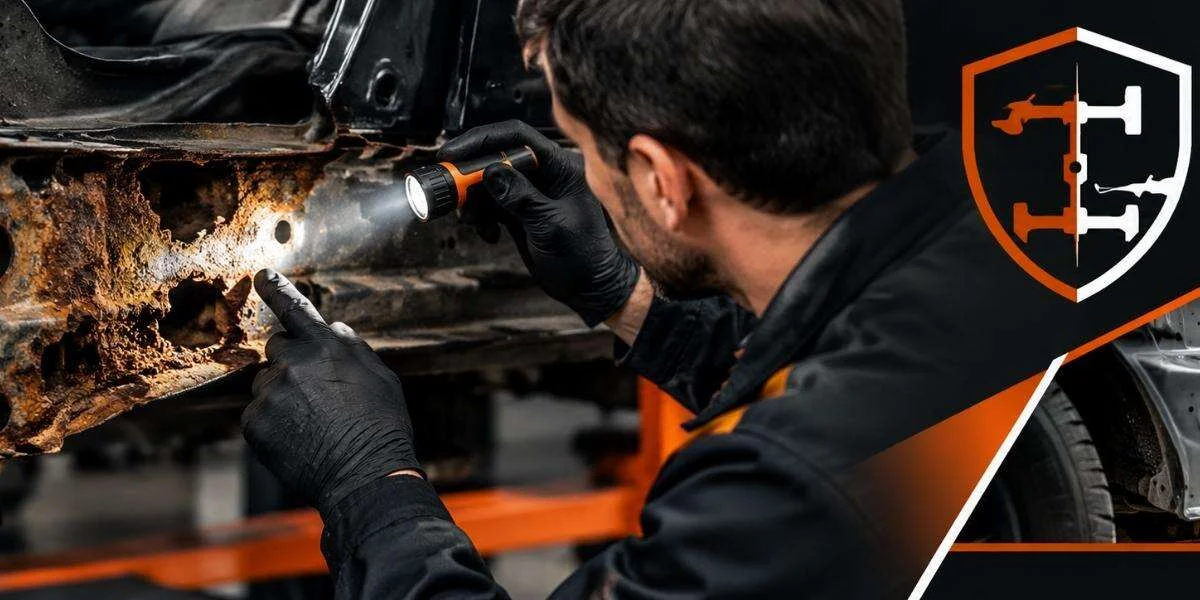
Start with the full frame, not only the area that looks worst from outside. On a pickup, the rails work with crossmembers and the attached suspension, cab, bed, and hitch mounts. Rust at an attachment can matter more than a larger patch of superficial scale on an accessible, non-critical surface. An inspection should therefore map corrosion across the truck and check whether the affected metal is still sound—not simply label the frame “rusty” or “clean.”
Areas to include in an inspection
- Front structure: inspect the rail areas around steering and front-suspension attachments, nearby crossmembers, and the transition toward the cab.
- Cab and bed mounts: check the frame and mount brackets where body weight and movement transfer to the rails.
- Rear suspension and hitch areas: inspect spring or suspension attachments, rear crossmembers, and the hitch installation, including any added or modified brackets.
- Hidden and overlapping surfaces: examine the inside faces of rails, seams, brackets, and places where dirt or trapped moisture can obscure the metal.
- Previous repairs: look for plates, welds, fresh coatings, or altered brackets that could conceal the original condition or complicate assessment.
These are inspection locations, not a claim that every Silverado has a defect in them. Corrosion depends on the individual truck’s exposure, maintenance, storage, and repair history. A vehicle used on salted winter roads may need a closer look in concealed areas than a truck stored and driven in a different environment. Ask the inspector to show you the affected spots and distinguish the frame rail itself from a bolt-on shield, bracket, or surface coating.
Surface scale versus section loss
Rust color alone cannot tell you whether a frame is repairable. The decision turns on whether the metal has lost thickness, developed holes, separated at a seam, buckled, or lost a sound attachment area. Flaking scale can make a surface look dramatically worse than the underlying metal, while a coating can make a compromised area look deceptively tidy. A proper assessment may require cleaning a limited area enough to see the metal and checking both sides where access allows.
Stop short of drilling, grinding, or welding into an unknown section to “test” it. Those actions can remove useful evidence, damage a line or nearby component, or turn a small inspection into an unsafe repair. If a mount moves, a rail is visibly deformed, a crack is present, or rust has opened a hole near a structural attachment, do not treat the truck as ready for routine driving until a qualified person has assessed it. When evaluating a used truck, make the sale conditional on an independent inspection if the frame cannot be fully checked beforehand.
Choose between monitoring, repair, and frame replacement
The practical choice is not simply “rustproof it” versus “replace the frame.” It is whether the existing metal remains suitable for its structural role, whether a repair can restore that role, and whether the surrounding metal is sound enough to support the repair. A repairer should explain the proposed scope in terms of locations and condition—not just promise to cover the rust.
- Monitor and protect: reasonable when inspection finds surface corrosion without meaningful section loss, distortion, or compromised attachments. Remove loose contamination as appropriate, keep drain paths open, and protect sound, prepared metal.
- Local structural repair: consider when damage is localized and the adjoining frame and attachment areas provide sound metal for a properly engineered repair. The method and limits need to be established for that exact truck and damage.
- Broader repair or replacement: discuss when corrosion is widespread, multiple mounts are affected, or the rail’s condition does not provide a reliable basis for a local patch. Verify the replacement frame’s identity, condition, and compatibility before work begins.
- Do not coat as a substitute for repair: undercoating can protect suitably prepared metal, but it does not restore lost steel or make a weakened mount sound.
Ask the shop to document the inspection findings and proposed repair area. For a localized repair, the estimate should identify what metal is being retained and what is being removed or replaced. For a frame change, ask how the donor or replacement is being matched to the truck and how attached components will be checked. A vague description such as “weld plates over the bad spots” is not enough to judge the scope or whether sound metal remains around the repair.
Plan the repair around the truck’s condition and intended use
Request a repair plan you can evaluate
Before authorizing work, ask the repairer to walk through the inspection and explain the proposed sequence. The purpose is not to prescribe a weld pattern without seeing the truck; it is to make sure the decision accounts for the actual Silverado, its corrosion, and the owner’s intended use. A truck that will tow or carry heavy loads deserves a particularly clear explanation of what supports those loads and how its condition will be verified.
- Get the configuration recorded. Confirm the VIN, series, cab, bed, drivetrain, and any non-factory changes that affect the work.
- Ask for a corrosion map. Have the inspector identify affected rails, crossmembers, mounts, and prior repairs, with photographs where practical.
- Clarify the repair boundary. Ask what will be cleaned, retained, removed, replaced, or left untouched—and why the remaining metal is suitable.
- Verify the procedure and parts. Request the applicable repair information and confirmation that any frame section or replacement component matches the truck.
- Agree on post-repair protection. Confirm that cleaning, bare-metal preparation where needed, and corrosion protection will follow rather than conceal unresolved damage.
For manufacturer-specific service information, repairers can consult ACDelco Technical Delivery System subscriptions, which provides access to GM service information. Ask what applicable procedure supports the proposed work; avoid assuming that a generic truck-frame method covers every year and configuration. The public-facing Chevrolet manual is useful for owner information, but it should not be mistaken for a structural repair procedure.
Understand the limits of an estimate
A preliminary estimate based on photographs or a quick look may change after loose scale, dirt, or old coating is removed and concealed surfaces become visible. That does not automatically mean the repairer has found an unrelated problem; it can mean the true repair boundary was hidden. Ask what finding would change the plan, whether the shop will pause for approval if the scope changes, and how the newly exposed condition will be shown to you.
Also separate structural repair from corrosion prevention. If the frame is sound after inspection, protective treatment may help limit future exposure, especially for a truck driven in winter conditions. If metal has already been lost, protection is a follow-on step after the structural decision—not a repair in itself. Learn what is involved in rust prevention undercoating for sound, appropriately prepared areas.
After structural work, protect the repaired frame
Once repair is complete, the goal is to avoid trapping contamination or hiding a problem that still needs attention. The repairer should explain how the work area was prepared and what protection was applied, including whether cavities, seams, and adjacent areas were addressed where accessible and appropriate. The right treatment depends on the repair and the surface condition; coating over loose scale, moisture, or an unresolved defect undermines the purpose.
Use this handover checklist:
- Keep photographs or notes showing the pre-repair damage and the completed repair.
- Ask which surfaces were repaired and which were only cleaned or protected.
- Confirm that drains and access openings were not blocked by coating or debris.
- Ask what routine inspection or cleaning the repairer recommends for the truck’s use and storage.
- Reinspect after winter use or whenever new impact damage, a change in handling, or a visible coating break raises concern.
If the Silverado needs substantial corrosion removal before repair, the scope may involve more than brushing away visible rust. frame-off rust removal explains the frame-off rust removal approach; whether disassembly and blasting suit a particular truck depends on its condition and the repair plan. Bay State Rust Prevention provides vehicle corrosion assessment, rust removal, frame-off sandblasting, and automotive frame repair; ask the shop to assess the specific Silverado before deciding on a treatment. Visit baystaterustprevention.com to review the available services and discuss the truck’s condition.
Authored with NotFair SEO