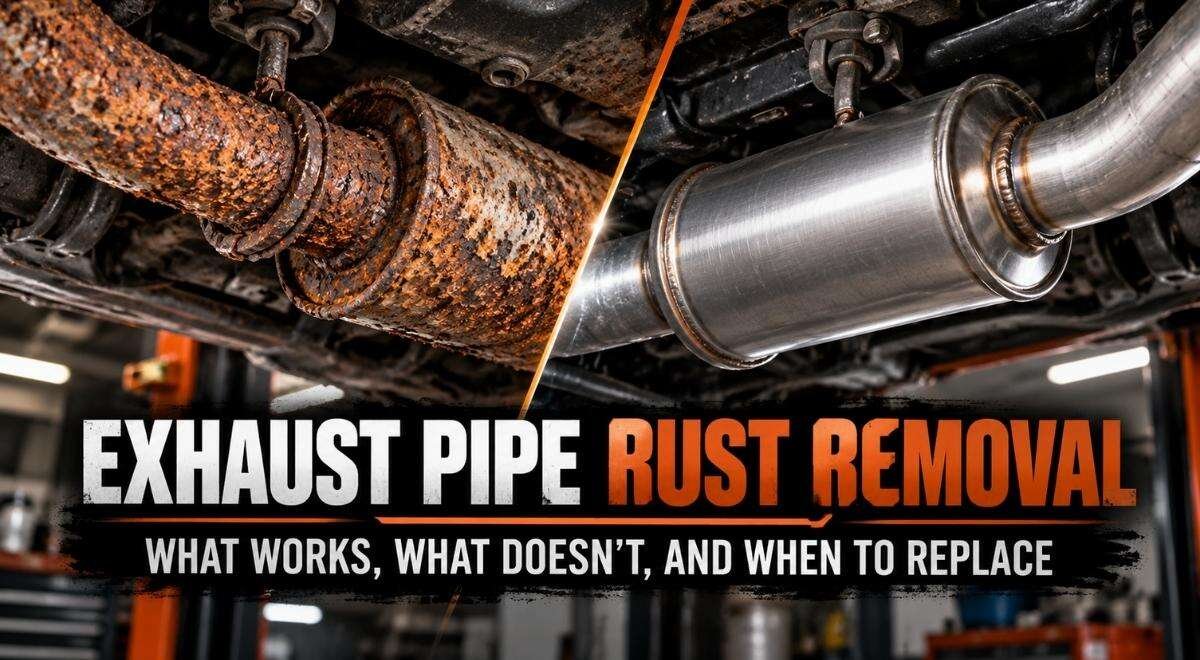
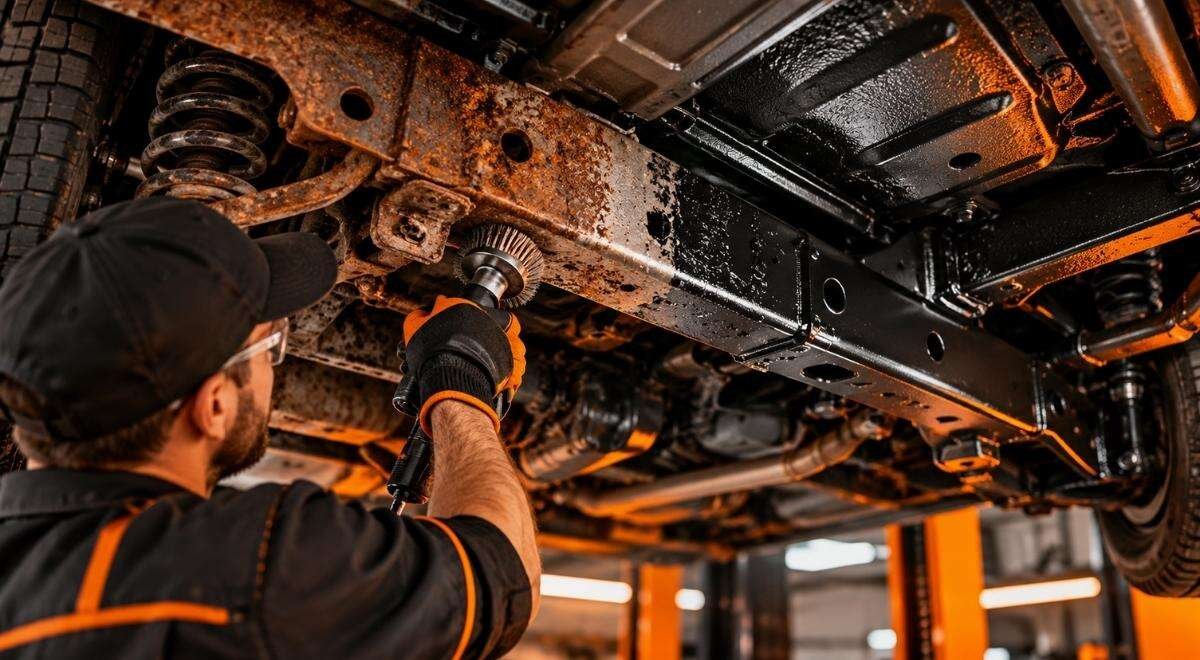
Exhaust pipe rust removal means removing loose, superficial corrosion from an exhaust pipe while checking whether the metal underneath is still sound. A wire brush and suitable abrasive can clean light scale on a cool, accessible pipe; they cannot restore metal that is deeply pitted, cracked, or perforated. If you find a hole, a leak, or a badly thinned section, arrange a proper repair or replacement rather than covering it with paint or a patch.
What Exhaust Pipe Rust Removal can—and cannot—do
Exhaust pipe rust removal is a surface-cleaning job, not a way to rebuild a corroded exhaust system. Rust forms when iron-containing steel reacts with oxygen and moisture. On a vehicle, water can collect inside the exhaust during short trips, while road spray and salt attack the exterior. The result may be a thin orange film, flaky scale, deep pits, or a hole. Those conditions can look similar under dirt, so cleaning is useful only if it helps you assess the metal.
Sound metal with light surface rust may be cleaned and monitored. Metal loss is the deciding factor: brushing removes corrosion products, but it also exposes the remaining thickness and can open an area that was already close to perforating. A shiny patch is not proof that the pipe is structurally sound.
The exhaust is a connected system. Pipes, joints, hangers, mufflers, resonators, and emissions components all have to remain secure and sealed. A repair that hides a leak or interferes with a required component is not a successful rust-removal job. In Massachusetts, vehicle inspections include safety and emissions checks; review the state’s vehicle inspection information if you are unsure what applies to your vehicle.
Why exhaust corrosion deserves more than a cosmetic fix
A rusty tailpipe may seem less urgent than a rusty frame, but a leak can let exhaust enter areas where people breathe. Exhaust gases can include carbon monoxide, which is odorless and dangerous. NHTSA advises drivers to have exhaust-system leaks repaired and not to run a vehicle in an enclosed space; the agency’s carbon monoxide safety guidance explains the risk. If you suspect a leak, do not idle the vehicle in a garage to diagnose it.
Corrosion can also affect how the system is supported and sealed. A rusted hanger may let a pipe sag or knock against the body. A corroded joint may leak, and a deteriorated flange can make a simple component replacement more involved. On a work truck or fleet vehicle, a small exhaust fault can become downtime if it is left until the pipe separates or the vehicle fails inspection.
Watch for these signs while the vehicle is safely parked and the exhaust is cool:
- New ticking or puffing near a joint, especially at startup, may point to a leak rather than harmless surface rust.
- A hanging or visibly misaligned pipe may indicate a failed hanger or a weakened connection.
- Black soot around a seam can mark escaping exhaust; it does not tell you how much sound metal remains.
- Repeated rattling can come from a loose shield or internal muffler damage, not necessarily the rusty area you can see.
Noise, soot, or an odor inside the cabin should prompt inspection, not an attempt to seal the system from the outside. The CDC describes carbon monoxide as a poisonous gas and lists symptoms such as headache, dizziness, weakness, nausea, and confusion in its carbon monoxide overview. If symptoms occur around a vehicle, move to fresh air and seek emergency help.
How to inspect and remove light surface rust
Start with a safe inspection
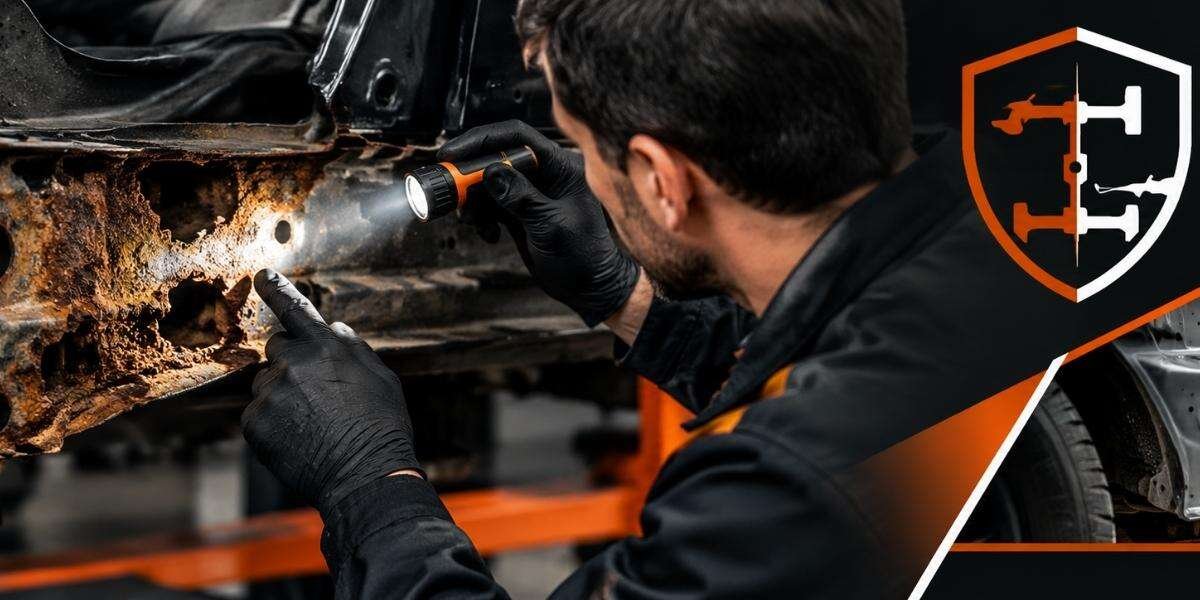
Work only when the exhaust is completely cool. Support the vehicle on correctly rated stands on a firm, level surface; a jack alone is not a safe support. Do not work underneath a running vehicle, and avoid scraping or grinding near fuel lines, wiring, plastic shields, or other components that could be damaged by sparks or abrasive debris. For rust in a hard-to-see area, use a light and inspection mirror rather than reaching blindly around a pipe.
First check the pipe, seams, clamps, flanges, hangers, and nearby muffler surfaces. Tap gently with a blunt tool only where access is safe; do not strike hard enough to dent the pipe. Look for flaking, swelling, cracks, separated seams, and holes. If the metal feels unusually thin, deforms easily, or opens during cleaning, stop. More aggressive abrasion will not make it serviceable.
Clean only what the metal can tolerate
For a pipe that appears intact with loose surface scale, use a hand wire brush or a controlled abrasive pad to lift loose rust. Wear eye protection and gloves, and keep debris away from your face. Start gently, clean a small area, and reassess. A powered grinder or aggressive sanding disc can remove sound metal along with rust, particularly on a thin-walled or already pitted pipe.
After brushing, wipe away the dust and inspect the cleaned area in good light. The goal is to see the metal clearly—not to polish every brown mark away. Avoid applying ordinary chassis undercoating, wax-based rustproofing, or general-purpose paint to exhaust parts: exhaust surfaces get hot, and products intended for frames are not automatically suitable for them. If a coating is being considered, follow the coating maker’s application and temperature instructions for that exact product and component.
A practical sequence is:
- Let the vehicle cool fully and secure it before inspection.
- Check the whole nearby section, not just the visible orange patch.
- Brush loose scale by hand and stop if the surface breaks through or deforms.
- Wipe off debris, then check for pitting, seams, holes, and loose supports.
- Decide whether the part is sound enough to monitor or needs professional repair.
Where cleaning stops being a repair
Use the cleaned surface to judge remaining metal
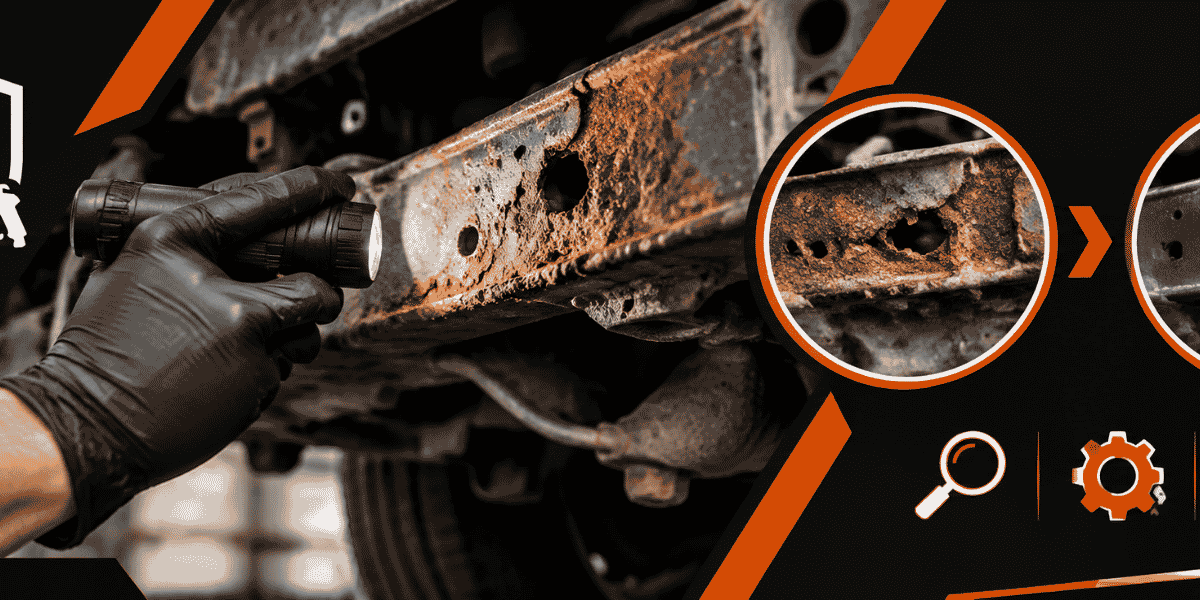
Rust removal is not a reliable fix when corrosion has eaten into the pipe wall. A pinhole, split seam, or crack is a defect, even if a clamp or sealant temporarily quiets it. Deep pits are also a warning: the visible pit is only the part you can see, and corrosion may extend farther around the circumference or beneath a joint. If brushing reveals a hole, stop cleaning and arrange diagnosis.
These examples are illustrative inspection scenarios, not universal replacement thresholds:
- A 1-inch patch of orange film on an intact pipe, with no flaking or leak signs, may be a surface-cleaning and monitoring case.
- A 2-inch area of layered scale near a clamp needs a careful check of the pipe and joint; the clamp can conceal a weakened section.
- One pinhole at a seam is a leak, even if the surrounding pipe looks clean after brushing.
- Several deep pits across the underside suggest broader metal loss and call for a repair assessment rather than cosmetic treatment.
Choose repair or replacement based on the failure
A qualified repairer can determine whether a damaged section can be replaced safely or whether a larger assembly is needed. The answer depends on the location and extent of corrosion, the condition of adjacent metal, the type of joint, and the vehicle’s exhaust layout. A clamp-on patch may be inappropriate if the pipe around it is too thin to hold the repair, or if the damaged area is close to a flange or emissions component.
Do not remove, bypass, or modify emissions equipment as a shortcut to a rust repair. If welding or cutting is needed, it is work for someone equipped to control fire, fumes, and nearby hazards. OSHA’s welding, cutting, and brazing guidance outlines precautions for hot work. A home repair that creates a new leak, damages a sensor, or leaves a component unsupported can turn a corrosion problem into a safety or inspection problem.
If the vehicle is driven in Central Massachusetts, inspect the underside periodically after winter use and after any exhaust noise or impact. Salt exposure is not limited to the pipe: brackets, frame rails, brake and fuel lines, and body seams can corrode at the same time. Cleaning one exhaust area does not protect those adjacent parts.
How to prevent repeat corrosion across the vehicle
Exhaust parts and vehicle frames need different treatment. A hot exhaust pipe should not be treated as though it were a frame rail. For the chassis, useful corrosion prevention begins with removing packed dirt and salt from areas where moisture can linger, then inspecting seams, boxed sections, and damaged factory coatings. A rustproofing product must be applied to suitable surfaces and kept away from components that should not be coated.
For owners of new trucks, leased vehicles, and fleet units, a documented baseline inspection is more useful than waiting for visible flakes. Note existing scratches, exposed metal, and areas of trapped debris, then follow the vehicle maker’s maintenance requirements. If rust is already present, identify whether it is surface contamination or metal loss before choosing prevention. Coating over loose scale can conceal continued deterioration rather than solve it.
For restoration shops and classic-car owners, the same principle applies at a larger scale: preserve sound metal, remove corrosion where appropriate, and repair weakened structure before applying protection. When chassis work is needed, frame-off rust removal can provide access to surfaces that are difficult to inspect or prepare with the body in place. That process is separate from cleaning a visible exhaust pipe and should be planned around the condition and restoration goals of the vehicle.
Consider these practical decisions:
- New or lightly used vehicle: inspect for transport or road damage and ask what surfaces a proposed rustproofing treatment will cover.
- Salt-used daily driver: include the exhaust, hangers, frame, and lines in underside checks instead of judging corrosion from the body panels alone.
- Work fleet: record exhaust leaks and loose supports promptly so a minor finding is not missed between service intervals.
- Restoration project: assess frame and component integrity before selecting blasting, repair, or protective coatings.
For owners dealing with road-salt exposure beyond the exhaust, Bay State Rust Prevention provides rust prevention undercoating, rust removal, frame-off sandblasting, and automotive frame repair for vehicles in Worcester and Central Massachusetts. If corrosion extends from a pipe to the chassis or you need help assessing restoration work, see what Bay State Rust Prevention offers and choose a service based on the metal’s condition.