
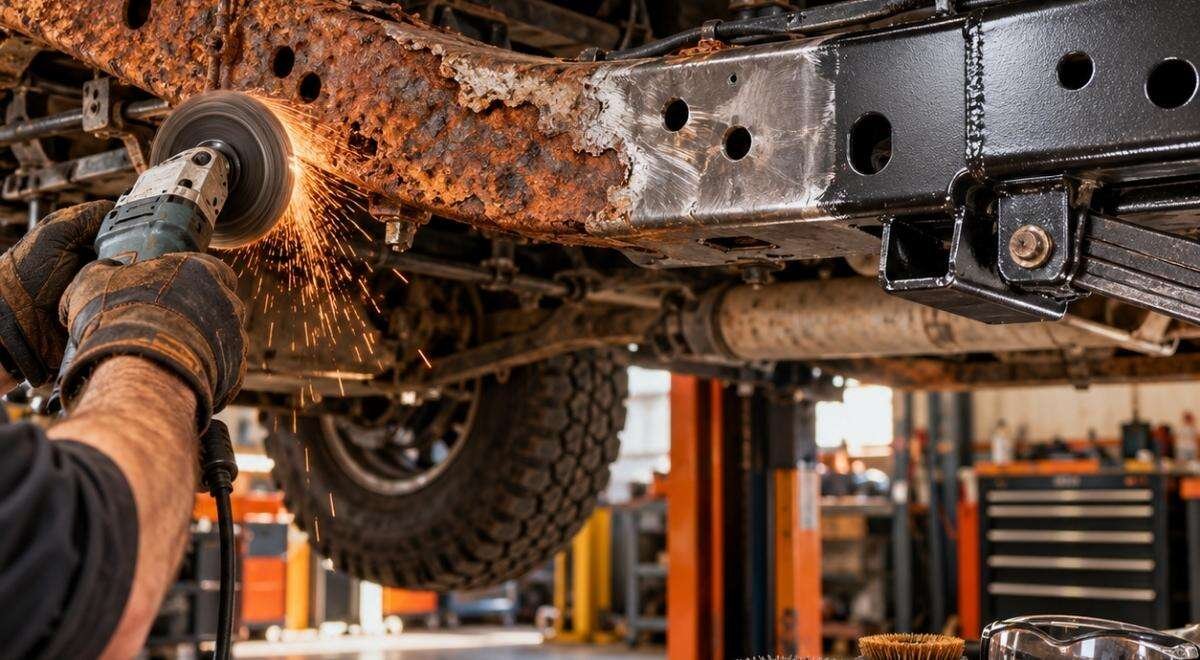
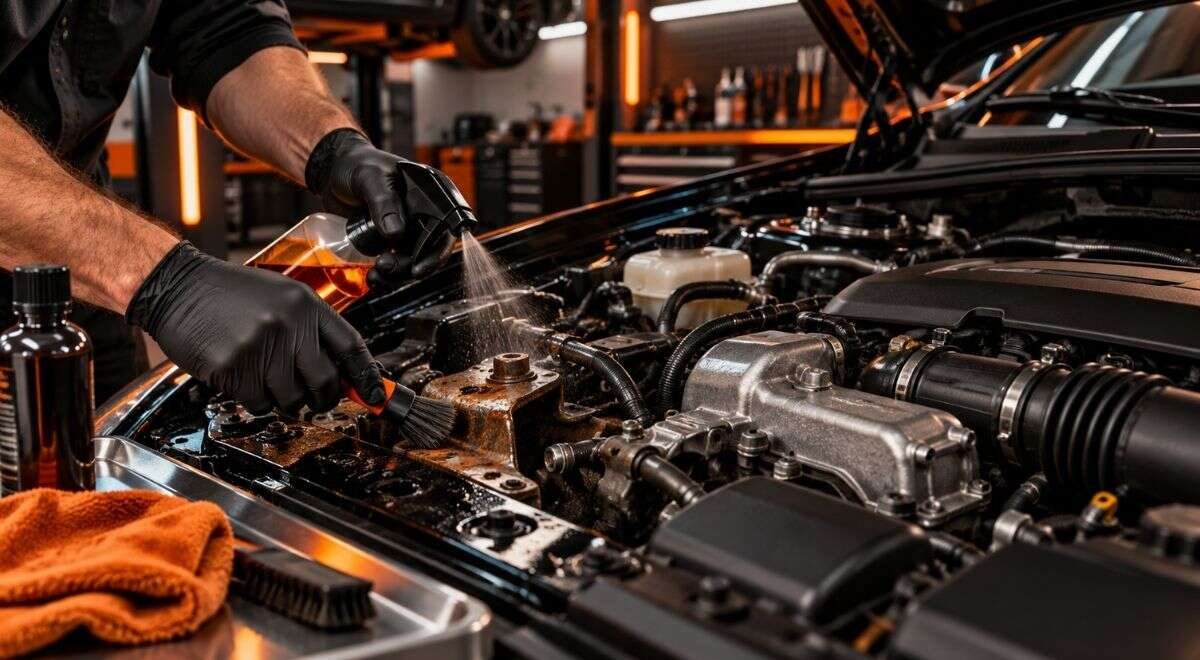
Frame rust removal means removing corrosion and affected coatings so the underlying steel can be inspected, then repairing or protecting the frame according to its condition. It is not simply covering rust with undercoating: if scale has reduced a rail’s strength, removal may reveal damage that needs structural repair—or a frame that should not be returned to service.
What Frame Rust Removal includes
On a vehicle frame, rust removal is a preparation and assessment job, not a single treatment. The aim is to expose as much of the relevant metal as practical, distinguish removable surface corrosion from section loss, and choose a next step that fits the vehicle’s structural condition. A cleaned frame is not automatically a sound frame.
Corrosion develops when steel reacts with its surroundings. Road salt adds chloride to the moisture that collects on underbody surfaces, encouraging corrosion and making Central Massachusetts’ winter driving a concern for vehicles that see treated roads. The USGS overview of road salt describes the impacts of salt and chloride in the environment; for a frame, the practical concern is repeated exposure where salty moisture remains trapped against steel.
The work may involve removing loose scale, old coating, and debris from accessible surfaces, including frame rails, crossmembers, brackets, and suspension mounting areas. How much can be reached depends on the vehicle’s construction and the access available. Some corrosion sits inside boxed rails or behind attached components; an outside surface treatment cannot establish the condition of hidden metal.
It is useful to separate three outcomes:
- Surface cleanup: loose rust and coating are removed, and the exposed steel appears intact on accessible areas.
- Further inspection: cleaning reveals pitting, seams, perforation, or suspiciously thin areas that need closer evaluation.
- Structural work: a qualified repairer determines whether the affected frame can be repaired appropriately or whether continued use is unsafe.
That distinction matters whether you are assessing a used truck, preserving a newer vehicle, or restoring a classic. A coating can slow future exposure on prepared metal, but it cannot replace steel that has already been lost.
Why removing rust before coating matters
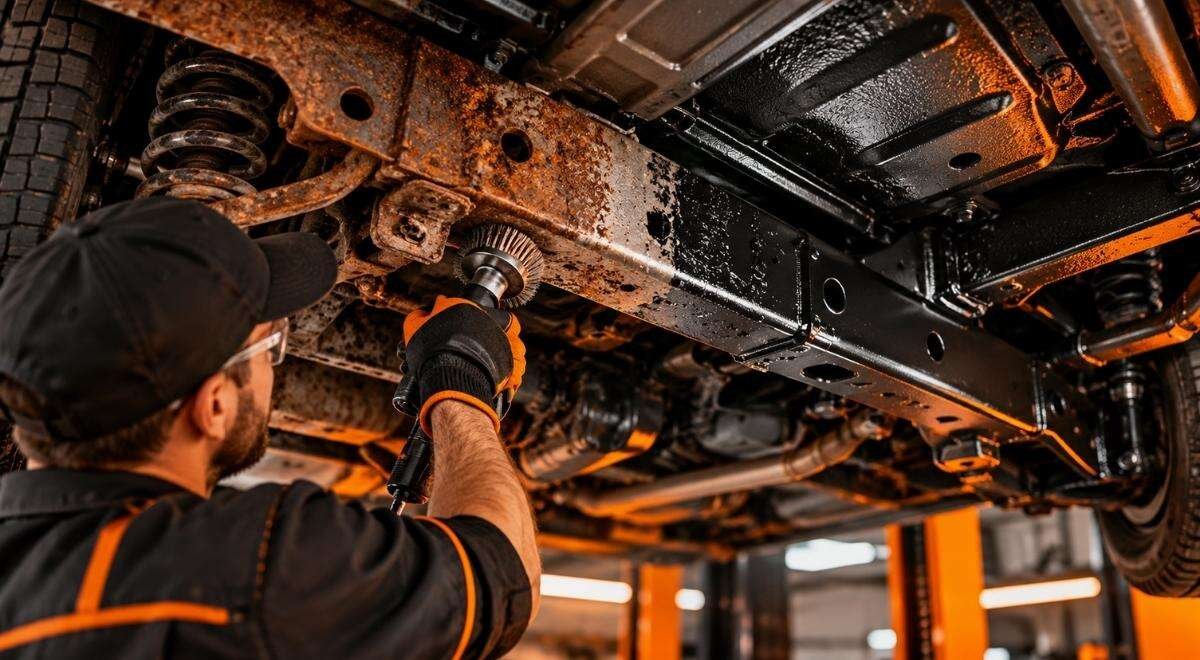
Coating over loose scale can leave a weak layer between the product and the frame. The surface may look darker or more uniform, while corrosion continues beneath material that was never firmly attached. Adhesion depends on preparation, and a durable-looking finish does not prove that the metal underneath is sound.
Cleaning also makes it easier to see the shape and extent of damage. Rust at a bracket, seam, or suspension attachment may be more consequential than a similar-looking patch on a non-structural surface. On a fleet truck, a delivery van, or a personal pickup, the correct inspection focus is not just “How much rust is there?” but where it is, what it affects, and whether the steel retains enough section for safe service.
AMPP’s explanation of what corrosion is describes corrosion as the deterioration of a material through its interaction with its environment. That general mechanism helps explain why simply hiding a corroded area does not reverse the damage. For vehicle decisions, though, coating choice comes after checking the metal and addressing any structural defect.
Read the location, not just the color
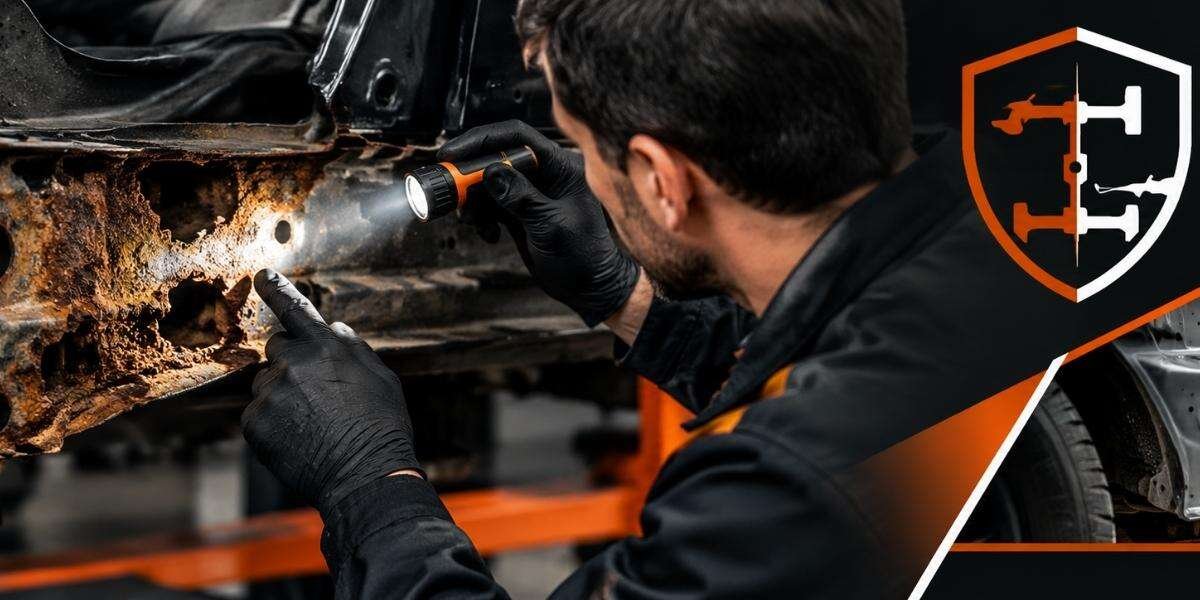
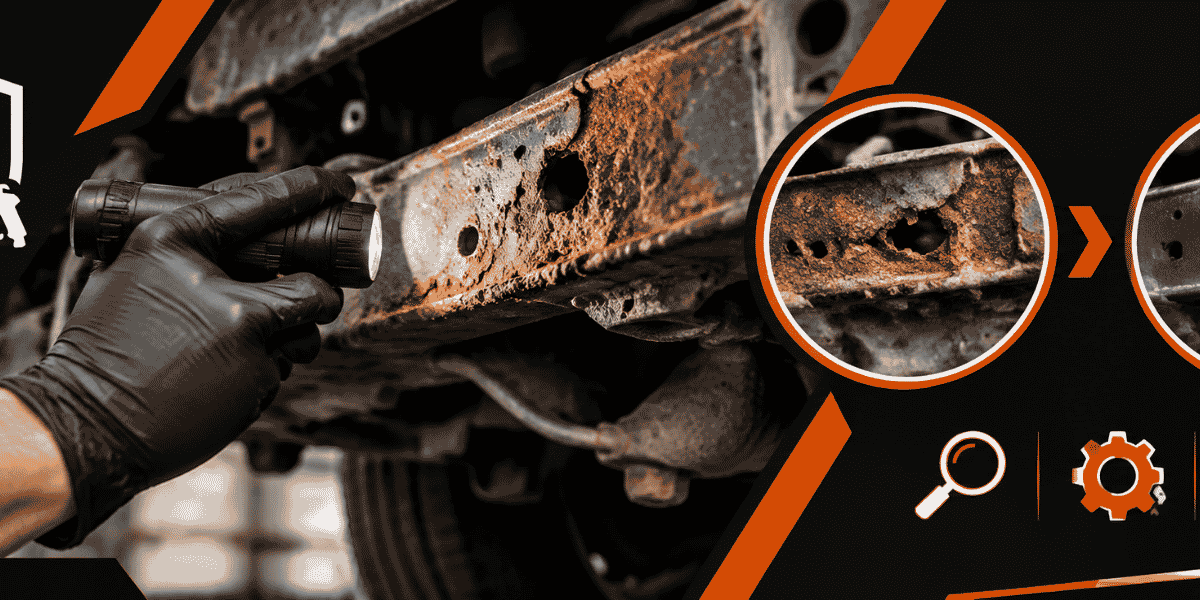
Pay particular attention to mounting points, overlapping seams, welds, and low areas where wet debris can collect. A small opening at a seam can signal deeper corrosion than a broad patch of light surface rust. Conversely, dark staining alone does not establish that a frame is structurally compromised; cleaning and examination are needed before drawing that conclusion.
- Look for distortion: buckling, separated seams, or a visibly altered rail profile deserves professional assessment.
- Check attachments: corrosion around suspension or body mounts can affect critical connections.
- Note paired areas: similar exposure on both sides may help explain a pattern, but does not prove equal remaining thickness.
- Record what is hidden: note areas blocked by shields, tanks, or other components rather than assuming they are clean.
For a used-vehicle buyer, a fresh-looking black coating is not a substitute for an inspection. Ask what preparation was performed, whether repairs were made, and whether photos or records show the frame before coating. If the seller cannot explain what is beneath the finish, arrange an independent inspection before treating the coating as evidence of good condition.
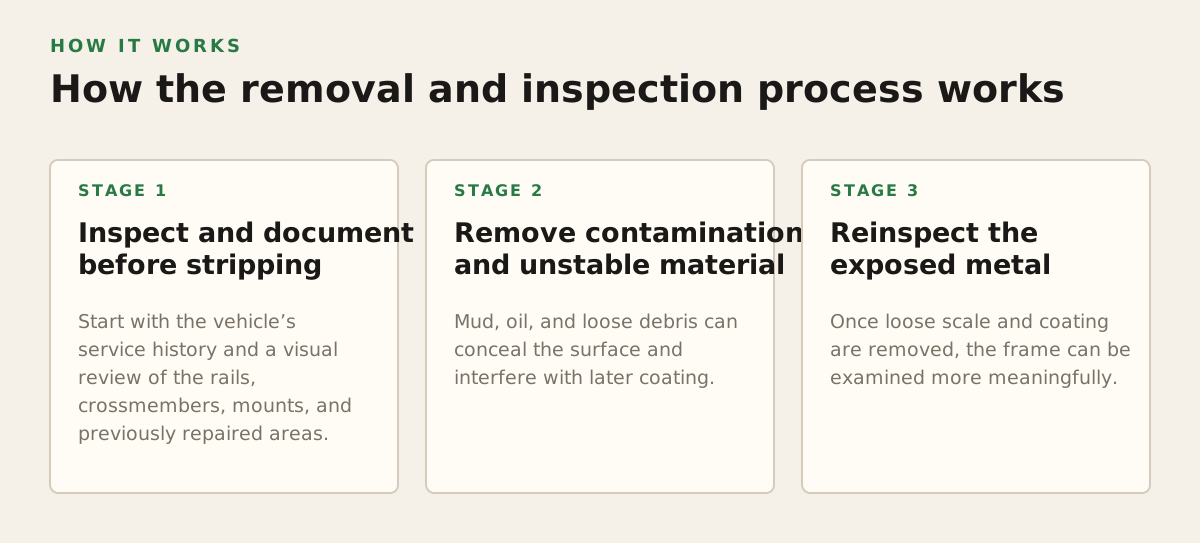
How the removal and inspection process works
The exact sequence depends on the vehicle, existing coatings, access, and the kind of corrosion present. A responsible job begins by identifying hazards and limitations, not by choosing the most aggressive blasting method. Cleaning method must match the substrate and the work area; excessive abrasion can damage thin sections or obscure evidence before it has been documented.
1. Inspect and document before stripping
Start with the vehicle’s service history and a visual review of the rails, crossmembers, mounts, and previously repaired areas. Photograph significant defects before cleaning. If components must be removed to reach an area, decide whether the added access is justified by the inspection or repair need. Where a frame is visibly perforated, distorted, or heavily scaled, do not assume it is safe to drive to a shop; get qualified advice about moving it.
2. Remove contamination and unstable material
Mud, oil, and loose debris can conceal the surface and interfere with later coating. After cleaning and drying as appropriate, technicians choose mechanical or abrasive removal suited to the material and access. OSHA’s abrasive-blasting guidance addresses hazards and controls associated with blasting work. Blasting can produce dust and flying particles, so containment, ventilation, protective equipment, and safe handling are part of the process—not optional finishing details.
Where blasting may create respirable crystalline silica exposure, employers must consider applicable controls. OSHA’s silica standard resources describe requirements and protective measures for covered work. The appropriate setup depends on the abrasive, substrate, equipment, and workplace conditions; a vehicle owner should not attempt open-air blasting based on a general online recipe.
3. Reinspect the exposed metal
Once loose scale and coating are removed, the frame can be examined more meaningfully. A visual check can identify obvious holes, cracks, pitting, and suspect seams, but it cannot always determine remaining thickness. If the condition is uncertain, a qualified repair professional may need additional inspection methods and vehicle-specific repair information before recommending work.
Here are illustrative examples, not universal repair rules:
- Example 1: A pickup has surface scale on an accessible crossmember. Cleaning exposes continuous metal without visible perforation; the next step is an overall condition check and suitable protection.
- Example 2: A work van has a small rust opening beside a body mount. The location calls for structural assessment before coating or routine use, even if the rest of the rail looks serviceable.
- Example 3: A restoration project has heavy scale on the outside of a boxed rail. The rail’s interior condition remains unknown until it is inspected through suitable access; exterior cleaning alone cannot settle the question.
When old coatings are disturbed, their composition may be uncertain. In workplaces where lead exposure is possible, employers need to assess applicable requirements and controls; OSHA’s general-industry lead standard sets requirements for covered occupational exposure. That is a reason to plan the work and manage dust, not a reason to assume every vehicle coating contains lead.
Where rust removal reaches its limits
Cleaning reveals damage; it does not repair it. A perforated rail, a cracked area, or severe loss of metal around a mounting point needs a structural decision. Covering the problem with filler or a protective coating can conceal it without restoring strength. Whether repair is appropriate depends on the location, extent of damage, vehicle design, and the repair procedure—not simply on whether a patch can be welded in place.
Frame repair should be evaluated against vehicle-specific service information and by a repairer qualified for the work. A repair that changes the rail’s shape, attaches material incorrectly, or traps moisture may create further problems. For a classic or specialty vehicle, originality and parts availability may influence the repair plan, but they do not remove the need to assess structural safety.
Removal methods have limits, too. Aggressive blasting can damage thin metal or force abrasive into cavities; hand tools may not reach enclosed areas; and disassembly adds time and can introduce its own repair needs. A shop should explain what areas were accessible, what method was used, and what remains unverified. If a frame cannot be fully cleaned or inspected without more disassembly, that limitation belongs in the report.
- Pause routine coating work if cleaning exposes a hole, crack, separated seam, or deformed rail.
- Do not treat a coating’s appearance as proof that hidden cavities are free of corrosion.
- Ask how any proposed repair follows vehicle-specific requirements and how the completed work will be documented.
- If the vehicle is a potential purchase, make unresolved structural concerns part of the buying decision rather than assuming they are cosmetic.
Owners should also distinguish rust removal from routine corrosion prevention. A vehicle with sound, properly prepared metal may be a candidate for protective treatment; a vehicle with active structural damage needs assessment first. A qualified shop can explain whether rust prevention undercoating is appropriate after the frame has been cleaned and evaluated.
Choosing a practical next step in Central Massachusetts
For a new truck or leased vehicle, ask about access, preparation, and the product used before approving preventive treatment. For an older daily driver, start with an inspection that identifies the worst areas and separates surface corrosion from structural concerns. For a restoration or shop project, agree on the work scope before stripping begins: what gets removed, what can be inspected, how findings will be recorded, and who makes repair decisions.
Use these questions when speaking with a rust-removal or repair provider:
- What will you inspect before removal? Ask whether the shop will document existing damage and identify areas hidden by components.
- How will you protect the vehicle and work area? Ask about dust control, containment, and management of removed coatings and debris.
- What happens if cleaning exposes structural damage? The plan should pause coating work and explain the assessment or repair referral needed.
- What does the final treatment cover? Clarify whether cavities and hard-to-reach sections are included, excluded, or still uncertain.
- What records will you receive? Photos and a clear description of repairs, limitations, and treatment make future inspections more useful.
There is no single visual threshold that makes every rusty frame safe or unsafe. A technician should base a recommendation on the actual vehicle and the condition of its metal, and clearly separate observed facts from areas they could not inspect. That is especially useful for fleets, where consistent records help managers decide which vehicles need cleaning, repair, closer monitoring, or retirement.
If corrosion is established but the frame is repairable, frame-off rust removal may be part of a restoration plan; the right scope depends on access and findings. Bay State Rust Prevention provides rust removal, frame repair, and WaxOyl corrosion protection for vehicle owners across Worcester and Central Massachusetts; contact baystaterustprevention.com to discuss an inspection and the appropriate next step.