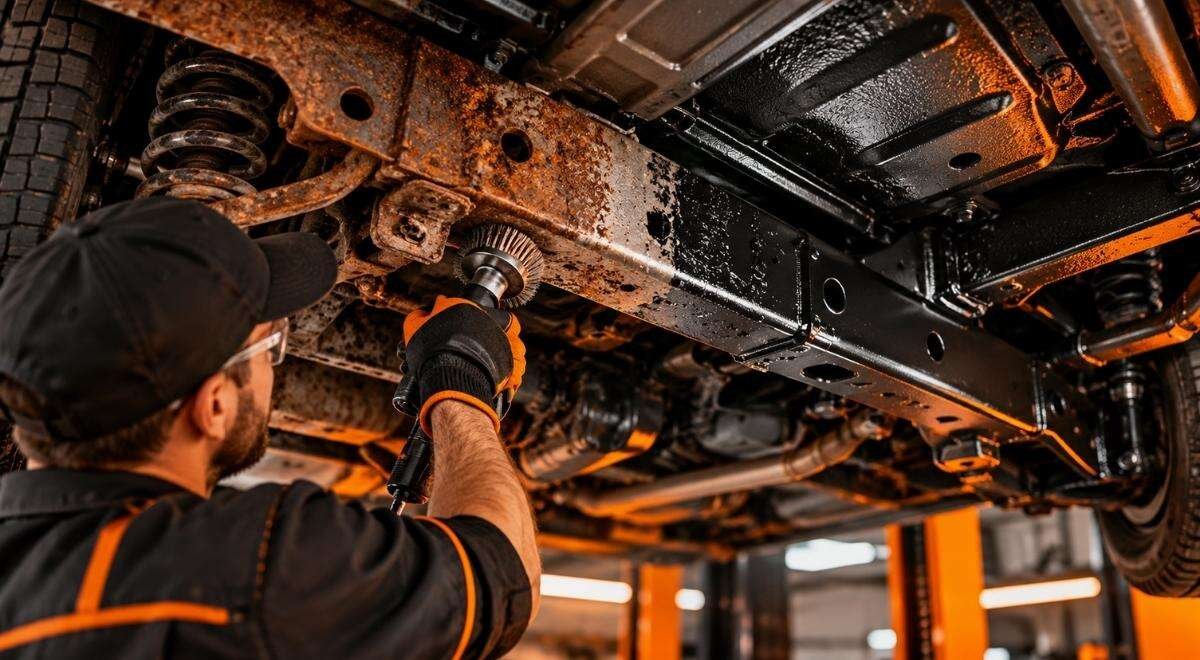
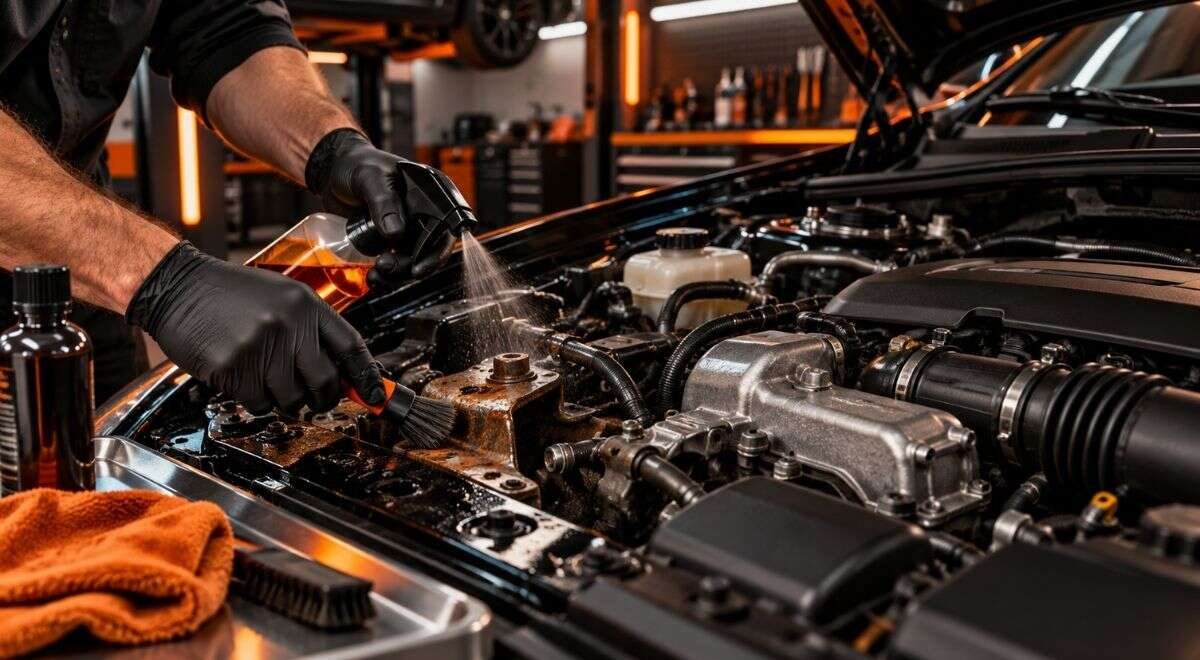
Metal frame rust is corrosion of a vehicle’s steel frame or other structural metal, caused when moisture and oxygen react with iron; road salt helps the reaction continue. Surface discoloration may need cleaning and protection, but deep scale, perforation, or weakened mounting points can call for professional assessment and repair. For Central Massachusetts owners, the key is to distinguish a rust-colored surface from metal that has lost strength before choosing a coating or restoration.
What Metal Frame Rust is—and what it is not
Rust is the corrosion product that forms as iron in steel reacts with oxygen in the presence of water. The process is electrochemical: moisture provides a medium for the reactions, while dissolved salts can make that moisture more conductive. The Association for Materials Protection and Performance’s corrosion overview explains corrosion as the deterioration of a material through reactions with its environment. On a vehicle, rust can affect the frame, suspension brackets, crossmembers, fasteners, and body structures.
Rust is not the same as dirt, a stain, or a removable coating defect. Dirt may wash off; a rust-colored mark can also come from a nearby corroding part. Conversely, a dark or recently coated surface may hide scale beneath it. A useful inspection asks what the metal looks like after loose dirt and flaky corrosion are removed from a small area—not just what the outside looks like from a standing position.
These terms describe different conditions and do not, by themselves, determine whether a frame is safe:
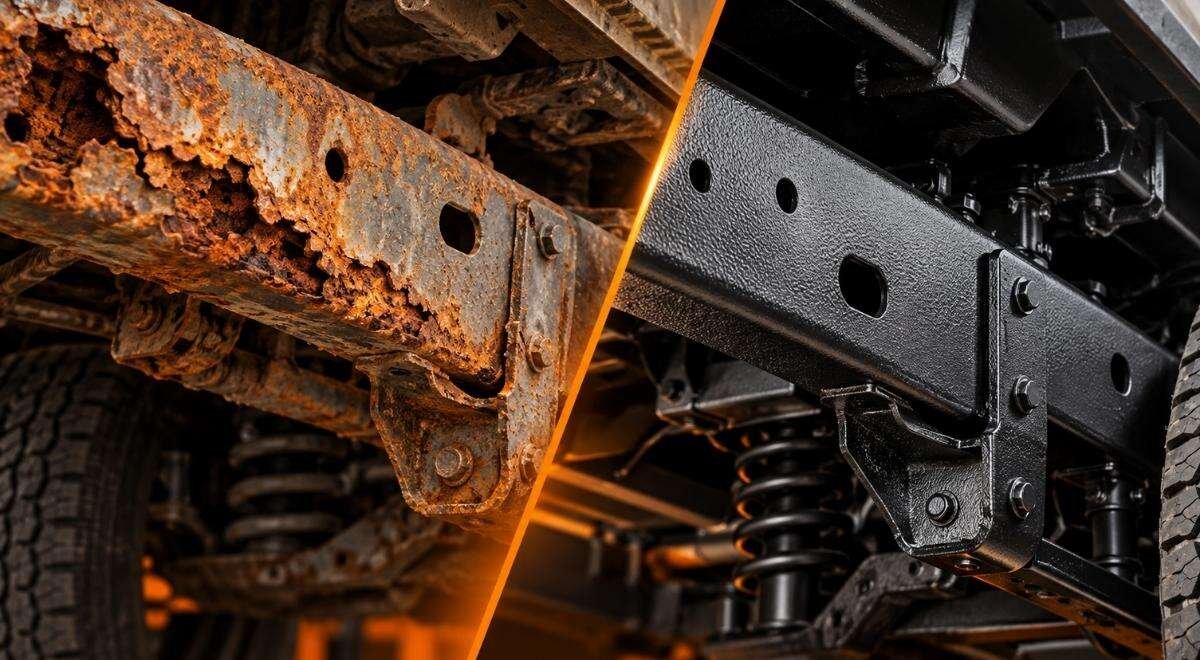
- Surface rust: discoloration or light oxidation without obvious deep scaling or a change in the metal’s shape.
- Scaling: layers of corrosion that lift or flake away, potentially leaving thinner steel underneath.
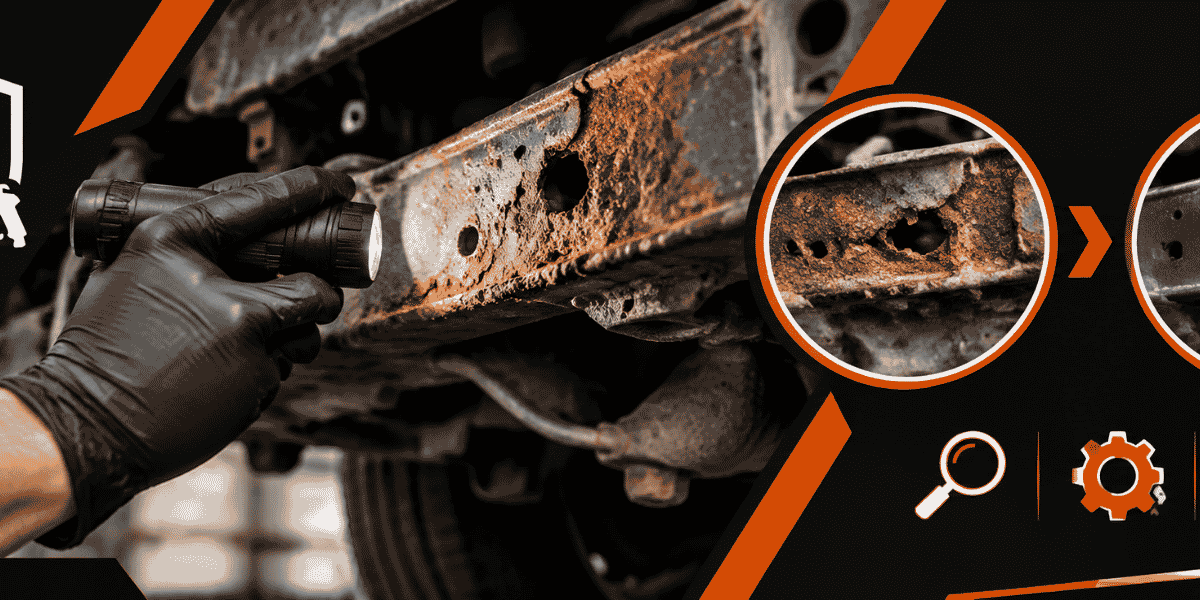
- Perforation: a hole through the metal, whether large enough to see clearly or partly concealed by scale.
- Structural section loss: metal has deteriorated enough to affect the section’s ability to support loads or retain an attachment.
Those descriptions are practical inspection language, not a substitute for a vehicle-specific safety standard. A frame’s design, the location of damage, and the condition of nearby connections all matter. Corrosion near a suspension, steering, body, or towing attachment deserves closer attention than an isolated patch on a non-structural surface.
Why frame corrosion matters in Central Massachusetts
Winter road treatment leaves vehicles exposed to moisture and dissolved salts. When salty water remains trapped in seams, overlaps, or boxed frame sections, the metal can stay wet longer than an exposed surface that dries quickly. The Federal Highway Administration’s research on corrosion and preventive strategies describes the corrosive effects of deicing materials on steel infrastructure. A vehicle is not a bridge, but the underlying concern—steel exposed to moisture and salts—is relevant to underbody care.
Damage location changes the consequence. A small rust patch on a broad, accessible surface may be treatable after proper preparation. Corrosion at a body mount, crossmember, or suspension attachment can affect how forces pass through the vehicle. On a truck, inspect the frame around brackets and the areas where equipment is attached. On a passenger vehicle, check the structural metal around suspension mounting points and the seams where water and debris collect.
Use these examples as inspection prompts, not as universal failure thresholds:
- One patch about 2 inches across on an exposed frame surface, with no visible scale or deformation, may warrant cleaning and a closer look before protection.
- A 6-inch band of layered scale around a crossmember should be evaluated for remaining metal thickness and attachment condition; covering it does not restore lost steel.
- A hole about 1 inch wide near a suspension bracket is a reason to stop treating the area as a simple coating job and seek a qualified structural assessment.
- Rust along a 12-inch seam can be more concerning than a larger flat stain if corrosion has entered an overlap or boxed section that cannot be inspected from one side.
The measurements above are illustrative examples, not pass/fail limits. A used-car buyer should ask where the corrosion is, whether loose scale was removed for inspection, and whether any prior repair is documented. Fleet managers can record the same views at each scheduled inspection to compare the condition of a vehicle over time, rather than relying on a single glance after underbody cleaning.
How to inspect rust before choosing a treatment
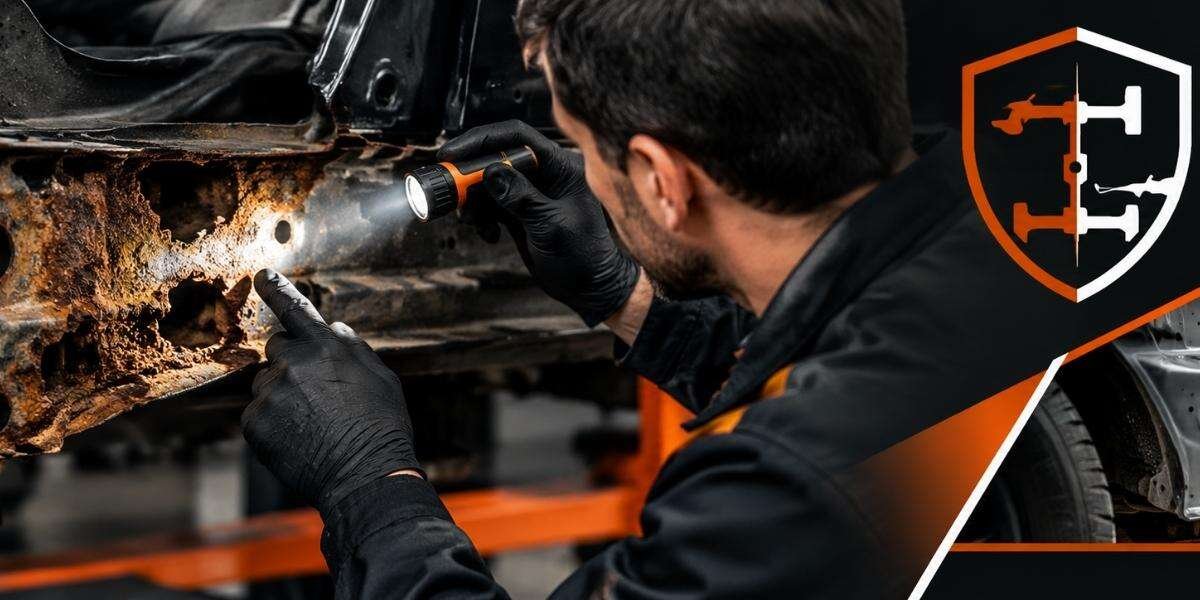
Start with a clean, dry vehicle and good lighting. Do not crawl under a vehicle supported only by a jack, and do not probe a suspect frame forcefully: a sharp tool can injure you or damage sound metal, while a weak area may break away. If the frame appears perforated, badly scaled, bent, or separated at a connection, leave assessment to a qualified repair professional.
Look for clues from shape, edges, and location
Examine both sides of the suspected area where access allows. Look for flaking layers, swollen seams, lifted paint or undercoating, fresh-looking coating over rough edges, and water or mud trapped in a pocket. A uniform coating can make visual inspection harder, so note whether it appears bonded to a clean surface or bridges over loose scale. Photograph the area from the same angle during follow-up inspections.
Separate a coating problem from a metal problem
A blister or peeling coating tells you that the coating has lost adhesion or that corrosion may be developing underneath; it does not reveal how much steel remains. If loose material can be removed safely during a professional inspection, the exposed metal may show whether the issue is superficial or more serious. Do not use a fresh undercoat to conceal active scale: coating over contamination can hide progression without replacing metal or stopping corrosion at its source.
For an initial record, note:
- Exact location: for example, driver-side rear frame rail, near a crossmember.
- Visible condition: surface discoloration, lifting scale, a seam opening, or a hole.
- Nearby parts: mounts, brake or fuel lines, suspension components, and wiring that may affect access or repair planning.
- Prior work: visible patches, welds, replacement sections, or coatings, along with any available repair records.
That record helps a repair shop distinguish a current condition from a change over time. It also gives a used-vehicle buyer more useful questions than “Has it been undercoated?” A coating history matters, but it cannot establish that the frame underneath is sound.
Where rust protection breaks down
Protective products work only as well as the surface preparation and access allow. Loose rust, dirt, salt residue, and trapped moisture can interfere with coverage or adhesion. A coating may also miss the inside of a boxed rail, a narrow overlap, or the back of a bracket. Those hidden surfaces are important because moisture and debris can collect where routine washing and visual checks do not reach.
Protection slows exposure; it does not rebuild steel. If corrosion has reduced a structural section, the remedy may require removing damaged material and repairing or replacing it with an appropriate structural method. Covering a weakened area can make future inspections more difficult. The FHWA discussion of corrosion prevention likewise treats prevention as a way to manage exposure—not as a way to recover material already lost to corrosion.
Common failure points include:
- Unprepared surfaces: loose scale remains under the coating and continues to separate from the metal.
- Blocked drainage: debris or product obstructs a drain opening and leaves water trapped inside a section.
- Missed edges and seams: the visible face receives product, while a joint or reverse side remains exposed.
- Damage after application: service work, road debris, or a new impact breaks the protective film.
Maintenance instructions can vary by vehicle and model year. Consult the owner’s manual for manufacturer guidance on washing, underbody care, and drain locations rather than assuming every vehicle has the same access points; Ford’s owner-manual resource and Toyota’s manuals and warranty resources are examples of where owners can look up vehicle-specific documentation. Do not seal a drain or apply material to a component if the vehicle maker’s instructions say otherwise.
How practitioners apply removal, repair, and protection
A sound job follows the condition of the metal, not a one-product-fits-all routine. The appropriate sequence is usually inspection, cleaning, rust removal where needed, repair of compromised structure, and protection of prepared metal. The scope can differ: a newer truck with intact metal may need preventive treatment, while a long-stored classic may need disassembly to expose concealed corrosion.
Match the method to the condition
- Sound metal with limited surface oxidation: remove contamination and loose corrosion, prepare the surface as the selected product requires, and protect it. Check that seams and accessible cavities receive suitable attention.
- Heavy scale but no confirmed structural loss: arrange a closer assessment and appropriate rust removal before coating. Abrasive methods, including frame-off rust removal, can expose metal for evaluation, but access, material thickness, and nearby components must guide the process.
- Perforated or weakened structural metal: have a qualified repairer determine whether the affected section can be repaired safely or needs replacement. Protection follows structural work; it is not a substitute for it.
- New or lightly used vehicle: consider preventive rust prevention undercoating after checking the manufacturer’s guidance and the condition of the underbody. Prevention is most useful before corrosion has undermined the metal.
For a frame-off restoration, disassembly may provide access to surfaces that cannot be reached on an assembled vehicle. That adds labor and requires careful handling of lines, wiring, and components, so it is not automatically justified for every rust spot. For a working fleet, a repeatable inspection record and prompt attention to damaged coating may be more practical than waiting for visible holes to appear.
WaxOyl is the corrosion-protection product used by Bay State Rust Prevention. As with any protective treatment, the important questions are whether the substrate is suitable, whether preparation is complete, and whether the application reaches the intended surfaces without obstructing drains or interfering with components. Ask the provider what was cleaned, what areas were treated, and which signs should prompt a follow-up inspection.
Choose the next step based on the metal—not the coating
If the frame is visibly intact and corrosion is limited to surface oxidation, arrange cleaning, preparation, and protection before the next period of regular salt exposure. If you see layered scale, a damaged seam, or corrosion around an attachment, request an inspection before choosing a coating. If the metal is perforated, distorted, or separating near a structural connection, prioritize a professional repair assessment and avoid using undercoating to disguise the condition.
For a Central Massachusetts vehicle, a practical starting policy is to record the underbody condition after cleaning and review it during routine service, with an additional check after any repair that disturbs the coating. That is a planning example, not a universal inspection interval: driving conditions, storage, vehicle design, and existing corrosion change what makes sense. Bay State Rust Prevention provides rust removal, frame repair, frame-off sandblasting, and WaxOyl corrosion protection for vehicles in Worcester and Central Massachusetts. To discuss whether your vehicle needs assessment, restoration, or prevention, visit baystaterustprevention.com.