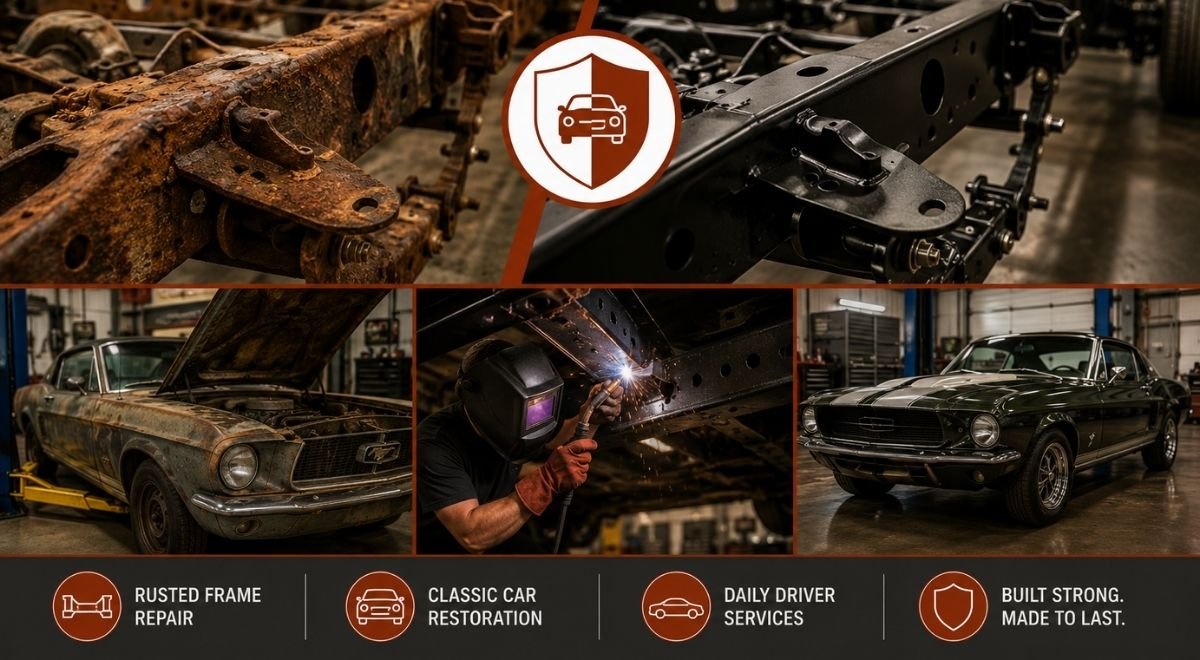
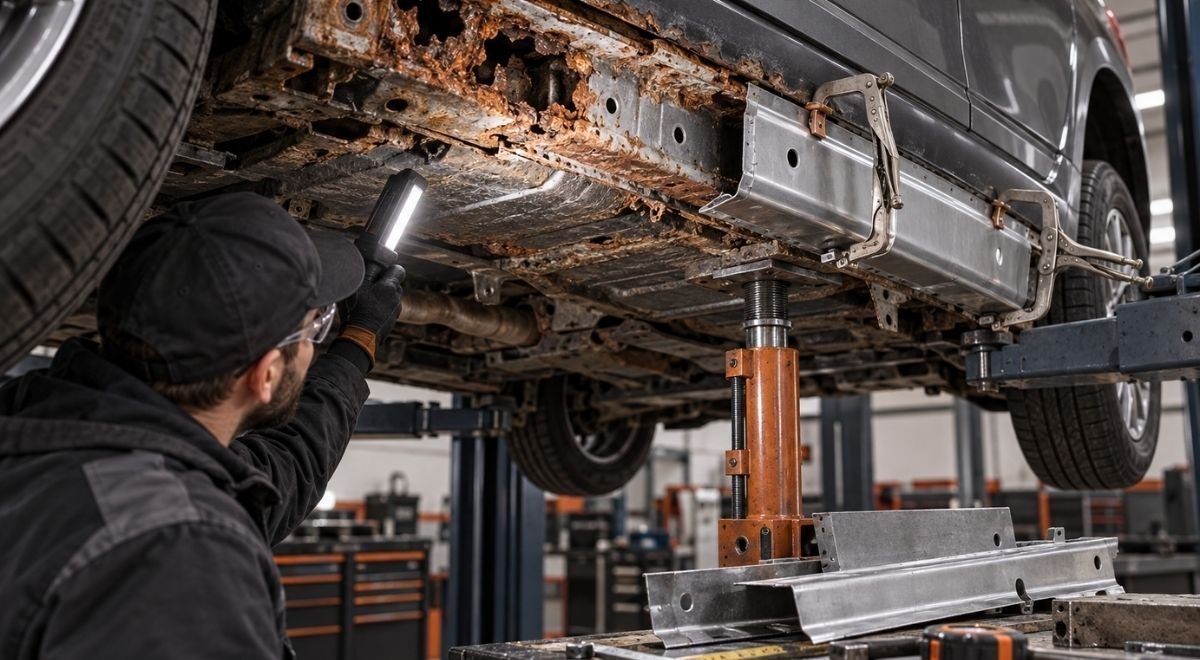
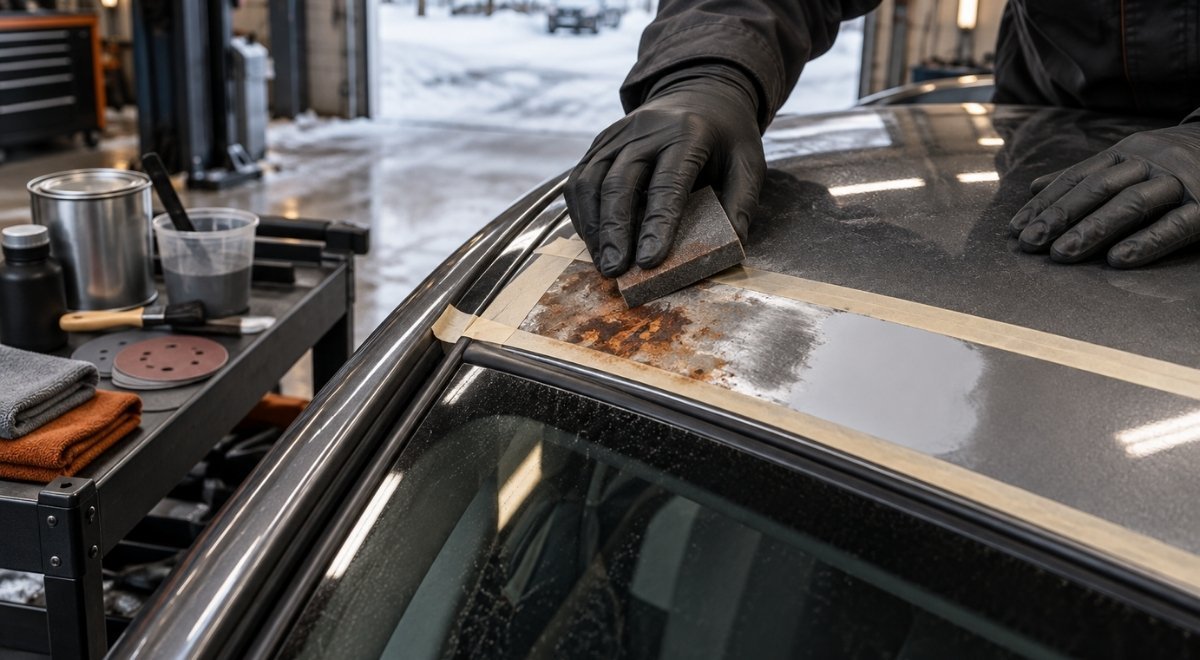
Automotive restoration services can mean anything from cleaning surface corrosion on a daily driver to rebuilding a rust-damaged frame on a classic truck. For Central Massachusetts owners, the useful question is not “Do I need restoration?” but which condition is being corrected, how much original material can be retained, and what protection will keep the work from being undone by road salt.
What Automotive Restoration Services actually include
Automotive restoration is a sequence of inspection, corrosion removal, structural correction, component replacement, surface preparation, and protective finishing. It is different from routine detailing because the target is not merely appearance. It is also different from a basic rustproofing appointment because restoration may require exposing hidden metal, cutting away compromised sections, welding repairs, and documenting the result.
The service category normally breaks into several distinct jobs:
- Rust inspection and diagnosis: locating corrosion in seams, cavities, brackets, body mounts, frame rails, brake-line clips, and other areas that may be hidden by dirt or undercoating.
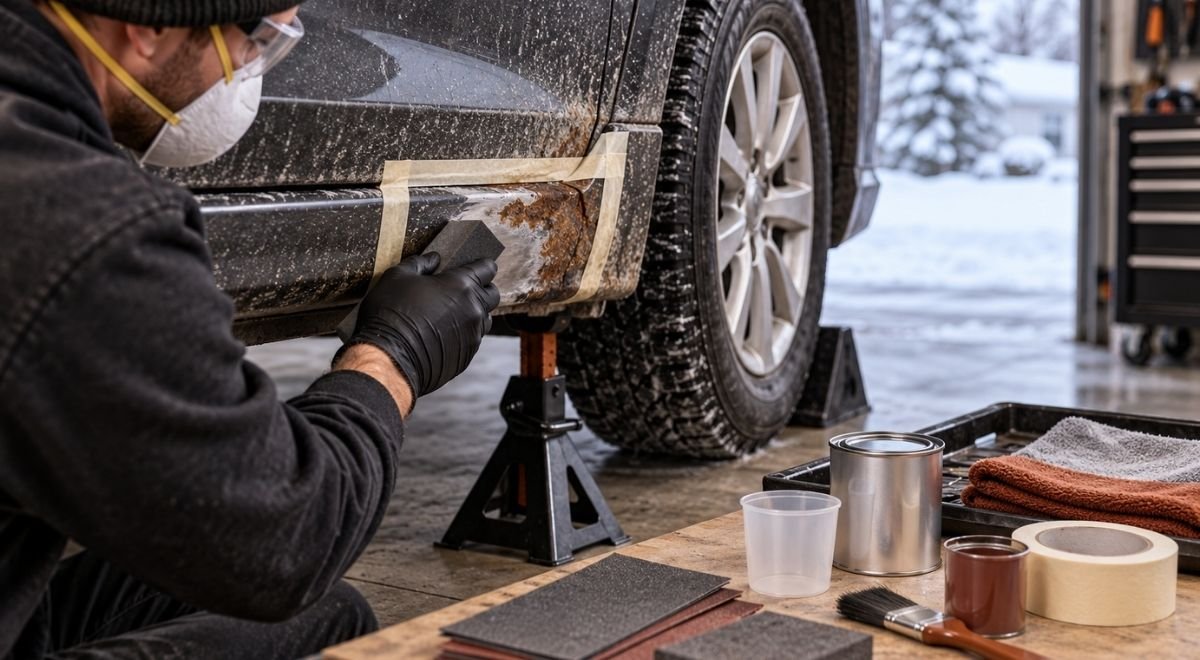
- Surface rust removal: removing oxidation from accessible steel where the underlying metal remains sound enough to preserve.
- Frame-off rust removal: separating the body, drivetrain, suspension, or other assemblies as needed so a frame can be cleaned and examined on all sides.
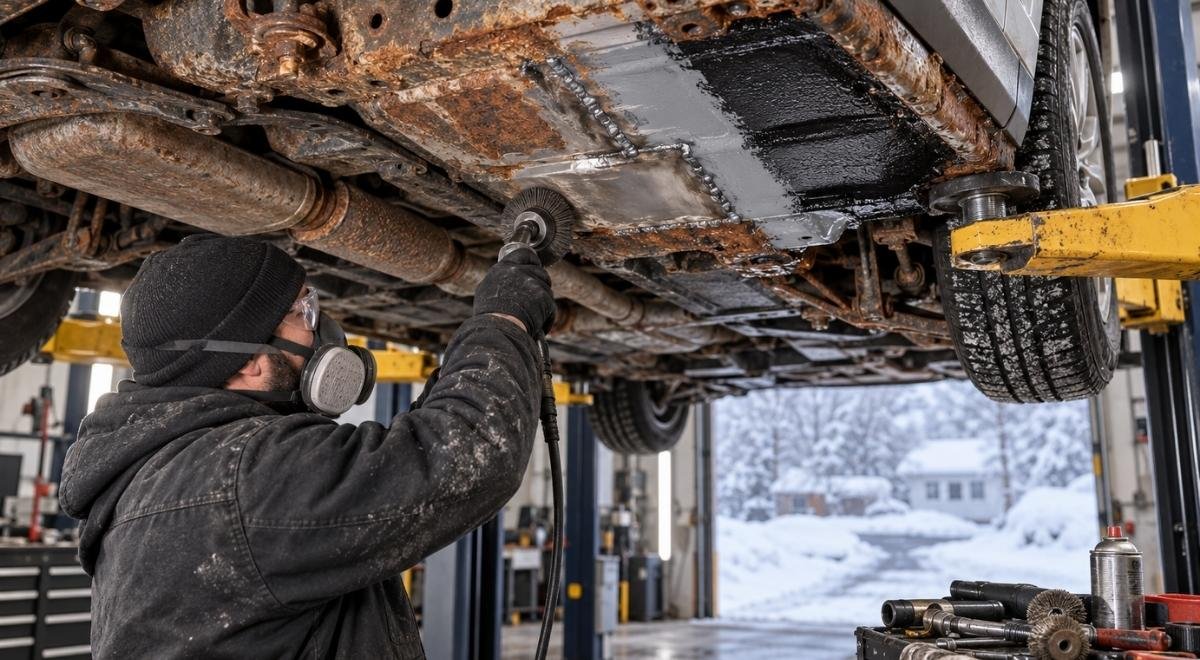
- Automotive frame repair: cutting out weakened sections, fabricating suitable patches or replacement sections, and welding according to the vehicle’s construction and repair requirements.
- Body and component restoration: treating brackets, inner fenders, floor sections, bumpers, fasteners, fuel-tank supports, and other parts affected by corrosion.
- Preventive undercoating: applying a corrosion-protection system to clean, dry, accessible surfaces after repairs. Bay State Rust Prevention uses WaxOyl for corrosion protection, including on restored vehicles and components.
Each category serves a different buyer situation. A new truck owner usually needs access inspection and prevention rather than a teardown. A used-car buyer needs an independent corrosion assessment before purchase. A classic-car owner may accept a longer project because originality, fit, and period-correct construction matter. A fleet operator generally values repeatable inspections, minimized downtime, and records that identify which vehicles need intervention first.
Restoration is not a cosmetic cover-up
Paint, rubberized coating, or fresh undercoating can make a damaged area look finished without restoring its strength. A credible process distinguishes cosmetic oxidation from section loss. A technician should inspect edges, seams, mounting points, and the reverse side of a panel rather than judging the repair from a clean outer surface.
For a structural concern, the vehicle manufacturer’s repair information and applicable safety requirements matter. In 2026, NHTSA’s vehicle-safety resources remain a useful public starting point for checking recalls and safety-related defects before authorizing unrelated restoration work; a recall issue should be handled through the appropriate manufacturer or dealer channel, not concealed under restoration materials. See the [NHTSA vehicle safety and recalls information](https://www.nhtsa.gov/vehicle-safety/vehicle-recalls-and-defects) before a major project.
Why road salt makes prevention part of restoration
Central Massachusetts vehicles encounter a corrosion system, not a single wet-weather event. Water carries dissolved salt into seams and cavities. Salt-contaminated moisture remains conductive, which helps electrochemical corrosion continue wherever steel, oxygen, and an electrolyte meet. Abrasion from grit removes protective finishes, while heat cycles and vibration open small gaps around fasteners, brackets, and body joints.
The most damaging areas are often not the broad, visible faces of panels. Pay particular attention to:
- Frame rails and crossmembers where packed material holds moisture against the steel.
- Body mounts, spring hangers, control-arm mounts, and cab supports where structural loads concentrate.
- Pinch welds, rocker seams, wheel arches, and boxed sections where drying is slow.
- Brake and fuel-line clips, cable brackets, splash shields, and fasteners that trap salty debris.
- Floor pans and cargo areas where wet carpeting or leaks keep the metal damp from inside.
The Federal Highway Administration has documented how chlorides used for winter maintenance can accelerate corrosion of vehicles, bridges, and other infrastructure; its technical report is a useful explanation of why winter contamination should be treated as a recurring exposure rather than an isolated stain. The [FHWA corrosion report](https://www.fhwa.dot.gov/publications/research/safety/humanfac/04081/) remains available as a 2026 reference.
Prevention does not reverse weakened steel. It changes the decision point by keeping sound metal from becoming repair metal. That is why a restoration plan should separate cleaning, repair, and protection. Applying a coating before removing packed salt, loose scale, or trapped moisture can preserve the problem under the new layer.
Different owners have different success criteria
A leased vehicle does not call for the same treatment as a frame-off classic restoration. A leaseholder may want a documented, reversible corrosion-prevention service that avoids unauthorized modifications and supports turn-in condition. A daily driver may justify targeted cavity protection and a yearly inspection. A collector may prioritize original weld appearance, correct panel alignment, and preservation of factory markings even when the work takes longer.
Useful success measures should be observable:
- Structural success: the technician identifies the affected section, explains whether metal was retained or replaced, and provides inspection photographs where practical.
- Surface-preparation success: loose scale, abrasive residue, salts, and moisture are addressed before coating.
- Coverage success: agreed frame rails, seams, cavities, and repaired areas are accessible and treated without blocking drains or inspection points.
- Usability success: the vehicle is reassembled with specified fasteners, clips, shields, and routing restored.
- Maintenance success: the owner receives a follow-up interval and instructions for washing, inspection, and touch-up.
Do not use “rust-free forever” as a measurable outcome. Steel exposed to winter roads can corrode again, and coatings can be damaged by impact, jacking, exhaust heat, or later repairs. A more defensible objective is slower progression with inspectable coverage.
How the work is performed: from inspection to protected metal
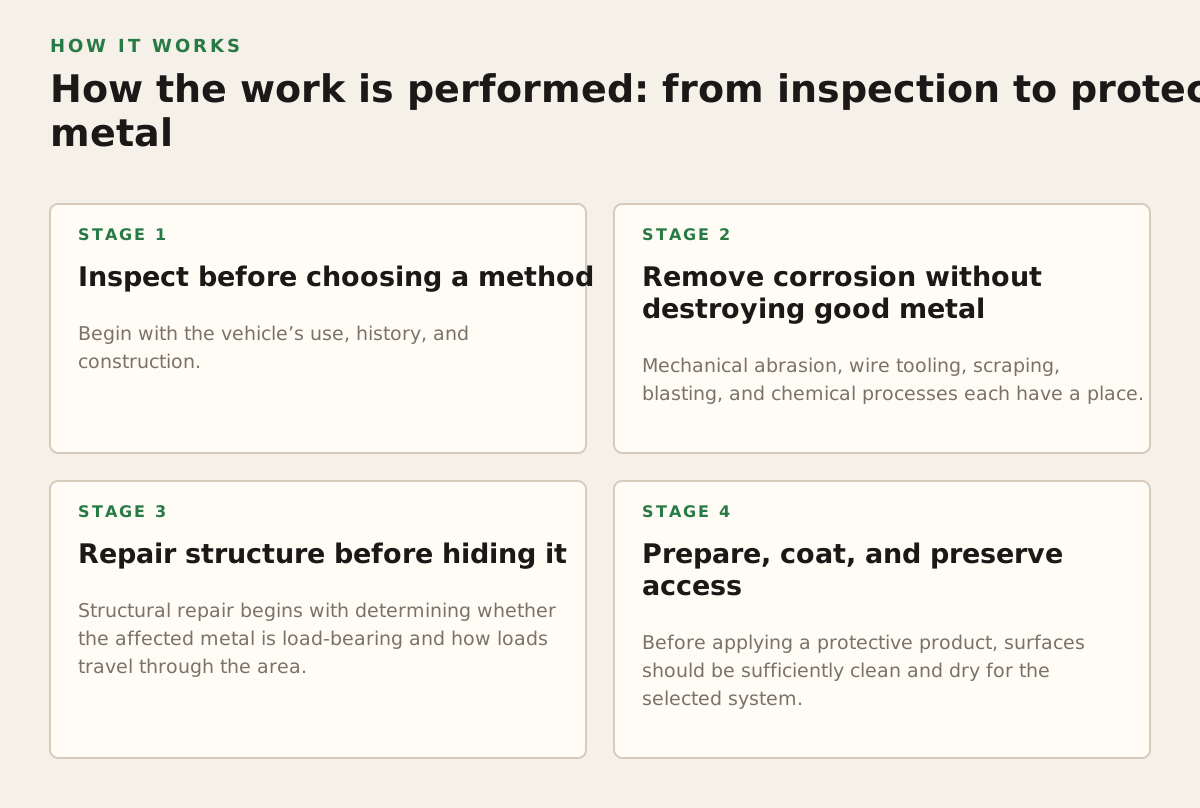
A sound restoration process follows the condition of the vehicle rather than a fixed package name. The order may change for a specialty vehicle, but the reasoning should remain visible to the owner.
1. Inspect before choosing a method
Begin with the vehicle’s use, history, and construction. Record whether it is driven through winter, stored indoors, used for towing, or being prepared for sale. Lift access reveals the underside, but inspection should also include wheel wells, door bottoms, drain holes, carpets, body cavities, and areas where previous undercoating has separated.
Ask for the technician’s classification of each area:
- Sound metal with contamination or light oxidation.
- Surface scale that can be removed while retaining the section.
- Perforation or section loss requiring panel or component replacement.
- Structural damage requiring engineering judgment, fabrication, or referral.
A useful inspection report does not need dramatic language. It should identify the location, explain the risk, show photographs when possible, and state what was not accessible. Hidden areas are a limitation that should be disclosed, not implied away.
2. Remove corrosion without destroying good metal
Mechanical abrasion, wire tooling, scraping, blasting, and chemical processes each have a place. The choice depends on thickness, access, contamination, heat sensitivity, and the finish that must remain. Excessive abrasion can thin edges. Aggressive blasting can distort sheet metal or drive media into cavities. Inaccessible boxed sections may require a different treatment than an open frame rail.
When blasting is part of the plan, ask how the shop controls dust, media, and worker exposure. OSHA identifies abrasive blasting as an activity that can create respirable crystalline-silica exposure depending on the abrasive and material involved; its [official abrasive-blasting safety guidance](https://www.osha.gov/silica-crystalline/abrasive-blasting) explains why containment, ventilation, respiratory protection, and safer media choices deserve specific answers in 2026.
“Blasted” is not a finish specification. The buyer should know whether the work is spot blasting, underside blasting with the body in place, or a more extensive teardown. The method also should identify what happens after cleaning: bare steel left overnight in a humid shop can flash-rust before primer or corrosion protection is applied.
3. Repair structure before hiding it
Structural repair begins with determining whether the affected metal is load-bearing and how loads travel through the area. A patch placed over thin or layered rust may look substantial while leaving the original failure underneath. A proper repair plan identifies the cut line, replacement material, weld access, heat control, drainage, and compatibility with adjacent components.
Frame repair can also expose secondary problems. Removing scale may reveal a perforated crossmember, a broken body mount, a corroded brake-line bracket, or a fastener that can no longer provide clamping force. That is not necessarily scope creep; it may be the consequence of making the original condition visible. It should, however, be documented and approved before additional work proceeds.
4. Prepare, coat, and preserve access
Before applying a protective product, surfaces should be sufficiently clean and dry for the selected system. Coating over salt, loose scale, oil, or damp seams compromises adhesion and can trap an active corrosion cell. The product’s technical directions govern curing, temperature, compatibility, and recoat requirements; the shop should be able to explain those constraints in plain language.
WaxOyl-style corrosion protection is most useful when it is treated as a maintenance layer, not a substitute for metal repair. Coverage should be planned around cavities, seams, and exposed underside surfaces while preserving drain holes, inspection points, exhaust clearances, tire clearance, and moving components. The owner should receive instructions for where future washing and inspection still matter.
Where restoration plans break down
Most disappointing outcomes come from a mismatch between the requested result and the vehicle’s actual condition. A buyer asks for undercoating, but the frame needs repair. A classic owner requests preservation, but previous repairs have already changed the metal. A shop promises a quick turnaround, then discovers that seized fasteners and hidden rust make disassembly the real job.
Common technical failure points
- Coating over active corrosion: loose scale and salty debris remain underneath, so the visible finish improves while deterioration continues.
- Inadequate access: the outer frame surface is treated while the inside of a boxed section remains unexamined.
- Heat or media damage: thin panels warp, delicate components are contaminated, or blasting removes markings the owner wanted preserved.
- Poor drainage: a coating blocks a drain path or a repaired cavity has no way to release water.
- Unplanned disassembly: aged clips, lines, bushings, and fasteners fail during removal and add legitimate but unexpected work.
- Incomplete reassembly: shields, clips, wiring, brake lines, or torque-sensitive fasteners are not returned to their intended positions.
There are also documentation risks. If a shop cannot identify what was removed, repaired, coated, or left untouched, the next repairer may have difficulty finding jacking points, drain holes, weld seams, or hidden patches. This matters especially for vehicles that will be sold, appraised, insured, or shown.
Environmental and legacy-finish concerns
Older vehicles may carry legacy coatings, old paint, or contamination that changes the preparation method. If lead-based paint is suspected, do not assume ordinary sanding or blasting is acceptable. The EPA’s [Lead Renovation, Repair and Painting program](https://www.epa.gov/lead/lead-renovation-repair-and-painting-program) explains federal requirements for covered renovation work in pre-1978 housing and child-occupied facilities; automotive work may fall outside that program, but the resource illustrates why suspected hazardous coatings should be identified and controlled rather than casually disturbed.
Vehicle owners should ask how removed scale, spent abrasive, contaminated wash water, and old coating debris are collected. A clean-looking driveway is not evidence of proper containment. The correct answer depends on the site, material, and local requirements, but “we just blow it off” is a serious process red flag.
Budget and schedule uncertainty are part of the decision
Restoration pricing may be structured as an inspection fee, fixed scope, time and materials, per-component work, or a staged estimate with approved change orders. None is automatically best. A fixed price is useful when access and condition are known. Time and materials may be more honest when hidden corrosion is likely. A staged plan can keep a daily driver usable while postponing nonessential cosmetic work.
Ask these budget questions before authorizing work:
- What is included in the written scope, and what is expressly excluded?
- Is lifting, washing, masking, disassembly, reassembly, and disposal included?
- How are hidden perforation, broken fasteners, and replacement parts approved?
- Is the estimate a ceiling, a range, or a planning figure?
- What happens if the vehicle is unsafe to reassemble without additional repair?
- Are storage, transport, or return visits billed separately?
Any budget number you create should be labeled as an illustrative planning example, not a universal benchmark. For example, a fleet manager might authorize inspection first, structural repairs second, and preventive treatment third so the company can stop after each decision gate. That sequencing is a policy choice, not a claim about what any shop should charge.
Choosing the right service: a buyer decision table
The following table is intended to prevent an attractive service name from substituting for a condition-based diagnosis. Several services can be combined, but the first step should match the vehicle’s actual need.
| Buyer need or vehicle condition | Best-fit service type | Main trade-off | Evidence to request |
|---|---|---|---|
| New or lightly used vehicle exposed to winter salt | Inspection plus rust prevention undercoating | Lower disruption than teardown, but inaccessible or already contaminated areas may remain untreated | Coverage map, preparation steps, drain-hole policy, maintenance interval |
| Daily driver with visible scale but no confirmed structural loss | Targeted rust removal, cleaning, and protective treatment | Preserves more original material, but hidden corrosion may require a later phase | Before-and-after images, areas excluded, method selected for each surface |
| Frame rail, crossmember, mount, or hanger with perforation | Automotive frame inspection and structural repair | More disassembly, fabrication, and downtime; coating alone is not an adequate substitute | Repair sketch or photos, metal removed, weld and reassembly plan, approval process |
| Classic or specialty vehicle with extensive underside corrosion | frame-off rust removal with staged component restoration | Highest labor and storage burden, but better access and documentation | Teardown boundaries, originality goals, media containment, component labeling |
| Used vehicle being considered for purchase | Independent corrosion and frame assessment before purchase | Inspection cost may be lost if the vehicle is rejected, but it can prevent a larger repair commitment | Written condition report, inaccessible areas, structural-risk explanation |
| Business or fleet needing repeatable protection | Condition-based inspection program with prioritized repairs and prevention | Requires scheduling and records, but avoids treating every vehicle identically | Vehicle-by-vehicle findings, service history, reinspection triggers, downtime plan |
How to evaluate a restoration provider in 2026
Start with the provider’s ability to explain limits. A good interview is not a sales presentation; it is a technical conversation about access, metal condition, safety, and what happens when the original scope changes.
Vendor interview checklist
- Will you inspect the frame, mounts, seams, cavities, and previous repairs before recommending a service?
- How do you distinguish surface rust from section loss?
- What parts of this vehicle can you access without disassembly?
- Which removal method do you recommend for each area, and what could that method damage?
- How do you contain abrasive media, dust, removed coating, and wash water?
- What is your procedure when blasting reveals perforation or a weakened mount?
- Who approves additional cutting, fabrication, parts, or labor?
- How are repaired areas prepared before primer, coating, or WaxOyl protection?
- Which drains, inspection points, exhaust clearances, and moving parts will remain clear?
- What photographs, measurements, parts records, or repair notes will I receive?
- What should I inspect after winter driving, washing, towing, or an underbody impact?
- What work is excluded because it requires a different trade, manufacturer information, or engineering review?
Ask for a written scope that names the vehicle, areas, method, finish, reassembly responsibilities, and approval threshold for changes. A vague promise to “make it solid” is not enough. Nor is a photographic gallery by itself: attractive results do not prove that hidden cavities were cleaned, structural loads were considered, or drains were preserved.
Red flags that should change the decision
- The provider recommends coating before viewing the underside or asks you to authorize work without discussing corrosion severity.
- The estimate promises permanent prevention or guarantees that no hidden rust will be discovered.
- The shop cannot explain where the coating will not be applied and why.
- Structural repairs are described only as “welding a plate over it,” without discussing the damaged section or load path.
- There is no process for photographs, change orders, parts labeling, or reassembly verification.
- The provider dismisses questions about dust, hazardous old coatings, ventilation, or disposal.
- The shop cannot state how the vehicle will be supported safely during frame or suspension work.
For a leased vehicle, confirm that the proposed treatment, drilling, removal, or modification is permitted by the leasing company. For a classic vehicle, write down whether the priority is originality, durability, show appearance, drivability, or resale documentation. For a fleet, require a consistent report format so managers can compare findings across vehicles without relying on memory.
A practical recommendation by vehicle stage
If the metal is sound, choose prevention and schedule inspection rather than waiting for visible bubbling. If scale is present but the section remains strong, remove the corrosion carefully, prepare the surface, and protect it. If there is perforation near a mount, rail, hanger, or suspension attachment, pause the coating decision and obtain a structural assessment first. If the vehicle is a valuable classic or severely corroded work truck, use a staged restoration plan with a defined stopping point after disassembly and cleaning.
The strongest automotive restoration services are therefore not the ones with the broadest package name. They are the ones that connect vehicle condition to repair method, disclose access and uncertainty, preserve inspection points, and leave the owner with a maintenance plan. In Central Massachusetts, owners can discuss rust prevention undercoating, rust removal, frame-off work, and automotive frame repair with [Bay State Rust Prevention](https://baystaterustprevention.com/), whose services include WaxOyl corrosion protection and restoration of rust-damaged frames and components through baystaterustprevention.com.